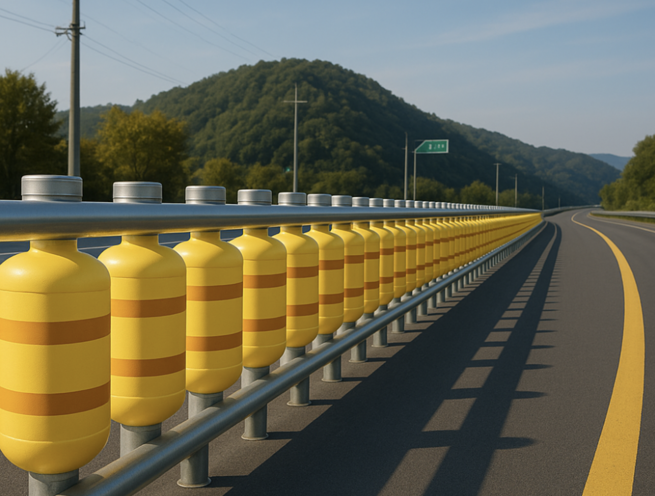
HIGHWAY GUARDRAIL BARRIERS - ROADSIDE SAFETY SYSTEMS AND CRASH PROTECTION SOLUTIONS
Madoors engineers and manufactures comprehensive highway guardrail barrier systems, road safety barriers, and crash protection guardrails designed to prevent vehicles from leaving roadways and reduce accident severity on highways, bridges, ramps, intersections, curved roads, median starts, and high-speed traffic zones worldwide. Our complete product portfolio includes W-beam guardrail systems, Thrie beam 3-wave barriers, steel wire rope guardrails, and rolling guardrail barriers—manufactured from hot-dip galvanized high-strength steel with passive safety engineering providing controlled vehicle redirection, collision energy absorption, and impact force dissipation protecting motorists, passengers, and roadside infrastructure during vehicular accidents.
W-BEAM HIGHWAY GUARDRAIL SYSTEM
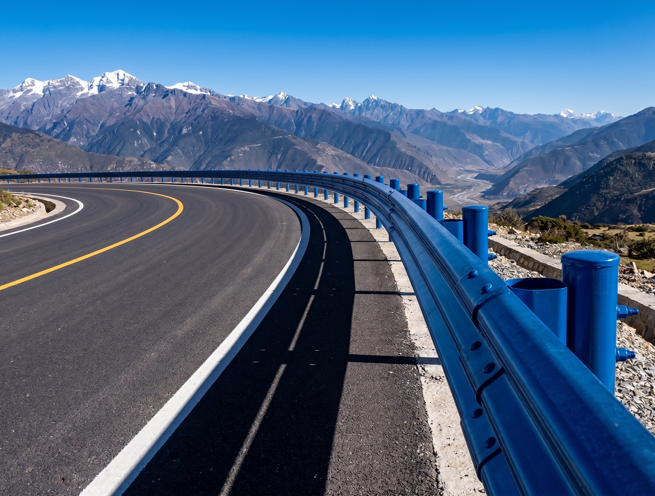
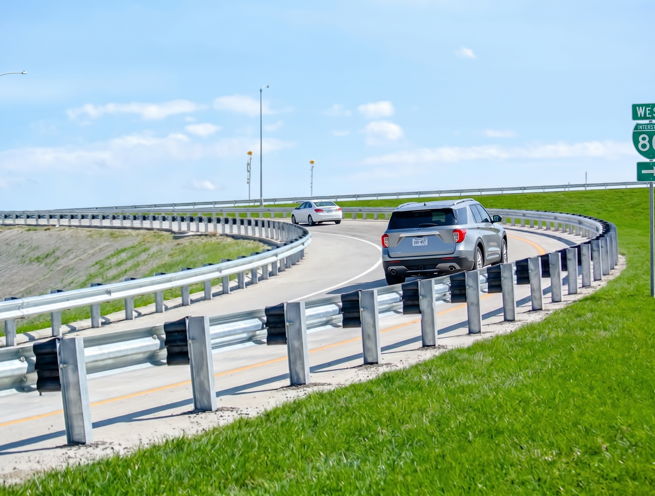
The W-beam guardrail, recognized as the industry-standard 2-wave roadside barrier, provides widely-preferred safety protection minimizing vehicle collision impact while guiding vehicles back to roadways through controlled redirection. Manufactured from hot-dip galvanized high-strength steel, this barrier configuration offers reliable protection and long-lasting performance under various environmental conditions including coastal salt exposure, industrial pollution, temperature extremes, and heavy precipitation. The W-profile design distributes impact forces longitudinally along barrier length while maintaining structural integrity during collisions. Applications span interstate highways, state routes, county roads, urban arterials, and any roadway requiring cost-effective passive safety protection.
THRIE BEAM 3-WAVE HIGHWAY GUARDRAIL
Our Thrie beam guardrail system delivers high-strength roadside safety protection designed specifically for areas experiencing intense heavy vehicle traffic including commercial truck routes, freight corridors, bridge approaches, elevated ramps, and hazardous curves. The triple-wave profile distributes impact energy over broader surface areas compared to W-beam designs—reducing collision forces while guiding vehicles back onto roadways through controlled redirection mechanisms. Superior strength-to-weight ratios enable effective protection against heavy commercial vehicles while maintaining installation efficiency. Madoors Thrie beam barriers earn preference in public and private sector infrastructure projects through proven durability, extended service life, and compliance with international safety standards.
STEEL WIRE ROPE HIGHWAY GUARDRAIL SYSTEM
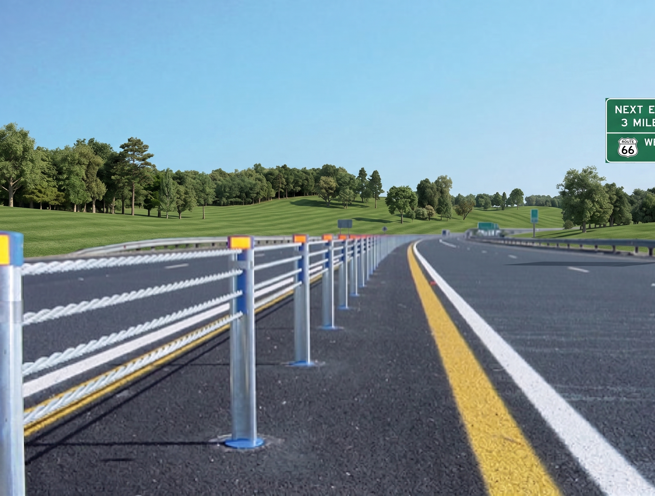
Specialized steel cable guardrail systems deliver controlled flexibility combining resistance with energy absorption—critical characteristics for modern highways and high-speed traffic zones. High-tension steel wire ropes absorb and dissipate collision energy while gently redirecting vehicles back to safety through flexible cable deflection. This system philosophy prioritizes controlled deformation over rigid resistance—reducing vehicle damage and occupant injury severity compared to rigid barrier systems. Applications include rural highways, scenic routes, environmentally sensitive areas, locations requiring post-impact barrier functionality, and installations where aesthetic considerations favor low-profile cable designs over solid metal barriers.
HIGHWAY SAFETY ROLLING GUARDRAIL BARRIER
Innovative roller barrier systems represent latest road safety technology providing high-level protection especially suited for highways, intersections, curved roads, bridge entrances, and median starts. High impact-absorbing structure minimizes casualties and vehicle damage during collision events through rotating barrel mechanisms. EVA buckets, anti-crash spinning barrels, and rotating roller cushions absorb collision energy while reducing vehicle snagging and occupant compartment intrusion. These anti-collision proof systems install at critical locations including work zones, temporary traffic control areas, crash cushion applications, and transition sections between barrier types requiring enhanced energy absorption capabilities.
PASSIVE SAFETY SYSTEM ENGINEERING
Highway guardrail barriers function as passive safety systems requiring no external power, activation mechanisms, or operator intervention—providing continuous protection through strategic placement and proven engineering principles. Barrier effectiveness derives from proper installation height, offset distance from travel lanes, end terminal treatments, transition sections between barrier types, and connection strength between adjacent sections. Madoors engineers specify barrier configurations based on roadway geometry, traffic volumes, vehicle mix, collision history, and site-specific hazards ensuring optimal protection matching risk profiles and regulatory requirements.
HOT-DIP GALVANIZED STEEL CONSTRUCTION
All Madoors highway guardrail systems manufacture from hot-dip galvanized high-strength steel providing superior corrosion resistance and extended service life across diverse environmental conditions. Zinc coating thickness meets or exceeds international standards protecting steel substrates from oxidation, rust formation, and structural degradation. Galvanized finishes maintain barrier integrity for decades while minimizing maintenance requirements and lifecycle costs. This proven protective treatment serves coastal installations, industrial corridors, northern climates experiencing road salt application, and any location where long-term corrosion resistance proves essential to safety performance.
IMPACT ENERGY ABSORPTION AND VEHICLE REDIRECTION
Effective guardrail systems balance two critical safety functions—collision energy absorption and controlled vehicle redirection. Energy absorption mechanisms include barrier deflection, post yielding, soil resistance, and material deformation dissipating kinetic energy reducing occupant injury severity. Controlled redirection guides vehicles parallel to traffic flow preventing roadway departure, rollover, and secondary collisions. Madoors barrier designs optimize both functions through proven profiles, post spacing, rail heights, soil conditions, and connection details validated through full-scale crash testing and decades of field performance.
APPLICATIONS ACROSS TRANSPORTATION INFRASTRUCTURE
Highway guardrail barriers protect critical locations including bridge approaches and bridge decks preventing vehicles from striking supports or falling from elevated structures, hazardous curves and sharp turns containing vehicles within travel lanes during emergency maneuvers, median barriers separating opposing traffic preventing head-on collisions, roadside slopes and embankments preventing rollover accidents, work zone protection shielding construction personnel and equipment, transition areas between barrier types ensuring continuous protection, gore areas at interchanges protecting from fixed objects, and any location where roadway departure consequences exceed guardrail installation and maintenance costs.
INTERNATIONAL STANDARDS COMPLIANCE
Madoors highway guardrail systems comply with international safety standards including AASHTO Manual for Assessing Safety Hardware (MASH), European EN 1317 standards, NCHRP Report 350 testing protocols, and national specifications worldwide. Compliance documentation includes crash test reports, structural calculations, installation guidelines, and maintenance recommendations ensuring regulatory acceptance and insurance approvals. This comprehensive standards conformance enables barrier specification for federal-aid highways, state transportation projects, municipal roadway improvements, and private development applications requiring certified safety performance.
INSTALLATION EFFICIENCY AND MAINTENANCE REQUIREMENTS
Madoors guardrail systems engineer for rapid installation using standard construction equipment and readily available materials. Post driving, rail splicing, and hardware installation proceed quickly reducing traffic disruption during barrier placement. Modular component designs enable straightforward maintenance and crash damage repair through section replacement without complete system reconstruction. Regular inspection protocols identify damage requiring attention while galvanized finishes minimize routine maintenance extending intervals between service interventions and reducing lifecycle costs.
WHY CHOOSE MADOORS HIGHWAY GUARDRAIL BARRIERS?
Multiple Barrier Types: W-beam, Thrie beam, steel cable, and rolling barriers addressing diverse protection requirements.
Hot-Dip Galvanized Steel: Superior corrosion resistance and extended service life across environmental conditions.
Controlled Flexibility: Cable systems absorb and dissipate collision energy while gently redirecting vehicles.
Triple-Wave Strength: Thrie beam profiles distribute impact over broader surfaces reducing collision forces.
High-Tension Wire Rope: Steel cable technology provides controlled deformation minimizing vehicle damage.
Rolling Barrier Innovation: Rotating mechanisms absorb impact energy reducing casualties and property damage.
International Standards: AASHTO MASH, EN 1317, and NCHRP 350 compliance with crash test validation.
Passive Safety Design: Continuous protection without external power or activation mechanisms required.
Heavy Vehicle Rated: Thrie beam systems specifically engineered for commercial truck traffic protection.
Long Service Life: Galvanized finishes and robust construction deliver decades of reliable performance.
Rapid Installation: Modular components and standard equipment enable efficient barrier placement.
Public and Private Projects: Proven performance in infrastructure applications worldwide.
Contact Madoors today to discuss your highway guardrail barrier requirements and receive customized roadside safety solutions engineered for your specific roadway geometry, traffic characteristics, and protection objectives. Our traffic safety specialists provide complimentary site assessments and barrier recommendations protecting motorists on highways, bridges, ramps, curves, and critical roadway locations requiring proven crash protection systems.
Exploring high-security Highway Guardrails solutions? Please share your facility requirements and project details below. Our engineering team will evaluate your perimeter defense needs and deliver a customized project proposal.