Please provide your technical specifications and project requirements for the X-Ray Vehicle Scanning Device. Our engineers will review your application and provide a detailed manufacturing quote, including exact pricing and lead times.
X-Ray Vehicle Scanning Device
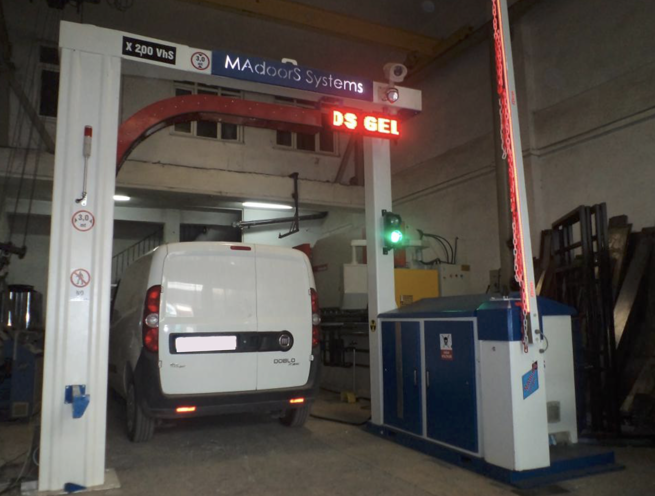
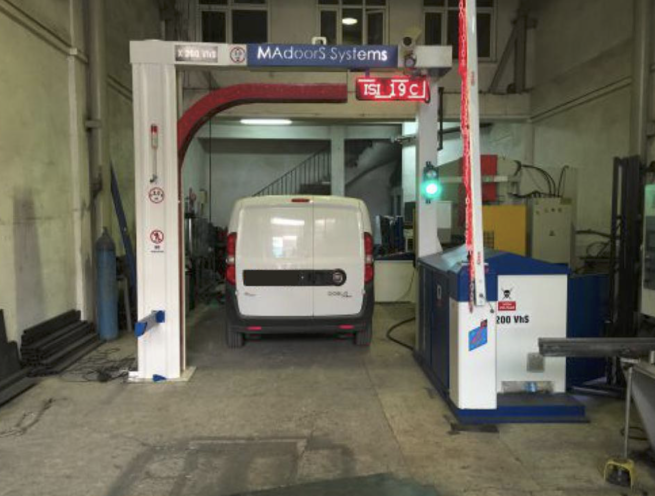
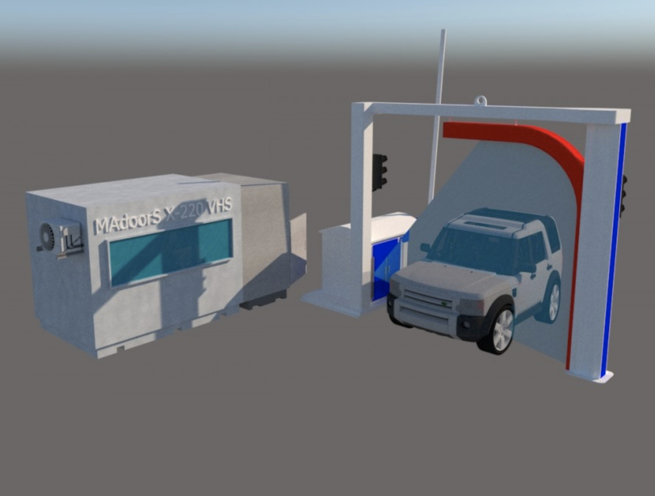
The Madoors USA X 200 VHS Drive-Through Portal Vehicle and Van X-Ray Security Inspection System is a 100% domestically manufactured, drive-through or mobile X-ray vehicle scanning system specifically developed for detecting illegal human trafficking, explosives, bombs, weapons, drugs, and prohibited substances hidden inside passenger vehicles, pickup trucks, and small vans — with a high-throughput portal capable of scanning up to 120 vehicles per hour at detection speeds up to 40 km/h in fixed configuration. The system uses such a low radiation dose that passengers can remain in their vehicles during the inspection process — making it both safe and convenient for high-traffic checkpoint applications at border crossings, military installations, government facilities, and any security perimeter requiring comprehensive non-intrusive vehicle inspection.
Available in fixed portal and mobile configurations, with Full HD image quality, L-shape dual sensor array, 3D image reconstruction, organic/inorganic material discrimination, license plate recognition with historical image comparison, satellite and Wi-Fi image transfer, UPS power backup, 200 kVA to 600 kVA power options, 2-year warranty, and 10-year spare parts guarantee.
TECHNICAL SPECIFICATIONS
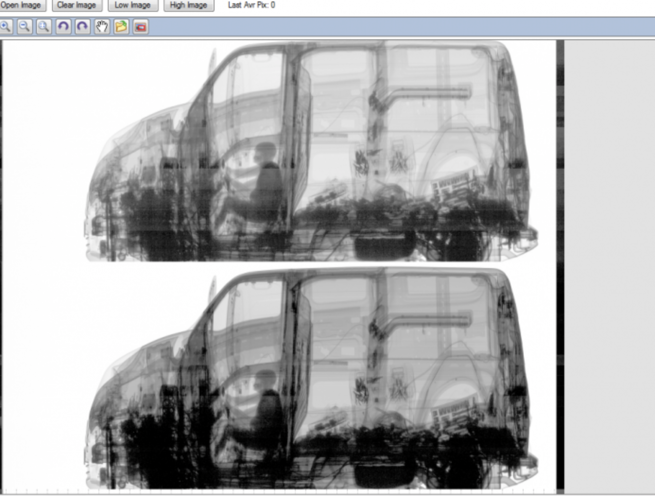
The Madoors USA X 200 VHS uses an L-shape sensor array — the vertical and horizontal sensor elements of the L configuration provide simultaneous side and underside imaging of the vehicle, enabling the 3D image reconstruction of the full vehicle interior from a single scan pass. Dual sensors provide redundant detection capability and enhanced image quality through overlapping coverage of the scanned volume. Full HD quality image analysis provides the resolution required for trained operator identification of concealed persons, weapons, explosives, and contraband within the vehicle interior.
The system distinguishes between organic and inorganic materials — organic materials including human bodies, drugs, explosives, and organic contraband are displayed differently from inorganic metallic and non-metallic objects — providing the material classification required for simultaneous detection of both human trafficking and prohibited object concealment within the same scan.
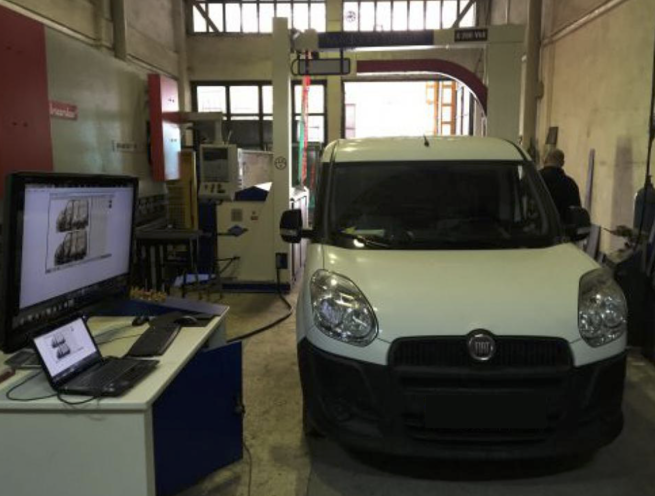
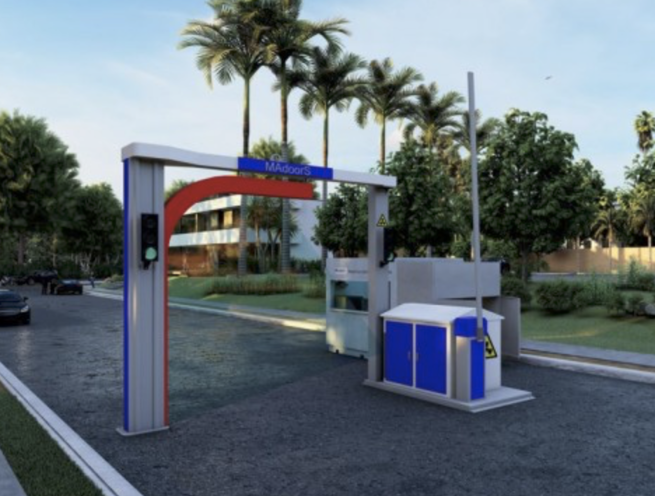
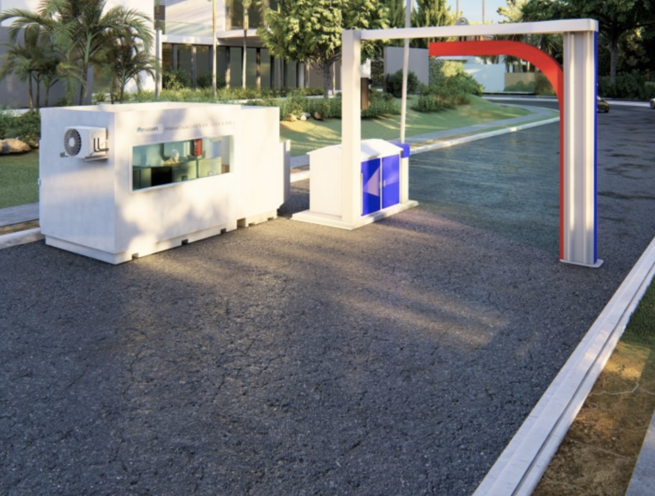
Fixed configuration: the vehicle drives through the portal at speeds up to 40 km/h — passengers remain in the vehicle. Portal throughput is up to 120 vehicles per hour. The X-ray portal remains stationary and the vehicle passes through the scanning gate.
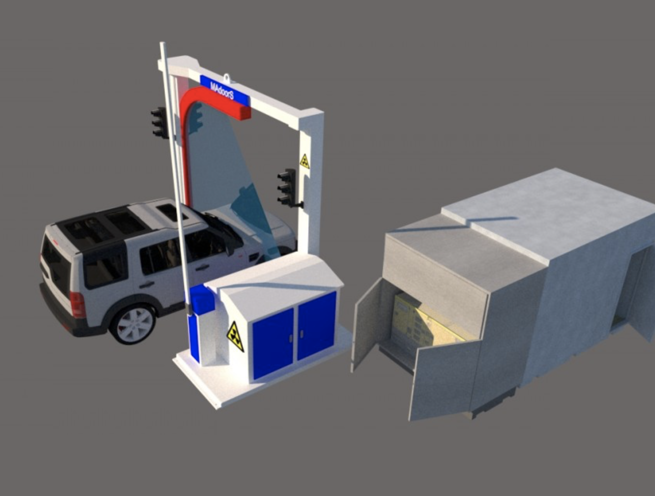
Mobile configuration: the vehicle is stationary and the driver exits the vehicle. The X-ray scanning device passes over the stationary vehicle using a traversing scanner mechanism — providing complete vehicle coverage from a mobile system that can be deployed at any location without permanent portal infrastructure.
Power options are 200 kVA, 450 kVA, and 600 kVA — with higher power providing enhanced image quality and penetration for larger vehicles and denser cargo. UPS support maintains continuous operation during mains power failure — critical for border crossing and military checkpoint applications where power outages cannot be permitted to create uninspected vehicle gaps.
License plate recognition software is integrated — coupling each scan image with the vehicle license plate number, date, time, and historical comparison data. The system compares each newly scanned vehicle image with the previous entry image from the same plate number — enabling detection of modifications to the vehicle interior between entries and providing a complete entry history database for each license plate.
Images are transferable to remote points via Wi-Fi or data cable — allowing a remote operator or command center to review vehicle scan images without physical presence at the scanning location. All scanned images are stored with date, time, and license plate data as a complete searchable record.
KEY FEATURES
120 Vehicles Per Hour — High-Throughput Drive-Through Portal
The drive-through portal configuration allowing vehicles to pass through at speeds up to 40 km/h provides the 120 vehicles per hour throughput rate required for high-traffic border crossings, military base main gates, and commercial facility security checkpoints where conventional stop-and-search inspection would create unacceptable vehicle queuing. This throughput rate makes the X 200 VHS one of the most operationally efficient vehicle scanning systems available for high-volume checkpoint applications.
Passengers Remain in Vehicle — Low Radiation Dose
The critically low radiation dose of the fixed portal system allows passengers to remain seated in their vehicles throughout the scan — eliminating the operational delay of passenger evacuation required by higher-dose scanning systems, maintaining the throughput rate, and providing a passenger experience comparable to a standard drive-through checkpoint. The low dose design satisfies the occupational and public dose limits applicable to systems where uninvolved persons may be scanned alongside the vehicle.
Human Trafficking Detection — Concealed Person Identification
The organic material discrimination capability specifically supports the primary mission of human trafficking detection — concealed persons within vehicle cargo areas, false-floor compartments, modified seats, and other hidden spaces are identifiable as organic density objects distinct from the surrounding vehicle structure in the X-ray image. The L-shape sensor array and 3D imaging provide the complete spatial coverage required to identify concealed persons regardless of their position within the vehicle.
Organic & Inorganic Material Discrimination
The system's material discrimination between organic and inorganic materials provides simultaneous detection capability for all major concealment categories — organic explosives and drugs appear as organic density objects, metallic weapons and components appear as inorganic high-density objects, and mixed constructions such as IEDs appear as characteristic organic-and-metallic composite objects. This dual-category discrimination directly reduces the false alarm rate for organic materials against metallic background clutter that affects single-energy systems.
L-Shape Dual Sensor Array — 3D Image Reconstruction
The L-shape sensor array configuration provides simultaneous vertical and horizontal X-ray coverage of the vehicle — the vertical sensors image the vehicle from the side, and the horizontal sensors image the vehicle from below. Combining these two orthogonal image sets produces the 3D reconstruction of the full vehicle interior volume, providing the spatial context required to locate concealed objects in three dimensions and distinguish them from legitimate vehicle components in the same image plane.
License Plate Recognition & Historical Image Comparison
The integrated license plate recognition system couples every scan image with the vehicle plate number — providing the ability to compare the current scan against all previous entry scans for the same plate. This comparison function detects modifications to the vehicle interior between entries — including newly installed hidden compartments, modified seating, altered cargo areas, and suspicious changes to the vehicle structure — that would not be apparent from the current scan image alone without the historical baseline.
Fixed & Mobile Configurations
Fixed portal configuration for permanent checkpoint installations at border crossings, military gates, and government facilities — providing the highest throughput rate with passengers remaining in the vehicle. Mobile configuration for temporary and relocatable checkpoint deployments — the scanning device moves over the stationary vehicle, providing complete coverage without permanent portal infrastructure. Both configurations use the same L-shape sensor array and 3D imaging software.
Wi-Fi & Data Cable Remote Image Transfer
Scanned images transfer to remote monitoring points via Wi-Fi or wired data connection — allowing a central security operations center to review vehicle scans from multiple checkpoint locations simultaneously, providing second-level review expertise for suspicious images, and maintaining a central database of all scanned vehicles across an entire border or facility checkpoint network.
200 kVA to 600 kVA Power Options — UPS Backup
Three power level options accommodate different vehicle types and cargo densities — 200 kVA for standard passenger vehicles, 450 kVA for light commercial vehicles and pickup trucks with cargo, and 600 kVA for the highest penetration requirements. UPS backup maintains continuous scanning operation during power outages — ensuring that no vehicle passes through the checkpoint uninspected during power failure events.
100% Domestic Production — 2-Year Warranty & 10-Year Parts
100% domestic and national production provides supply chain security and technology sovereignty for military and government procurement. The 2-year warranty covers all system components from the date of installation. The 10-year spare parts guarantee ensures operational availability of all replacement components throughout the full system service life — a critical support commitment for checkpoint systems installed at remote border locations where alternative spare parts sourcing is impractical.
PRODUCT CONFIGURATIONS
Fixed Drive-Through Portal — X 200 VHS Standard
Permanent portal installation at high-traffic checkpoints. Vehicle drives through at up to 40 km/h. Passengers remain inside. Up to 120 vehicles per hour. Full HD imaging with L-shape dual sensor array and 3D reconstruction.
Mobile Traversing Scanner
Portable system for temporary checkpoint deployment. Vehicle stationary, driver exits. Scanner traverses over vehicle. Complete vehicle coverage without permanent infrastructure. Wi-Fi image transfer to remote command point.
ASSEMBLY & INSTALLATION SEQUENCE
Site Assessment & Configuration Selection
Checkpoint road width, vehicle type profile, required throughput rate, power supply availability, remote image transfer requirement, and license plate recognition integration are confirmed. Fixed portal or mobile configuration is selected based on deployment permanence and throughput requirements.
Foundation & Portal Structure Installation (Fixed Configuration)
Portal foundation is constructed at the confirmed checkpoint position. The X-ray portal structure — housing the L-shape sensor array and X-ray source — is installed over the vehicle travel lane. Portal alignment, vehicle lane clearance, and sensor coverage geometry are verified.
Power Supply & UPS Connection
The specified 200 kVA, 450 kVA, or 600 kVA power supply is connected to the portal. UPS system is connected and charged. Power failure operation is tested — confirmed continuous scanning from UPS during simulated mains failure.
Imaging System & Software Installation
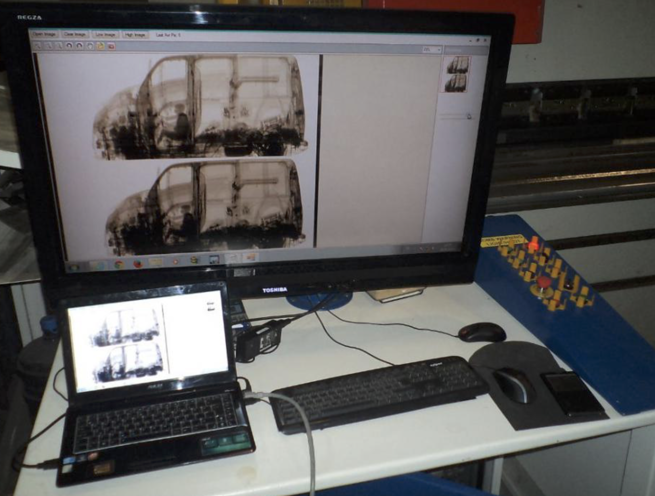
The control computer, Full HD imaging displays, and scanning software are installed in the operator control station. License plate recognition cameras are positioned and calibrated for plate capture at the portal entry and exit positions.
3D Image Calibration & Material Discrimination Testing
L-shape dual sensor array calibration is completed. 3D image reconstruction quality is verified with test objects of known geometry. Organic and inorganic material discrimination is calibrated and verified with reference test items.
License Plate Database & Historical Comparison Setup
License plate recognition software is configured and the plate database is initialized. Historical image comparison function is tested with recorded test plate entries. Remote image transfer via Wi-Fi and data cable is tested to the remote monitoring point.
Throughput Testing & Operator Training
Fixed portal throughput at 40 km/h vehicle speed and 120 vehicles per hour capacity is verified. Operator training on image interpretation, color coding, material discrimination, 3D image review, and license plate comparison is completed.
2-Year Warranty & 10-Year Parts Documentation Handover
System commissioning records, operator training certificates, 2-year warranty documentation, and 10-year spare parts guarantee records are compiled into the project handover package.
DEPLOYMENT SCENARIOS & USE CASES
Madoors USA X 200 VHS X-Ray Vehicle Scanning Systems are specified for any vehicle checkpoint requiring non-intrusive high-throughput vehicle inspection for human trafficking, explosives, weapons, and contraband.
- Border crossing drive-through vehicle X-ray portal inspection
- Military base and installation main gate vehicle scanning
- Airport vehicle access control and cargo vehicle scanning
- Government facility and ministry vehicle entrance inspection
- Embassy and diplomatic compound vehicle security scanning
- Prison and correctional facility vehicle entry inspection
- Port and maritime terminal vehicle and cargo inspection
- Nuclear facility and critical infrastructure vehicle screening
- Drug interdiction and customs vehicle X-ray inspection
- Counter-terrorism vehicle checkpoint scanning systems
- VIP compound and protected residence vehicle inspection
- Large event venue vehicle security scanning systems
- Petrochemical plant and refinery vehicle entrance control
- Railway terminal and transport hub vehicle inspection
- Any high-security vehicle checkpoint requiring non-intrusive scanning
- Category: X-Ray Systems