Please provide your technical specifications and project requirements for the X-Ray Train Inspection Scanning System. Our engineers will review your application and provide a detailed manufacturing quote, including exact pricing and lead times.
X-Ray Train Inspection Scanning System
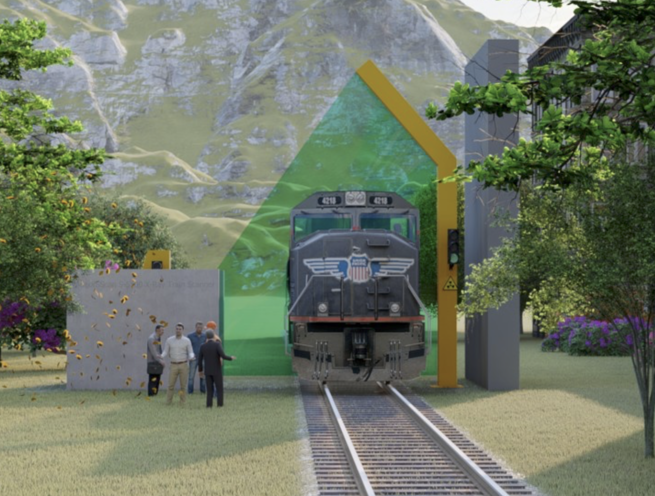
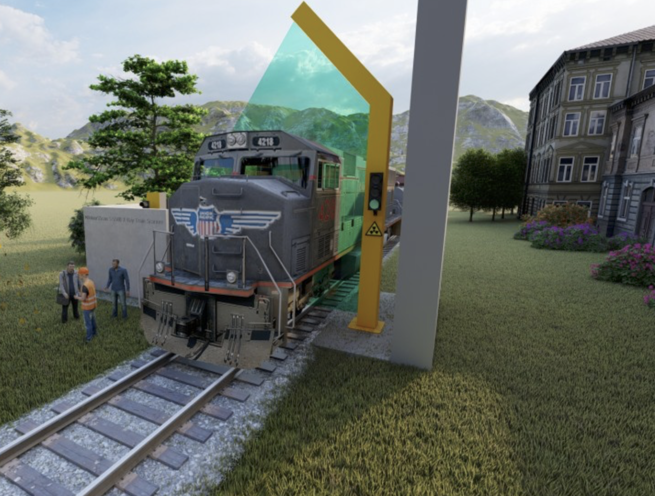
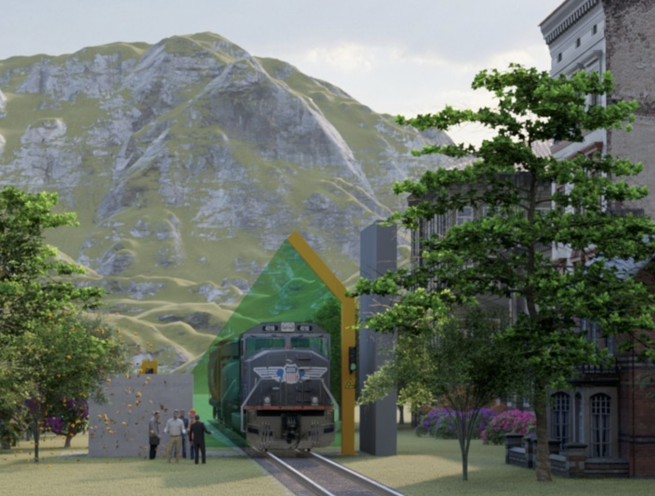
The Madoors USA Madoorsscan S-5500 is a high-energy X-ray drive-through train inspection system that allows inspection of rail cargo wagons and containers for correspondence to accompanying documents and detection of weapons, explosives, narcotics, smuggled goods, and concealed persons — without cargo unloading or wagon unsealing. Powered by a 6 MeV generator with 300mm steel penetration capability, the S-5500 scans up to 300 containers in 10 minutes at train speeds up to 30 km/h, delivering separate high-resolution side-view X-ray images for each wagon to an ergonomic operator workstation with customizable image processing tools, automatic container code recognition, and Customs EDI network integration for remote analysis, knowledge sharing, and automated cargo verification.
Using no radioactive source — the X-rays are generated electrically — the S-5500 provides a radiation-safe train inspection solution that significantly reduces the necessity of manual inspection and cargo unloading at rail border crossings, customs checkpoints, and freight inspection facilities.
TECHNICAL SPECIFICATIONS
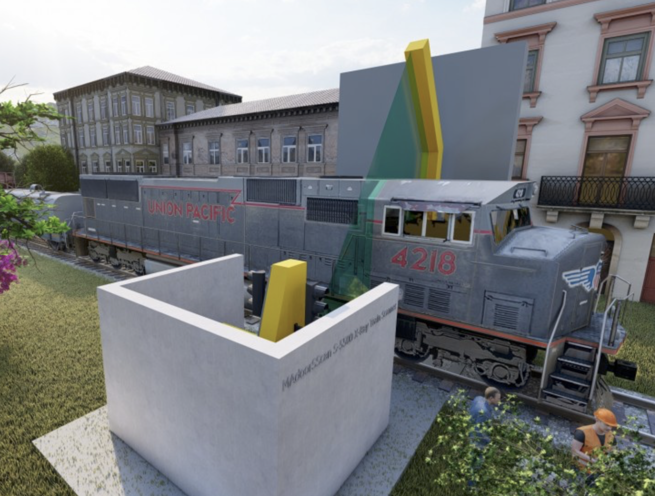
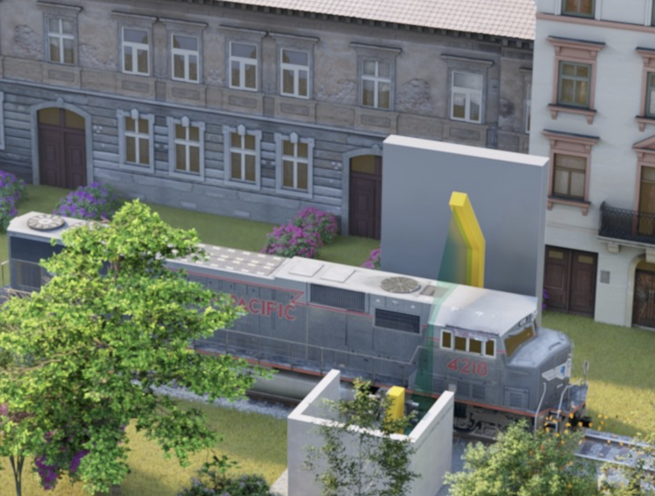
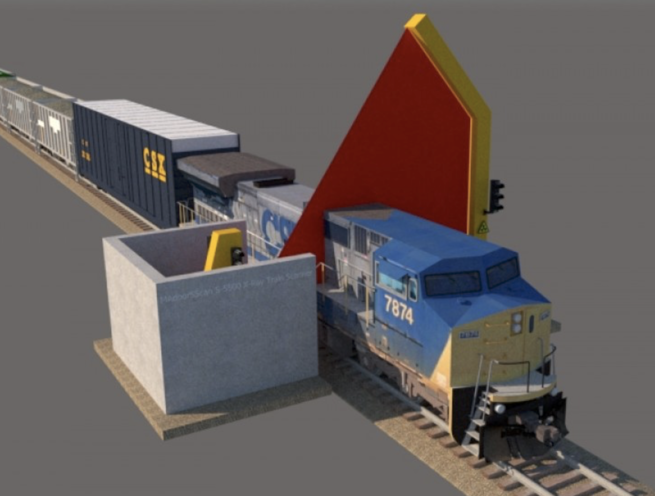
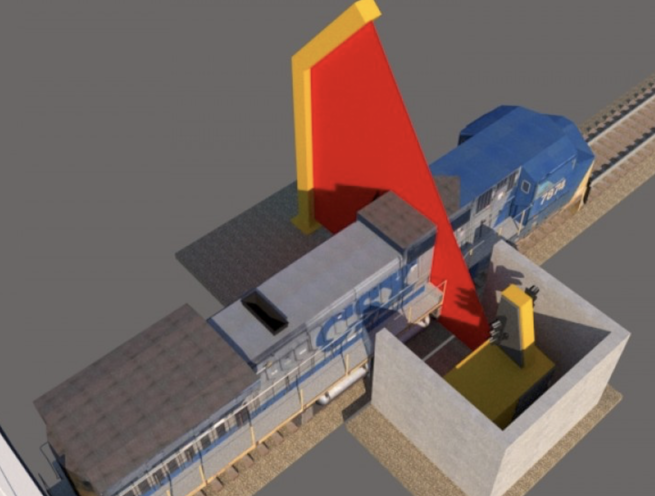
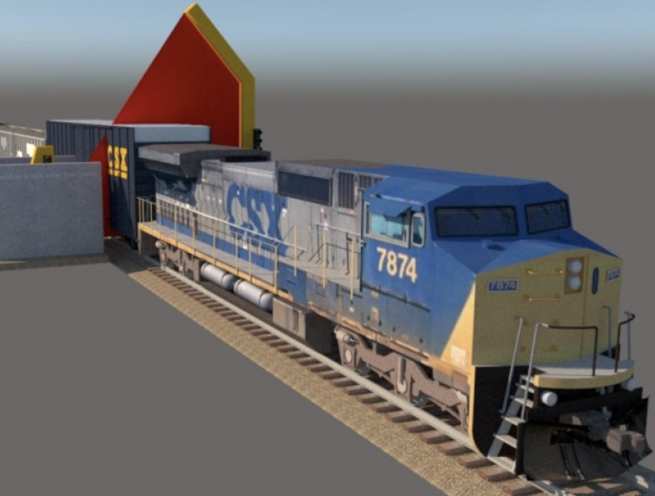
The Madoorsscan S-5500 train drive-through X-ray inspection system consists of an ionizing radiation source generating 6 MeV X-rays, a detection and data transfer system, a signal control and processing unit installed in the scanning portal, an acquisition and analysis workstation, protective rooms for system arrangement, and protective shielding providing radiation safety for all personnel in the vicinity.
The 6 MeV generator provides the X-ray energy level required for penetration of 300mm of steel — confirming imaging capability through the full wall thickness of standard ISO shipping containers, reinforced wagon bodies, and dense metallic cargo loads that would stop lower-energy inspection systems. At the optimal scanning speed of 15 km/h, the system delivers the highest image quality with maximum penetration depth. At the maximum operational speed of 30 km/h, the system maintains effective scanning capability for all standard cargo inspection requirements — allowing trains to pass through the inspection portal at low-speed operational velocity without requiring full stopping.
Throughput is 300 containers in 10 minutes at optimal scanning speed — equivalent to 30 containers per minute or 1,800 containers per hour. This exceptional throughput rate makes the S-5500 the appropriate specification for the highest-volume rail cargo inspection requirements at major international border crossings and port rail terminals where the inspection of each complete train set must be completed within the available time window without creating significant schedule disruption.
The system generates a separate X-ray image for each individual wagon — allowing the operator to review each wagon's cargo independently rather than interpreting a continuous image of the full train length. Automatic container code recognition links each wagon image to its associated customs dataset — providing instant access to the declared manifest for comparison with the X-ray image content.
No radioactive source is used — the X-rays are generated by the electrical accelerator, which can be switched off when not scanning. This non-radioactive source design eliminates the regulatory licensing, safety management, and emergency response requirements associated with permanent radioactive source-based inspection systems.
Customs EDI network integration allows the S-5500 to communicate directly with customs electronic data interchange networks — receiving declared cargo data before the train arrives and transmitting inspection results after the scan. Multiple S-5500 systems can be networked together for remote analysis, comparison, and knowledge sharing across a national or international rail inspection network.
KEY FEATURES
300 Containers in 10 Minutes — Exceptional Rail Throughput
The S-5500 throughput of 300 containers in 10 minutes at optimal scanning speed provides the highest available rail cargo inspection rate — allowing complete inspection of a standard freight train in a single 10-minute pass through the inspection portal without stopping. This throughput rate transforms rail cargo inspection from a manual, time-consuming, wagon-by-wagon operation into an automated, high-speed screening process that does not create significant delays in the rail freight schedule.
No Cargo Unloading — No Wagon Unsealing
The non-intrusive X-ray inspection eliminates the requirement to unload cargo or unseal wagons for inspection — maintaining the integrity of sealed cargo consignments, reducing inspection time from hours to minutes per train, and eliminating the handling damage and contamination risk of manual inspection. This sealed-wagon inspection capability is the primary operational advantage of X-ray train inspection over all conventional manual inspection methods at rail border crossings and customs checkpoints.
6 MeV — 300mm Steel Penetration
The 6 MeV generator provides sufficient X-ray energy to penetrate 300mm of steel at 15 km/h scanning speed — covering the full wall thickness of standard ISO containers, reinforced wagon bodies, and any metallic cargo loading configuration encountered at rail freight checkpoints. This penetration capability ensures that no cargo can be concealed behind a metallic shield within the wagon that would block the X-ray image and create an uninspected volume.
No Radioactive Source — Safe Operation & Simplified Licensing
The electrically generated X-ray source eliminates the regulatory licensing, security, and emergency response requirements associated with radioactive isotope-based inspection systems. The source can be switched off when not scanning — eliminating the continuous radiation management requirements of permanent source systems and simplifying the operational safety procedures for checkpoint staff working in the vicinity of the inspection portal.
Separate Wagon-by-Wagon Images — Ergonomic Operator Interface
The separate image delivery for each individual wagon provides the operator with a focused, manageable image for each inspection unit — rather than a continuous image of the full train length that would require the operator to manually locate wagon boundaries and correlate image positions with wagon identities. The ergonomic operator interface provides customizable image processing tools — colorization, enhancement, comparison, and zoom — for each wagon image, supporting effective interpretation and rapid threat identification across all wagon types and cargo densities.
Automatic Container Code Recognition — Instant Dataset Access
The automatic container code recognition option reads the container identification code from the X-ray image and instantly retrieves the associated customs declaration dataset — providing the operator with the declared cargo manifest for the container being reviewed at the moment the X-ray image is displayed. This instant manifest access allows the operator to compare declared and actual cargo content simultaneously without manual data lookup — directly supporting manifest verification and contraband detection efficiency.
Customs EDI Network Integration — Automated Compliance
Direct integration with Customs Electronic Data Interchange networks allows the S-5500 to receive pre-arrival cargo declarations before the train enters the inspection portal — enabling pre-screening risk assessment — and to transmit inspection results automatically after the scan to the customs management system. This automated two-way data exchange eliminates manual customs data entry at the inspection checkpoint and provides real-time inspection result integration into the national customs compliance management system.
Multi-System Network — Remote Analysis & Knowledge Sharing
Multiple S-5500 systems at different border crossings and rail terminals can be networked together — allowing remote analysis of suspicious cargo images by centralized expert analysts, comparison of cargo images across multiple inspection sites to identify serial smuggling patterns, and knowledge sharing of threat image libraries across the complete national rail inspection network. This network capability transforms individual inspection checkpoints into nodes in an integrated national rail security intelligence system.
Contraband, Weapons & Concealed Persons Detection
The S-5500 detects the full range of rail cargo security threats — explosive materials and IED components through density and shape recognition, narcotics as organic density masses, weapons and firearms as metallic objects, smuggled cigarettes and consumer goods as characteristic stacking patterns inconsistent with declared cargo, and concealed persons as organic density objects within cargo loads. The 6 MeV penetration and organic/inorganic discrimination capability ensure that concealment in dense cargo, behind metallic shields, and in structural wagon compartments does not defeat detection.
Powerful Customizable Software — Image Processing Tools
The powerful operator software provides customizable image treatments, processing options, and comparison tools for effective cargo image interpretation — supporting both real-time inspection and retrospective analysis of recorded images. Platform upgrade capability allows the software to be enhanced with new features and detection algorithms as they become available — protecting the investment in the inspection system infrastructure against obsolescence as threat profiles evolve.
SYSTEM ARCHITECTURE
Scanning Portal — The structural gateway over or beside the rail track containing the 6 MeV X-ray source, detection array, signal processing unit, and radiation shielding.
Ionizing Radiation Source — 6 MeV electrically-generated X-ray system. No radioactive source. Switchable off when not scanning.
Detection & Data Transfer System — Side-view detector array capturing the transmitted X-ray image for each wagon as it passes through the portal.
Signal Control & Processing Unit — Real-time processing of the detection signal to generate the high-resolution radioscopic image for each wagon.
Acquisition & Analysis Workstation — Operator interface for image display, processing, manifest comparison, and container code dataset access.
Protective Rooms & Radiation Shielding — Structural radiation protection for all personnel in the checkpoint area during scanning operations.
Customs EDI Network Interface — Two-way data exchange with customs management systems for pre-arrival risk assessment and post-inspection result reporting.
ASSEMBLY & INSTALLATION SEQUENCE
Site Assessment & Portal Design
Rail track position, available portal installation space, train speed at the inspection location, required throughput rate, radiation shielding design for the specific site layout, and Customs EDI network connectivity are confirmed.
Foundation & Portal Structure Installation
Portal foundation is constructed at the confirmed track position — providing the structural support for the portal gantry and radiation shielding. The portal structure is installed and structural integrity is verified.
X-Ray Source & Detection System Installation
The 6 MeV accelerator is installed within the portal structure. The side-view detector array is installed on the opposite portal wall. Source-to-detector geometry, coverage width, and penetration depth are calibrated.
Radiation Shielding & Protective Room Construction
Radiation shielding is installed around the portal and operator workstation positions to the calculated shielding requirements for the 6 MeV source at the specified scanning speed. Protective rooms for operator workstations are constructed and shielding effectiveness is verified by radiation survey.
Signal Processing & Operator Workstation Installation
Signal control and processing units are installed in the portal. Acquisition and analysis workstation with operator interface software is installed in the protective room. Separate wagon image delivery and container code recognition functions are tested.
EDI Network Integration & Multi-System Networking
Customs EDI network connection is established and two-way data exchange — pre-arrival cargo data and post-inspection results — is tested. Multi-system network connection to other S-5500 installations is configured where specified.
Speed Calibration & Throughput Testing
System performance at 15 km/h optimal speed and 30 km/h maximum speed is verified. Throughput at 300 containers per 10 minutes is confirmed with test train runs. Operator training on image interpretation, manifest comparison, and EDI system operation is completed.
Radiation Safety Certification & Handover
Radiation survey confirming safe dose rates at all operator and public access positions is completed. System certification documentation and installation records are compiled into the project handover package.
DEPLOYMENT SCENARIOS & USE CASES
Madoors USA Madoorsscan S-5500 X-Ray Train Inspection Systems are specified for any rail cargo checkpoint requiring high-throughput non-intrusive inspection.
- International rail border crossing cargo inspection portals
- Port rail terminal container and wagon X-ray scanning
- Customs checkpoint rail cargo screening installations
- Drug interdiction rail border X-ray inspection systems
- Explosives and weapons detection at rail checkpoints
- Smuggled goods and contraband detection at rail borders
- Concealed person detection in rail cargo wagons
- Military supply chain rail cargo security inspection
- Nuclear facility rail delivery vehicle inspection
- Free trade zone rail cargo customs verification
- National rail security inspection network installations
- Railway freight terminal cargo compliance verification
- Seaport rail connection cargo inspection systems
- Chemical and hazardous goods manifest verification
- Any high-volume rail cargo checkpoint requiring 300mm steel penetration inspection
- Category: X-Ray Systems