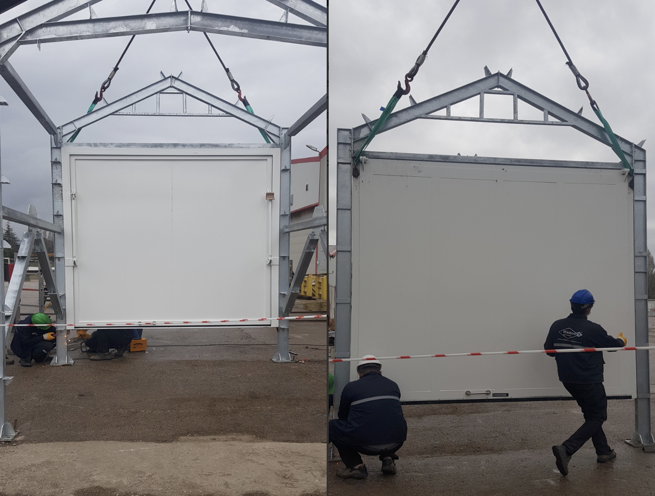
Please provide your technical specifications and project requirements for the Wind Load Resistant Door Window. Our engineers will review your application and provide a detailed manufacturing quote, including exact pricing and lead times.
Wind Load Resistant Door Window
The Madoors USA WLRD-3000 Wind Load Resistant Door System is a specialist range of wind-resistant doors engineered, tested, and certified to Class 5 wind force resistance for structures in high-wind geographic locations — including coastal areas, high-altitude facilities, tower structures, and any building where exceptional wind loading on door and window openings is the governing structural design criterion. Designed using the regional wind speed atlas specific to the installation location, calculated to TS 498 standard engineering methodology, and certified by a third-party independent testing organization with approved test reports, the Madoors USA wind-resistant door range covers five product configurations — wind load resistant shutter type spiral doors, wind resistant panel type industrial doors, wind speed resistant bi-fold and side-folding panel hangar doors, wind resistant hangar door systems, and wind power resistant PVC tarpaulin high-speed doors.
Manufactured from special profiles and panels with double-walled construction, special connection techniques, and polyurethane foam, insulation foam, or rock wool fill providing simultaneous wind resistance and thermal insulation, the WLRD-3000 range delivers high wind load resistance, energy efficiency, and operational reliability through high-technology motors and activators with wide control options — available in polyester powder paint in standard RAL colors and custom finishes to match any building facade design.
TECHNICAL SPECIFICATION & WIND LOAD ENGINEERING
The Madoors USA WLRD-3000 system is designed using wind load calculation methodology to TS 498 standard — the engineering standard governing wind load determination for building structures, doors, and windows.
Wind load is calculated using the formula W = Cf × q (kN/m²), where W is the wind load value, Cf is the aerodynamic load coefficient determined by the building geometry and wind approach route, and q is the suction speed pressure calculated as q = v² / 1600, where V is the wind speed in meters per second. This formula-based approach ensures that the wind load design value for each specific installation accounts for the actual wind speed at the installation location, the aerodynamic geometry of the building, and the angle of wind approach — producing a site-specific design wind load rather than a generic regional classification.
Wind load values for tall structures — defined as towers where building height is at least 5 times the average building width — are calculated with additional consideration of height-dependent wind speed amplification and the increased dynamic wind loading at tower-scale elevations. Table values inclined toward the wind route are multiplied by the sine of the approach angle x — Sin x — to determine the actual wind load component perpendicular to the door surface.
The inertia momentum required to resist the calculated wind load is provided by the door and window construction — with the combined inertia value of the profile sections and the reinforcement sheet exceeding the required inertia value for the specific door dimensions and calculated wind load. Profile inertia values and reinforcement sheet inertia values are calculated separately and combined — with the reinforcement sheet thickness and structural configuration selected to provide the additional inertia required beyond the profile contribution alone. This calculation-driven design approach ensures that every WLRD-3000 door is structurally adequate for the specific wind load of its installation location without either over-specification that adds unnecessary cost or under-specification that creates structural risk.
PRODUCT RANGE
Wind Load Resistant Shutter Type Spiral Doors
Spiral-configuration shutter doors with wind load resistant construction for industrial, commercial, and warehouse openings where high wind force resistance is required alongside high-cycle operational performance. Special profiles and reinforcement sheet construction provide the inertia required for Class 5 wind force resistance. Available with polyurethane or rock wool fill for simultaneous thermal insulation and wind load resistance.
Wind Resistant Panel Type Industrial Doors
Panel construction industrial doors for warehouse, factory, and large commercial facility openings in high-wind locations. Double-walled profiles with polyurethane foam or rock wool fill provide wind load resistance and thermal insulation. Special connection techniques maintain panel integrity under the cyclic wind loading of coastal and exposed industrial locations.
Wind Speed Resistant Bi-Fold, Bi-Folding & Side-Folding Panel Hangar Doors
Bi-fold and side-folding panel door systems for aircraft hangars, large industrial bays, and agricultural buildings in high-wind locations where the folding door configuration must maintain structural integrity under Class 5 wind forces. Panel reinforcement and special folding hinge connections distribute wind loads across the full folded door structure without joint failure or panel separation.
Wind Resistant Hangar Door Systems
Complete hangar door system solutions for aviation, military, and industrial hangar facilities in coastal, island, and high-altitude locations where wind loading on large-span hangar doors is the primary structural design criterion. Full engineering analysis and third-party certification for site-specific wind load — with door leaf, track, drive system, and foundation all designed to the confirmed wind load calculation.
Wind Power Resistant PVC Tarpaulin Fast Doors
High-speed PVC tarpaulin doors with enhanced wind resistance for high-cycle industrial access points in exposed locations — providing the rapid opening and closing cycle times of standard high-speed doors alongside the wind load resistance required for installation in coastal and wind-exposed industrial buildings. Reinforced fabric construction and special guide track connection maintain fabric integrity under the dynamic loading of high wind speeds during door operation.
KEY FEATURES
Class 5 Wind Force Resistance — Third-Party Certified
The WLRD-3000 product range is designed and tested to Class 5 wind force — the highest available wind resistance classification for industrial door systems — with certification by a third-party independent testing organization and approved test reports confirming the certified performance. Class 5 certification satisfies the structural specification requirements for door systems in the most exposed coastal, high-altitude, and severe climate locations where standard industrial doors would fail under the design wind loading.
TS 498 Standard Wind Load Engineering — Site-Specific Design
The TS 498 standard wind load calculation methodology — W = Cf × q, with q = v² / 1600 — provides a site-specific design wind load for every WLRD-3000 installation based on the actual wind speed at the installation location, the aerodynamic geometry of the specific building, and the wind approach direction. This site-specific engineering approach ensures that every door is designed for the actual wind load it will experience — not a generic regional classification that may over- or under-specify for the specific site conditions.
Regional Wind Speed Atlas Design Basis
Madoors USA engineers consult the wind speed atlas appropriate to the geographic location of each installation — using annual average and design maximum wind speed values for the specific region — as the primary input to the TS 498 wind load calculation. This atlas-based regional wind speed assessment ensures that the design wind speed input is based on measured historical data for the installation location rather than conservative national standard assumptions that may not reflect actual site exposure.
Double-Walled Profiles & Reinforcement Sheet — Inertia Engineering
The double-walled profile and reinforcement sheet construction provides the inertia value required to resist the design wind load — with the profile and sheet inertia values calculated individually and combined to confirm that the total door inertia exceeds the required inertia for the specific door dimensions and wind load. Reinforcement sheet thickness and structural configuration are selected from the inertia calculation — providing the precise structural adequacy required without unnecessary material addition.
Polyurethane Foam, Insulation Foam & Rock Wool Fill — Dual Function
The three available fill materials — polyurethane foam, insulation-grade foam, and rock wool — provide simultaneous wind load resistance and thermal insulation within the double-walled door construction. Polyurethane foam provides the highest thermal insulation value per unit thickness. Rock wool provides fire resistance alongside thermal insulation for applications requiring combined wind, thermal, and fire performance. Insulation foam provides a cost-effective intermediate option for standard wind and thermal performance requirements.
Special Connection Techniques — Structural Integrity Under Cyclic Loading
The special connection techniques used in WLRD-3000 construction maintain the structural integrity of profile-to-profile, panel-to-panel, and panel-to-track connections under the cyclic dynamic loading of repeated wind gusts — preventing the joint loosening, fatigue cracking, and connection failure that affect standard industrial doors in high-wind locations under years of cyclic wind loading.
High-Technology Motors & Activators — Wide Control Options
High-technology motors and activators provide reliable automated operation of wind-resistant doors under the elevated resistance forces of high wind pressure on large door panels — with motor sizing matched to the specific door weight and wind resistance force requirement of each configuration. Wide control options cover remote control, building management system integration, safety sensor interfaces, and emergency manual override — providing complete operational control for any facility management requirement.
RAL Color Polyester Powder Paint — Facade Integration
Standard RAL color polyester powder paint and custom color options allow all WLRD-3000 door configurations to be specified in colors that match or complement the surrounding building facade — integrating the wind-resistant door system into the architectural character of the building without the visual disruption of non-matching industrial door finishes.
WIND LOAD CALCULATION EXAMPLE
For a coastal industrial facility installation with a regional design wind speed of 40 m/s and an aerodynamic load coefficient Cf of 1.3 for the specific building geometry and wind approach angle:
Suction speed pressure: q = V² / 1600 = 40² / 1600 = 1,600 / 1,600 = 1.0 kN/m²
Wind load value: W = Cf × q = 1.3 × 1.0 = 1.3 kN/m²
The door and window inertia value required to resist this 1.3 kN/m² wind load at the specific door dimensions is then calculated from the structural beam formula — and the profile and reinforcement sheet combination achieving this inertia is selected for the WLRD-3000 door specification at this installation.
ASSEMBLY & INSTALLATION SEQUENCE
Site Wind Speed Assessment & TS 498 Calculation
Regional wind speed atlas data for the installation location is obtained. Building geometry — height, width, and form factor — and wind approach direction are confirmed. TS 498 wind load W = Cf × q is calculated for the specific site conditions. Required door inertia value is determined from the calculated wind load and door dimensions.
Profile & Reinforcement Sheet Selection
Profile inertia values and reinforcement sheet inertia values are calculated for the available construction options. Profile and reinforcement sheet combination achieving the required total inertia for the calculated wind load is selected. Door construction specification — double-walled profiles, fill material, and reinforcement sheet thickness — is confirmed.
Door & Frame Manufacturing
Doors and frames are manufactured to the confirmed construction specification using special profiles and connection techniques. Polyurethane foam, insulation foam, or rock wool fill is applied within the double-walled construction. Polyester powder paint in the specified RAL color is applied.
Foundation & Frame Installation
Foundation and structural fixing positions for the door frame and track system are prepared to the wind load engineering specification — with anchor embedment and concrete specification designed for the calculated wind load transfer into the building structure.
Door Leaf & Drive System Installation
Wind-resistant door leaf is installed on the track or hinge system. High-technology motor and activator are connected. Motor force output is verified for the door weight and maximum wind resistance loading.
Third-Party Certification Testing
Independent test organization conducts wind load performance testing to the Class 5 specification. Test report confirming certified wind load resistance is issued and compiled into the project documentation.
Operational Testing & Handover
Complete operational testing across all control modes, safety systems, and manual override functions is conducted. Third-party certification documentation, TS 498 wind load calculation records, and installation engineering documentation are compiled into the project handover package.
DEPLOYMENT SCENARIOS & USE CASES
Madoors USA WLRD-3000 Wind Load Resistant Door Systems are specified for any building opening in a high-wind location requiring Class 5 certified wind resistance.
- Coastal industrial facility high-wind resistant doors
- Island and offshore platform door systems
- High-altitude mountain facility wind-resistant doors
- Airport and aviation hangar coastal wind-resistant doors
- Military base coastal perimeter building doors
- Seaport and maritime terminal wind-resistant doors
- Wind energy facility maintenance building doors
- Agricultural building high-wind spiral and panel doors
- Tower structure and high-rise building wind-resistant doors
- Polar and sub-polar research facility wind-resistant doors
- Hurricane and typhoon zone industrial building doors
- Offshore oil and gas platform building doors
- Coastal hotel and hospitality facility wind-resistant doors
- Emergency services coastal facility wind-resistant doors
- Any exposed location requiring Class 5 wind force certification
- Category: Personnel Doors