Please provide your technical specifications and project requirements for the Water Disruptor Carrier Robot. Our engineers will review your application and provide a detailed manufacturing quote, including exact pricing and lead times.
Water Disruptor Carrier Robot
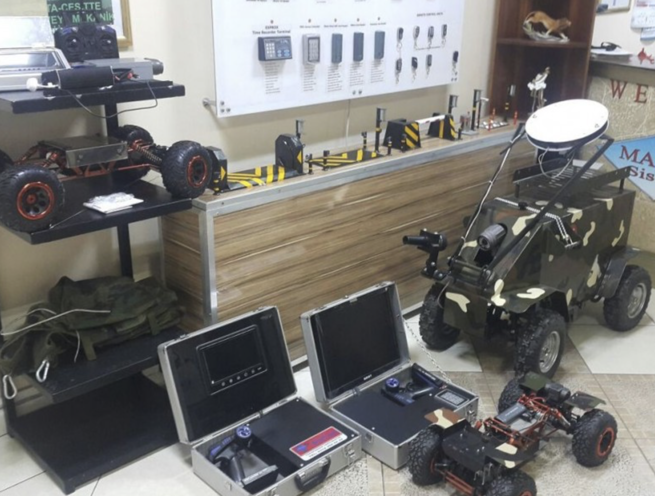
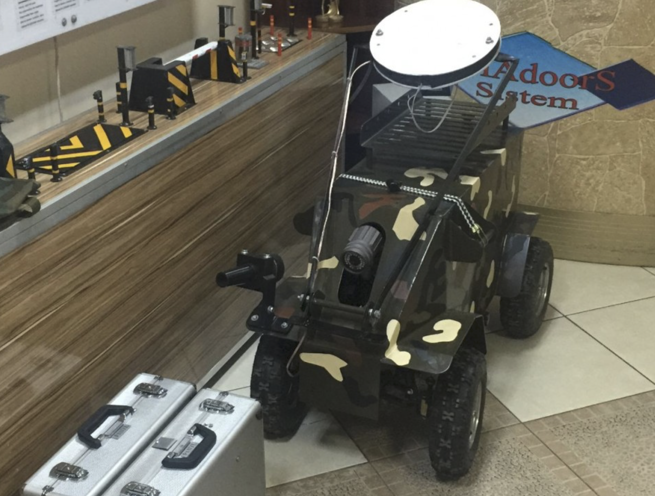
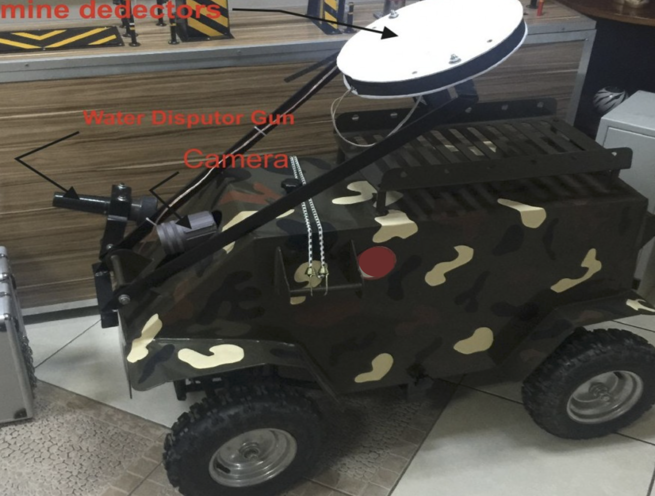
The Madoors USA Water Disruptor Carrier Robot is a battery-powered, remote-controlled, all-steel bulletproof 4-wheel bomb disposal robot that carries and deploys the Ak-er water cannon system — destroying suspicious packages and bomb assemblies by approaching under remote satellite control, aiming via the onboard camera system, and firing a water cannon projectile that separates the bomb and firing system from each other by hydraulic pressure without detonating the explosive device. Operating up to 20 km on a single battery charge with night vision IR camera, remote video and audio transmission up to 1 km via the access point system, satellite coordinate marking of detected mines, and optional front-mounted mine search apparatus detecting buried metallic mines by density — the Madoors USA Water Disruptor Robot provides the complete bomb disposal and mine detection capability required for EOD operations, counter-IED missions, suspicious package investigations, and complex urban terrain operations without exposing personnel to direct explosive hazard.
The Autonomous Mine Detection System — AMDS — configuration extends the platform with three payload modules incorporating wideband Ground Penetrating Radar for unprecedented detection, marking, and neutralization of explosive hazards at standoff in complex terrain, confined areas, and subterranean environments.
TECHNICAL SPECIFICATIONS
The Madoors USA Water Disruptor Carrier Robot is built on a 4-wheel drive platform with all-steel bulletproof casing — providing protection against weapons fire, blast fragmentation, and secondary explosions during bomb disposal operations. The battery power system provides 20 km of operational range on a single charge — sufficient for extended operational deployment at bomb disposal and EOD sites without battery replacement during a mission.
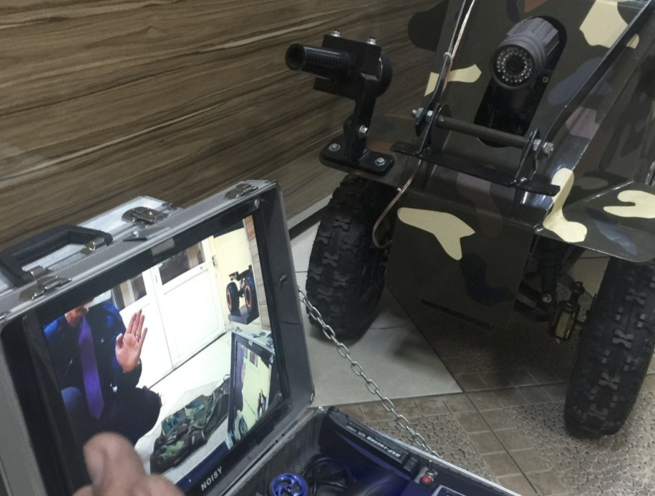
Remote control via satellite-connected system provides operational range beyond direct line-of-sight — the coordinate and control data are transmitted via satellite, allowing the operator to maintain safe standoff distance during all bomb approach, assessment, and disruption operations. Image and sound transmission via the access point system operates at ranges up to 1 km — providing clear real-time video and audio feedback to the operator throughout the full operational sequence.
The night vision camera with IR spotlight provides operational capability in all lighting conditions — including the nighttime and low-light conditions encountered at many bomb disposal call-outs where the incident may have occurred or continued into hours of darkness.
The Ak-er water cannon system fires a water projectile by remote control — the water thrown by pressure from the cannon breaks apart the bomb assembly and separates the bomb from the firing system without triggering the explosive charge. This non-explosive disruption method is the critical safety advantage of the water cannon over alternative bomb disposal methods — the bomb is rendered safe by mechanical disruption of the firing system rather than by controlled detonation that creates secondary hazards.
The front-mounted mine search apparatus detects buried metallic mines by density — providing mine detection capability during approach and transit operations. Detected mines are marked with satellite coordinates that are transmitted to personnel at the remote control point — providing the coordinate data required for subsequent mine removal or avoidance.
The AMDS three-payload-module configuration uses wideband Ground Penetrating Radar for detection and marking of metallic and low-metallic landmines, surface-laid and camouflaged explosive hazards, and buried and subterranean explosive ordnance — with a dedicated neutralization payload module for remote in-place explosive hazard neutralization.
KEY FEATURES
Ak-er Water Cannon System — Non-Explosive Bomb Disruption
The integrated Ak-er water cannon is the primary weapon of the bomb disposal robot — providing the ability to disrupt bomb assemblies and destroy suspicious packages by hydraulic pressure rather than explosive disruption. The water cannon projectile is aimed using the robot's onboard camera system under remote satellite control, fired remotely, and the high-pressure water jet breaks apart the bomb assembly by physically separating the bomb from the firing system. This mechanical separation prevents the firing system from activating the explosive charge — rendering the bomb inert without detonation. Non-explosive disruption is the safest available disposal method for complex IEDs and suspicious packages where detonation would create secondary casualty risk from fragments and blast.
Battery Powered — 20 km Single-Charge Range
The 20 km single-charge operational range provides sustained EOD mission capability without battery exchange or recharging during operations — covering the full operational area of any single bomb disposal or mine detection mission from a single charge. Battery power eliminates the fuel supply logistics of combustion-engine systems and provides quieter operation that does not create acoustic disturbance in sensitive urban EOD environments.
All-Steel Bulletproof Construction — Blast & Ballistic Protection
The all-steel bulletproof casing protects the robot systems and mechanisms from weapons fire during counter-IED and mine detection operations in active combat environments — maintaining robot operational capability through the ballistic and blast threats encountered at IED sites, mined areas, and complex urban terrain operations where the robot is exposed to direct fire risk. This construction directly protects the robot as a mission-critical asset, reducing the replacement and repair cost from ballistic damage during operational deployment.
Night Vision Camera with IR Spot — All-Light Conditions
The night vision camera with integrated IR spotlight provides full operational imaging capability in complete darkness — allowing bomb disposal and mine detection operations to continue at night and in the low-light conditions of underground, confined, and subterranean environments where ambient light is insufficient for standard camera operation. Night vision capability directly extends the operational availability of the robot to the full 24-hour operational period rather than daylight hours only.
Satellite Coordinate Marking — Remote Mine Location Transmission
The satellite coordinate marking system assigns GPS coordinates to each detected mine position and transmits the coordinates to personnel at the remote control point — providing precise mine location data for subsequent removal operations, area avoidance, and minefield documentation. Satellite coordinate transmission ensures that the mine location data is available to all relevant personnel immediately on detection rather than requiring post-mission data extraction.
Remote Satellite Control — Safe Operator Standoff Distance
The satellite-connected remote control provides operational range beyond direct line-of-sight communication limits — allowing the operator to maintain the maximum possible standoff distance from the explosive hazard while maintaining complete control of all robot functions. This standoff distance directly protects the operator from the primary hazard of EOD operations — unintended detonation during robot approach, assessment, or disruption operations.
AMDS — Wideband Ground Penetrating Radar — Three Payload Modules
The AMDS three-payload-module system provides the Army with unprecedented detection, marking, and neutralization capability for the full range of explosive hazard types in complex terrain. The Mine Detection and Marking Payload Module detects and marks surface-laid and buried metallic and low-metallic antitank and antipersonnel mines and scatterable munitions — covering all mine construction materials including the minimum-metal plastic mines that conventional metal detectors miss. The Explosive Hazards Detection and Marking Payload Module extends detection to surface-laid, partially buried, and camouflaged explosive hazards beyond standard mine types. The Neutralization Payload Module provides remote in-place neutralization of confirmed hazards — completing the detect, mark, and neutralize sequence without personnel entry.
Complex, Urban & Subterranean Terrain Capability
The AMDS is specifically designed for operation in complex and urban terrain including confined areas and subterranean environments — the terrain types where conventional vehicular mine detection equipment cannot operate and where the highest concentrations of IEDs and booby traps are encountered in modern asymmetric warfare. The man-transportable robotic system scale of the platform allows it to navigate building interiors, tunnels, culverts, and any confined space accessible to the robot dimensions.
Image & Sound Transmission — 1 km Access Point Range
The access point communication system transmits real-time video and audio up to 1 km from the robot — providing the operator with complete situational awareness of the robot's environment and the bomb or mine being assessed at operational range. Audio transmission adds the ambient sound environment to the visual information — providing additional situational data for the operator's assessment of suspicious packages and IED components that visual inspection alone cannot fully characterize.
OPERATIONAL MISSIONS
Suspicious Package Investigation
The robot approaches the suspicious package under remote satellite control — the operator views the package through the onboard camera from a safe distance, assesses the package characteristics, aims the water cannon at the identified firing system, and fires the water cannon projectile. The hydraulic disruption separates the bomb from the firing system without detonation.
IED Disruption — Counter-IED Operations
The robot approaches the confirmed or suspected IED at the road or building position under satellite control — the operator navigates using the night vision camera, assesses the IED configuration from the close-up camera image, aims and fires the water cannon to disrupt the firing system. Satellite coordinate marking records the IED position for incident documentation.
Mine Detection During Approach
The front-mounted mine search apparatus detects buried metallic mines along the robot's approach route — the audible signal alerts the operator to mine presence, and the satellite coordinate marking system records each mine position for transmission to EOD personnel.
AMDS Mine Field Survey
The AMDS wideband GPR payload module systematically surveys the mine field — detecting and marking all metallic and low-metallic mines and explosive hazards at standoff. The neutralization payload module subsequently neutralizes confirmed hazards in place. The complete detect-mark-neutralize sequence is completed before human personnel enter the cleared area.
DEPLOYMENT SCENARIOS & USE CASES
Madoors USA Water Disruptor Carrier Robots are deployed at any EOD, bomb disposal, mine detection, or counter-IED operation requiring robotic standoff capability.
- Military bomb disposal and EOD robot operations
- Counter-IED route clearance robotic operations
- Suspicious package investigation and water cannon disruption
- Military mine field detection and marking operations
- Urban IED detection and neutralization operations
- Police and security force bomb disposal robot deployment
- VIP route proving and IED clearance operations
- Military checkpoint suspicious vehicle investigation
- Building and tunnel explosive hazard detection
- Airport and port facility suspicious package response
- Critical infrastructure IED threat response
- Military forward area mine detection operations
- Subterranean and confined space explosive hazard detection
- Peacekeeping mission mine and IED clearance support
- Any EOD or bomb disposal operation requiring non-explosive robotic disruption
- Category: Bomb Disposal Robotics