Please provide your technical specifications and project requirements for the Underwater Inspection Research Robot. Our engineers will review your application and provide a detailed manufacturing quote, including exact pricing and lead times.
Underwater Inspection Research Robot
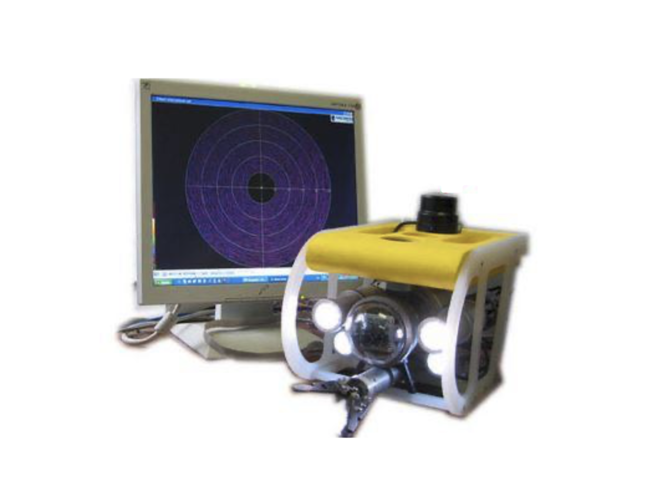
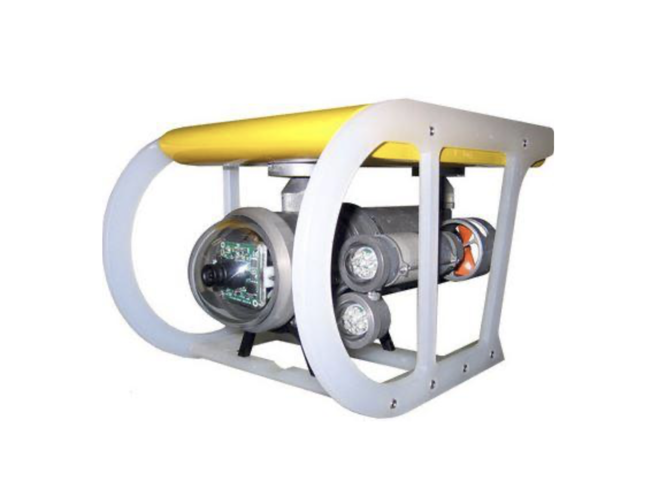
The Madoors USA UWI-500 is a self-propelled unmanned underwater inspection robot engineered to replace expensive surface vessels and manually-operated subsea inspection support for underwater visual inspection, cleaning, valve and choke operation, maintenance, and repair tasks — with a slender, flexible design enabling long-distance travel and operation in confined underwater spaces. Equipped with sonar detection of animate and inanimate foreign objects in blurred water conditions, infrared night vision cameras, wired and wireless operation, image transfer from long distances, 150-meter depth capability, high-pressure resistant stainless steel construction, and long-term charging facilities, the UWI-500 directly facilitates large reductions in subsea inspection and intervention budgets while cutting the time required for inspection, maintenance, and repair operations across existing and new underwater fields.
TECHNICAL SPECIFICATIONS
The Madoors USA UWI-500 is self-propelled — the robot navigates underwater under its own power without requiring a tether for propulsion, allowing it to travel over long distances and access confined spaces that tethered systems cannot reach. The slender, flexible form factor is the fundamental design principle enabling this confined-space capability — the slim profile allows passage through narrow underwater infrastructure gaps, pipeline interiors, and subsea structure openings that conventional ROV systems cannot navigate.
The robot operates in both wired and wireless modes — wired connection for maximum data transmission bandwidth and operational control reliability in demanding inspection conditions, and wireless for the greatest freedom of movement and access to positions where cable routing would be impractical. The wireless mode enables the long-distance image transfer capability — transmitting inspection images and sonar data from remote underwater positions to the surface operator without the cable length constraint of wired-only systems.
Sonar detection provides the primary sensing capability in blurred, turbid, and low-visibility underwater conditions where camera imaging is limited — detecting both animate objects such as marine life and human divers and inanimate objects including structures, debris, and foreign attachments to underwater infrastructure. The sonar capability extends the effective operational range of the robot beyond camera visibility distance, providing awareness of the surrounding environment in all water clarity conditions.
Infrared cameras provide night vision capability — extending the robot's operational effectiveness to low-light and no-ambient-light underwater environments including deep water, night operations, and enclosed underwater spaces where natural light does not penetrate. The infrared imaging supplements the standard visible-light camera for conditions where visible light cameras cannot provide adequate image quality.
Camera recording capability operates to 150 meters depth — the stainless steel construction and high-pressure resistant surface withstand the hydrostatic pressure at 150m depth without structural compromise or seal failure. Custom depth ratings can be produced to the desired specification for applications requiring greater operational depth.
KEY FEATURES
Replaces Expensive Surface Vessels — Major Budget Reduction
The primary operational value of the UWI-500 is the replacement of expensive surface vessel support — conventionally, underwater inspection, maintenance, and repair operations require the charter of specialized surface vessels with ROV equipment, operator teams, and support infrastructure. The self-propelled UWI-500 robot negates this requirement — a single operator deploys the robot from a small platform, pier, or even directly from the shore, conducting the inspection without the vessel charter cost that dominates conventional subsea inspection budgets. The resulting budget reduction is substantial — vessel charter costs are the single largest cost element in subsea inspection and maintenance programs.
Slender Flexible Design — Confined Space Access
The slender, flexible design enables access to the confined underwater spaces that conventional ROVs cannot enter — pipeline interiors, narrow structural gaps, equipment enclosures, and any underwater space where the robot dimensions determine whether inspection is possible. This confined-space capability directly extends the scope of inspections achievable without human diver entry — reducing the diver safety risk and the cost of diver-based confined-space inspection.
Sonar — Foreign Object Detection in Blurred Water
The sonar detection capability provides reliable object detection regardless of water clarity — turbid coastal waters, stirred sediment around inspection activities, and biologically dense water all reduce camera visibility while leaving sonar detection unaffected. Detection of both animate and inanimate objects provides the situational awareness required for safe robot navigation in busy underwater environments where marine life, other divers, or structure components must be detected and avoided during inspection operations.
150-Meter Depth — High-Pressure Stainless Steel
The 150-meter operational depth with high-pressure resistant stainless steel construction covers the depth range of the majority of coastal and offshore infrastructure inspection applications — port and harbor structures, near-shore pipeline infrastructure, shallow offshore platforms, and coastal defense underwater structures all fall within the 150-meter operational envelope. Custom depth production to the desired specification extends capability to deeper applications.
Visual Inspection, Cleaning & Valve Operation
The three primary task capabilities — visual inspection with camera recording, cleaning of marine growth and fouling, and operating valves and chokes — cover the core subsea inspection and intervention workflow. Visual inspection provides the condition assessment data required for maintenance planning. Cleaning removes the marine growth that obscures inspection surfaces and degrades the performance of subsea valves and sensors. Valve and choke operation provides the remote actuation capability required for subsea system management without diver intervention.
Infrared Night Vision — 24-Hour Operation
The infrared camera night vision capability provides continuous operational availability — inspection and monitoring operations can continue through night hours, in enclosed underwater spaces without natural light, and in deep water below the photic zone. This 24-hour capability directly increases the productive operational time available from each UWI-500 deployment.
Long-Term Charging — Extended Field Operations
The long-term charging facilities support extended field deployment — the robot's battery system provides the operational endurance required for comprehensive inspection programs covering multiple inspection points in a single deployment, and the charging system restores full operational range between deployments without returning to a shore base.
Wired & Wireless Flexibility — Operational Adaptability
The dual wired and wireless operation modes provide the flexibility to match the communication method to the specific operational requirement — wired for the highest-bandwidth video and data transmission required for detailed inspection recording, and wireless for the maximum navigation freedom required for long-distance exploration and confined space access where cable routing is not practical.
OPERATIONAL APPLICATIONS
Visual Inspection — Camera recording of underwater infrastructure condition — hull fouling, corrosion, structural damage, weld condition, and coating integrity assessment at port structures, pipelines, offshore platforms, and coastal infrastructure.
Cleaning — Removal of marine growth and biofouling from inspection surfaces, sensors, valves, and underwater equipment — restoring the clear surface required for accurate condition assessment and reliable equipment operation.
Valve & Choke Operation — Remote actuation of subsea valves and chokes in pipeline and offshore production systems — eliminating the diver intervention previously required for routine valve operation in subsea infrastructure management.
Sonar Survey — Mapping of underwater terrain, structure geometry, and foreign object presence in low-visibility conditions — providing the spatial awareness required for safe navigation and comprehensive inspection coverage in turbid water.
Foreign Object Detection — Identification of unauthorized attachments, debris accumulation, and structural anomalies on underwater infrastructure — supporting security inspection of port and harbor infrastructure against unauthorized attachment of devices to vessel hulls and underwater structures.
ASSEMBLY & DEPLOYMENT SEQUENCE
Pre-Deployment System Check
UWI-500 system functions — propulsion, camera, sonar, infrared, wireless communication, and battery charge — are confirmed operational. Wired or wireless operation mode is selected for the specific deployment.
Launch
The robot is launched from the deployment platform — pier, vessel deck, or shore entry — into the water at the inspection area.
Navigation to Inspection Position
The operator navigates the robot to the inspection start position using the sonar and camera feed from the surface control station. Infrared cameras are activated for low-visibility or enclosed space operations.
Inspection & Recording
Camera recording commences at the inspection start position. The robot progresses through the inspection route — visual inspection, sonar survey, and any cleaning or valve operation tasks are completed according to the inspection program.
Image Transfer & Real-Time Monitoring
Images and sonar data are transmitted to the surface control station via wireless or wired connection throughout the inspection. Real-time monitoring of the inspection progress provides immediate detection of any anomalies requiring extended examination.
Recovery & Charging
The robot is recovered from the water at the completion of the inspection program. The battery system is connected to the charging facilities for restoration to full operational charge for subsequent deployment.
DEPLOYMENT SCENARIOS & USE CASES
Madoors USA UWI-500 Underwater Inspection Research Robots are deployed across the full range of subsea inspection and maintenance applications.
- Port and harbor underwater structure inspection
- Ship hull inspection and fouling assessment
- Subsea pipeline visual inspection and cleaning
- Offshore platform underwater structure inspection
- Coastal defense and seawall underwater inspection
- Underwater valve and choke remote operation
- Dam and reservoir underwater structure inspection
- Bridge pier and underwater foundation inspection
- Aquaculture facility cage and mooring inspection
- Submarine cable route inspection and survey
- Offshore wind turbine foundation inspection
- Naval vessel hull and propeller inspection
- Port security underwater foreign object detection
- Hydroelectric power station intake inspection
- Any underwater inspection requiring confined-space capable self-propelled robot with sonar and infrared imaging
- Category: Bomb Disposal Robotics