Please provide your technical specifications and project requirements for the Telescopic Automatic Photocell Doors. Our engineers will review your application and provide a detailed manufacturing quote, including exact pricing and lead times.
Telescopic Automatic Photocell Doors
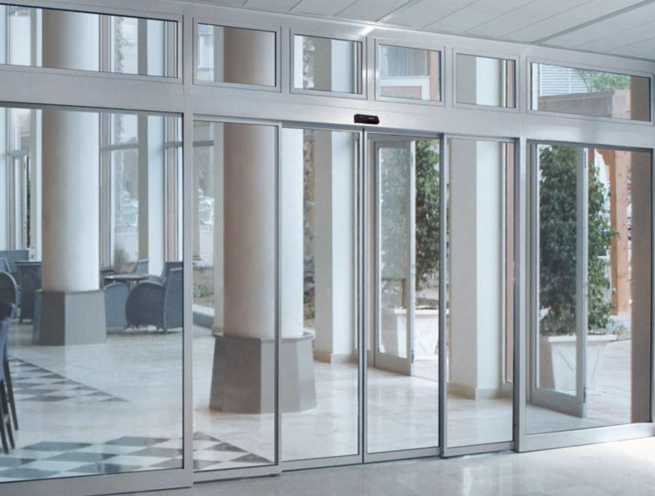
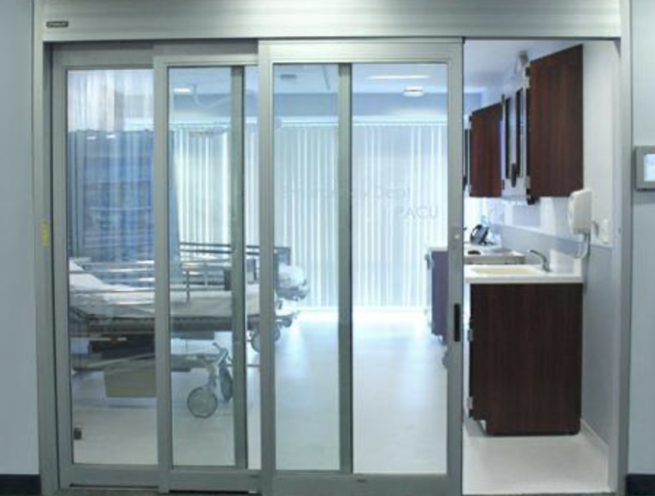
The Madoors USA Telescopic Automatic Photocell Door is a radar and photocell-activated automatic sliding glass door system specifically engineered for narrow entrances and space-constrained openings where conventional single or bi-parting sliding doors cannot provide the required passage width — with telescoping wing panels that open onto each other at relative speeds, multiplying the effective clear opening width within the same wall opening dimension. Available in 2-wing and 3-wing configurations, bi-parting and single-slide opening options, frameless glass-only wing construction for maximum aesthetic refinement, and multiple operational modes including full open, full closed and locked, 50% winter position, and single-sensor operation, the Madoors USA telescopic photocell door provides the widest possible passage in the narrowest possible wall space.
TECHNICAL SPECIFICATIONS
The Madoors USA Telescopic Automatic Photocell Door operates by driving multiple wing panels along the same overhead track at relative speeds — each wing traveling at a different speed so that the panels open onto each other in a telescoping sequence, with the outermost panel traveling at the highest speed and the innermost at the lowest. This relative speed telescoping action maximizes the clear opening width achieved within the available run-back space beside the opening, making the telescopic door the only practical automatic sliding door solution for entrances where the run-back space is too narrow for all panels to stack fully open in a single layer.
The system is available in 2-wing and 3-wing configurations. A 2-wing telescopic system provides approximately double the clear opening width of a standard single-panel slider within the same run-back space. A 3-wing system provides approximately triple the clear opening width for the same run-back space — the maximum available clear opening multiplier in a single telescopic door unit.
Opening configurations cover bi-parting — wings opening to both sides of the center simultaneously — and single-slide — all wings traveling to one side — with the option of opening on one or both sides depending on the architectural layout of the entrance. This configuration flexibility allows the telescopic door to adapt to virtually any entrance geometry where limited run-back space exists.
Wing panels are manufactured in tempered laminated safety glass with aluminum frame, or as frameless glass-only wings — providing maximum optical transparency and the most refined architectural appearance for premium commercial, institutional, and hospitality building entrances. Photocell radar sensors activate door opening on approach detection without requiring any physical contact.
Four operational modes are available through the control system. Full open — the door remains fully open for continuous high-traffic periods. Full closed and locked — the door remains closed and locked for security or after-hours operation. Inner or outer sensor cancellation — disabling one of the two sensor zones to control one-direction activation only. 50% opening in winter position — limiting door travel to half the maximum opening width to reduce heat loss during cold weather while maintaining pedestrian access.
KEY FEATURES
Telescoping Wing Action — Maximum Clear Width in Minimum Run-Back
The defining operational advantage of the telescopic door over conventional sliding and bi-parting doors is the telescoping wing action — multiple panels opening onto each other at relative speeds achieve a clear opening width two to three times greater than would be possible if the same panels were stacked in a single layer. This multiplication of effective opening width within the existing wall opening dimension makes the telescopic door the solution to passage problems that no other automatic sliding door configuration can resolve.
2-Wing & 3-Wing Configurations
Two and three-wing configurations provide different clear opening multiplication ratios within the available run-back space. The 2-wing configuration is suited to moderately space-constrained entrances requiring approximately double the single-panel opening width. The 3-wing configuration maximizes the clear opening multiplier for the most severely space-constrained entrances where three stacked panels in the open position can be accommodated in the available run-back but a full single-layer stack of equivalent total panel width cannot.
Bi-Parting & Single-Slide Opening Options
Bi-parting opening — panels traveling to both sides simultaneously — provides symmetrical opening suited to centered entrance positions with equal run-back space on both sides of the opening. Single-slide opening — all panels traveling to one side — is suited to entrances with run-back space available on one side only, or where the architectural layout requires all panels to clear to one side for functional or aesthetic reasons.
One-Side or Both-Sides Opening
The option of opening on one or both sides extends the configuration flexibility of the telescopic door system — covering bi-parting entrance layouts where both sides open simultaneously, and asymmetric layouts where only one side opens while the other remains fixed.
50% Winter Position Opening Mode
The 50% winter position operational mode limits door travel to half the maximum opening width, reducing the clear opening area and the duration of full environmental exchange between interior and exterior zones during cold weather — maintaining pedestrian access while significantly reducing heat loss through the door opening during winter months. This winter position mode directly reduces heating energy consumption at climate-controlled building entrances during cold weather operation without requiring any physical modification to the door system.
Inner & Outer Sensor Cancellation
The ability to cancel either the inner or the outer sensor zone provides directional access control — enabling one-direction automatic activation for controlled entry or exit applications where only approaching pedestrians from one direction should trigger door opening, while the opposite direction requires manual activation or remains inactive.
Full Open & Full Locked Modes
Full open mode maintains the door in the maximum open position for sustained high-traffic periods — eliminating repeated open and close cycling during peak flow and maximizing throughput at the highest-traffic entrance points. Full closed and locked mode provides after-hours security closure with positive door locking, preventing unauthorized entry when the building or facility is unoccupied.
Frameless Glass-Only Wing Option
Wing panels are available as frameless glass-only construction — without aluminum frame profiles visible on the leading edges and meeting stiles of the panels. Frameless glass wings provide the maximum possible visual transparency and the most refined architectural appearance for premium commercial and institutional entrances where conventional framed door systems would interrupt the full-width glass visual character of the building facade.
Tempered Laminated Safety Glass
Wing glazing in tempered laminated safety glass provides both the controlled fracture characteristic of tempered glass and the fragment retention characteristic of laminated construction — satisfying the safety glazing requirements applicable to automatic door systems at public building entrances across international building safety standards.
Photocell Radar Activation — Hands-Free Entry
Radar and photocell sensors detect approaching pedestrians and activate door opening without physical contact — providing hands-free, hygienic entry for the full range of public building entrance applications where zero-contact operation supports hygiene compliance, accessibility, and operational convenience simultaneously.
Adaptable to All Structural Types — Harmonious Aesthetic
The telescopic door system's adaptability to all types of building structures and entrance geometries — through the combination of 2 or 3-wing configuration, bi-parting or single-slide operation, frameless or framed glazing, and one-side or both-sides opening options — allows it to achieve a harmonious aesthetic integration with any architectural context, from contemporary glass facade commercial buildings through to traditional institutional and heritage entrance environments.
ASSEMBLY & INSTALLATION SEQUENCE
Opening Assessment & Configuration Selection
Opening width, available run-back space on each side, required clear passage width, wing count — 2 or 3 — opening direction — bi-parting or single-slide, one-side or both-sides — glazing specification — framed or frameless — and operational mode requirements are confirmed. The telescopic configuration is verified as the correct solution for the specific space constraint of the installation.
Overhead Track & Drive Unit Installation
The overhead track system accommodating multiple wing panels at staggered positions on the same track is installed at the header position. Drive unit housing and motor connections for each wing panel drive are installed. Track alignment, level, and structural fixing integrity are verified.
Wing Panel Fabrication & Glazing
Wing panels are fabricated to the confirmed dimensions with tempered laminated safety glass in the specified framed aluminum or frameless glass-only configuration. Panel surface finish and edge quality are verified before installation.
Wing Panel Hanging & Relative Speed Calibration
Wing panels are hung on the overhead track in the specified 2 or 3-wing telescoping sequence. Drive speed for each individual wing is calibrated for the correct relative speed ratio — ensuring that all panels reach their fully open positions simultaneously and all panels return to the fully closed position simultaneously at the correct relative closing speeds.
Photocell Radar Sensor Installation & Calibration
Radar and photocell sensors are installed at the specified activation positions for the confirmed sensor zone configuration. Inner sensor zone, outer sensor zone, and sensor cancellation function are calibrated and tested. 50% winter position opening travel is set and verified.
Operational Mode Programming & Testing
All four operational modes — full open, full closed and locked, sensor cancellation, and 50% winter position — are programmed into the control system and tested through multiple activation cycles for each mode. Bi-parting synchronization or single-slide sequence is verified for correct panel coordination throughout the full open and close travel.
Safety System Testing & Final Handover
Safety sensor responses — door halt on obstruction detection during closing — are tested across the full telescoping panel travel range. Final operational testing across all modes and configuration options is completed. Installation handover documentation is provided.
DEPLOYMENT SCENARIOS & USE CASES
Madoors USA Telescopic Automatic Photocell Doors are specified for any entrance where space constraints prevent conventional automatic sliding door installation but maximum clear passage width is required.
- Narrow building entrance corridors requiring maximum clear width
- Hospital and healthcare facility corridor and department entrance doors
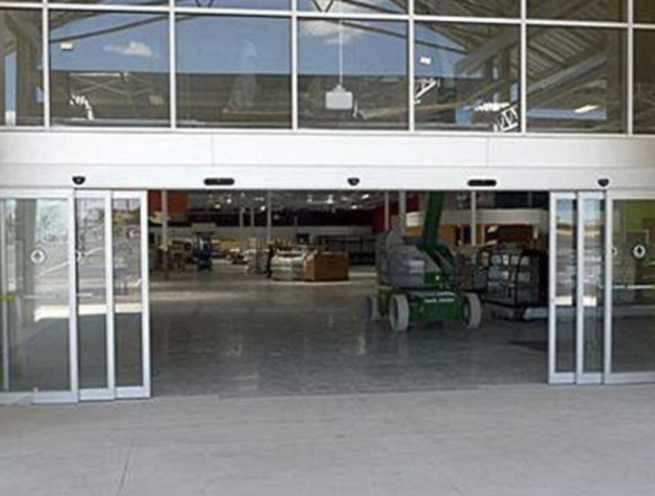
- Shopping center and retail premises space-constrained entrance systems
- Office building and corporate headquarters narrow entrance lobbies
- Hotel and hospitality facility corridor partition doors
- Airport terminal space-constrained passenger access doors
- University and educational institution building narrow entrance doors
- Supermarket and food retail space-constrained entrance systems
- Pharmacy and healthcare retail space-constrained access doors
- Museum and cultural institution narrow entrance passage doors
- Government and civic building corridor access control doors
- Bank branch and financial institution narrow entrance doors
- Sports and leisure facility corridor access doors
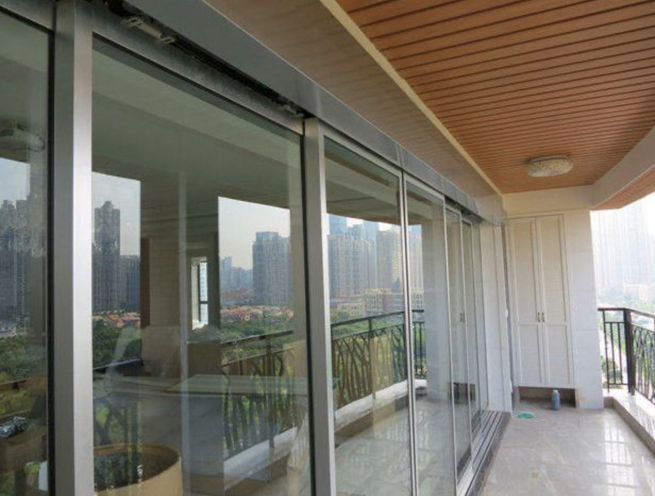
- Residential apartment building lobby space-constrained entrance doors
- Industrial facility access corridor maximum-width passage doors
- Category: Automatic Door