Please provide your technical specifications and project requirements for the Self Closing Flood Barrier. Our engineers will review your application and provide a detailed manufacturing quote, including exact pricing and lead times.
Self Closing Flood Barrier
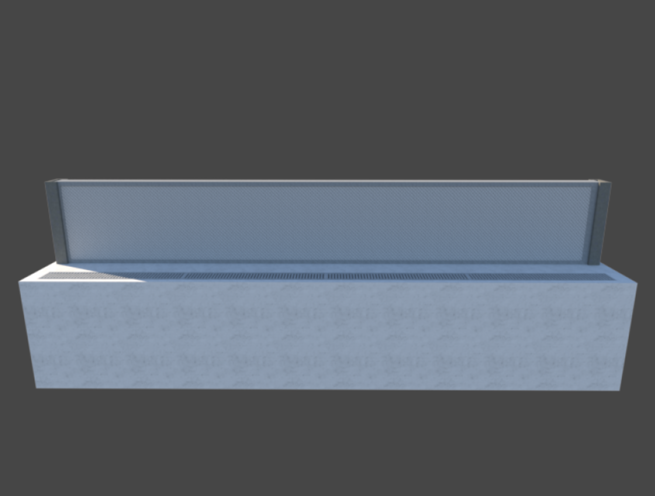
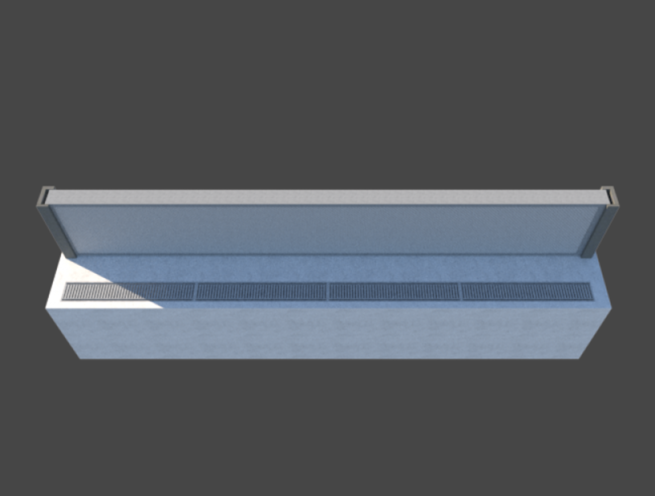
The Madoors USA Self Closing Flood Barrier is a globally proven, automatically self-rising floodgate system that has been in continuous use worldwide since 2000 — using the approaching floodwater itself to raise the barrier automatically without any electrical power, manual intervention, sensor systems, or control panels. Stored invisibly below ground in a steel or concrete trough in the vertical position, the barrier rises fully when floodwater reaches the predetermined trigger level, locks into the fully raised and watertight position through an angled support block mechanism, and returns automatically to the below-ground resting position as floodwater recedes — providing complete passive flood defense at unmanned sites, aesthetically sensitive locations where permanent visible barriers are not acceptable, and anywhere where insufficient warning time or available manpower makes manually installed barriers impractical.
Available in single units up to 10 meters in length and 2.5 meters in height, connectable in multiple sections using permanent intermediate posts for long run protection, and directionally flexible through angled guide-posts for changes in barrier alignment, the Madoors USA Self Closing Flood Barrier is configured in straight lengths from 1 meter with standard sections up to 10 meters.
TECHNICAL SPECIFICATIONS
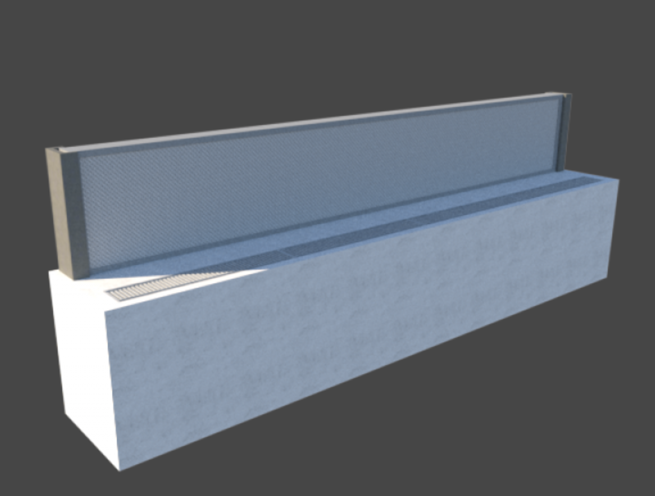
The Madoors USA Self Closing Flood Barrier consists of a rigid foam core providing the buoyancy required for self-rising operation and an aluminum outer layer providing the structural rigidity, corrosion resistance, and watertight surface required for effective flood barrier performance. The composite foam core and aluminum construction provides a lightweight barrier that floats reliably when the trough is filled with water, rises fully to the design height, and locks in the watertight position — while being durable enough for repeated activation and recovery cycles across the full service life.
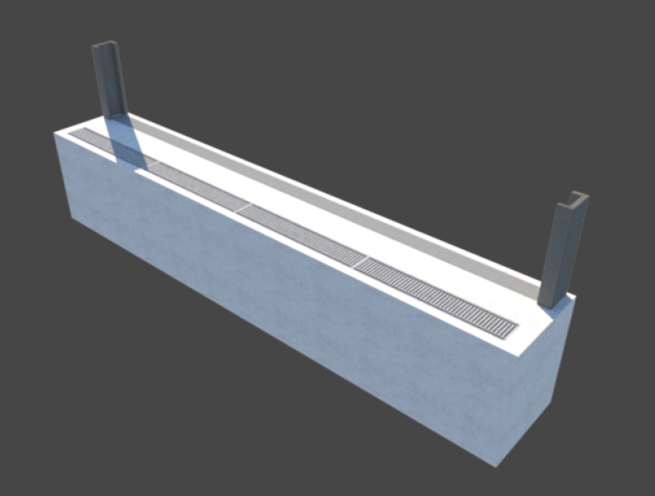
In the resting standby position, the barrier is stored below ground in a vertical orientation within a steel or concrete trough — completely invisible from the surface with no above-ground visual presence that would affect the aesthetic character of the protected location. The below-ground trough is constructed in either steel or concrete depending on the ground conditions and structural requirements of the specific installation.
The activation mechanism operates entirely through the physics of water and buoyancy — no electricity, no sensors, no motors, and no operator action are required at any stage of the raising process. When floodwater rises to the predetermined trigger level at the service pit, water spills into the service pit and flows through a connecting pipe into the below-ground trough. As the trough fills, the buoyant foam-core barrier floats and rises progressively — reaching the fully raised position when the trough is completely filled. An angled support block then locks the barrier in the fully raised position, sealing it against the guide structure and making it watertight to its full height.
As floodwater recedes, the water level in the trough drops — the barrier lowers progressively back to the below-ground resting position. The trough can also be pumped out to lower the barrier before the adjacent groundwater levels have fully receded — providing manual override capability for barrier recovery management when operational requirements demand the barrier be lowered before the natural recession process is complete.
Single barriers are available up to 10 meters in length — with multiple sections connectable through permanent intermediate posts for long run protection covering any total perimeter length. Angled guide-posts allow sections to be linked at direction changes — enabling the barrier system to follow the perimeter geometry of any protected site without limitation to straight-line configurations only. Standard sections are up to 10 meters with the minimum length of 1 meter.
KEY FEATURES
Floodwater-Powered Automatic Rising — No Electricity Required
The self-rising mechanism uses the approaching floodwater itself as the only energy source for barrier raising — the water fills the trough, the barrier floats, and the buoyancy force raises the barrier to full height automatically. This completely passive operation requires no electrical power supply, no battery backup, no sensor systems, no motor drives, and no control panels — eliminating every electrical failure mode and every electrical infrastructure dependency that affects powered automatic flood barrier systems. The barrier cannot fail to rise due to power failure, sensor malfunction, or control system fault — the only energy required is the floodwater that activates it.
Globally Proven Since 2000 — Established Reliability
The self-closing floodgate technology has been in continuous global use since 2000 — more than two decades of proven performance across flood events worldwide. This global track record provides clients with the highest available evidence base for barrier reliability — demonstrated performance in real flood events across multiple geographic locations and flood scenarios, rather than laboratory test certification alone.
Ideal for Unmanned Sites — No Personnel Required
The fully automatic, passive operation of the self-closing flood barrier makes it the definitive specification for unmanned sites where no security or maintenance personnel are present to operate or monitor a manually deployed barrier system. Holiday properties, remote infrastructure, unoccupied commercial premises, and any location where flood events may occur during periods of no occupancy are served by the self-closing barrier — the barrier activates automatically when the floodwater arrives, regardless of whether anyone is present.
Below-Ground Storage — No Visible Presence
The below-ground trough storage with the barrier in the vertical position eliminates any above-ground visual presence of the barrier during the standby non-flood period — providing invisible flood protection that does not compromise the aesthetic character of the protected environment. This invisible standby condition makes the self-closing barrier the only acceptable specification for heritage sites, conservation areas, premium commercial and hospitality properties, and any location where the visual presence of a permanent flood barrier would be aesthetically, commercially, or architecturally unacceptable.
No Warning Time Required — Independent of Flood Alert Systems
The automatic activation eliminates the dependence on flood warning systems, alert notifications, and operator response time that affects all manually deployed flood barrier systems. The self-closing barrier activates when the floodwater arrives at the trigger level — without any requirement for prior warning, alert notification, or human response. This warning independence is the critical performance advantage for flash flood and rapid-onset flood scenarios where the available warning time is shorter than the manual deployment time of any manually installed barrier system.
Angled Support Block Locking — Fully Watertight
When the trough is fully filled and the barrier reaches its maximum raised height, the angled support block locks the barrier in position — providing structural support against the hydrostatic pressure of the floodwater load on the barrier face and creating a watertight seal at the barrier edges and base. The locked, sealed condition maintains the barrier in the fully effective watertight position for the full duration of the flood event without relying on continued water pressure in the trough to maintain the raised position.
Rigid Foam Core & Aluminum Outer Layer — Composite Construction
The rigid foam core provides consistent, reliable buoyancy for self-rising operation across the full range of water temperatures and contamination conditions encountered in real flood events. The aluminum outer layer provides the structural rigidity for the 2.5-meter height in the raised position, watertight surface performance against floodwater penetration, and corrosion resistance for long-term below-ground storage in the potentially wet trough environment. The composite construction achieves the combination of buoyancy, structural performance, and durability that neither material alone could provide.
Automatic Lowering on Recession — Passive Reset
As floodwater recedes and the water level in the trough drops, the barrier automatically lowers to the below-ground resting position — the same passive physics that raised the barrier in response to rising water lowers it automatically in response to receding water. This automatic passive reset requires no operator action, no manual lowering procedure, and no pumping in normal flood recession scenarios — the barrier returns to its invisible standby position autonomously.
Pump-Out Manual Override — Pre-Recession Lowering
The trough pump-out capability allows the barrier to be manually lowered before the adjacent groundwater levels have fully receded — by pumping out the water in the trough to drop the water level below the barrier's floating threshold. This manual override capability provides operational flexibility for scenarios where the barrier must be lowered before natural recession completes — such as when the protected site needs to be accessed or inspected while floodwater is still present in the surrounding area.
Up to 10m Single Section — 2.5m Maximum Height
Single barrier sections up to 10 meters in length cover the widest standard road, driveway, and perimeter opening configurations without requiring intermediate posts within the protected opening. The 2.5-meter maximum height accommodates the highest flood levels encountered in standard urban and coastal flood scenarios. Custom heights below 2.5 meters are available for installations where the design flood level is lower.
Modular Long Run Connection — Any Perimeter Length
Multiple sections connected through permanent intermediate posts provide continuous barrier protection across any total perimeter length — from a single short section protecting a narrow building entrance through to multiple connected sections protecting an extended waterfront, urban perimeter, or infrastructure boundary. Long run connectivity ensures that the self-closing barrier can serve as a complete perimeter flood defense system rather than individual point protection only.
Directional Flexibility — Angled Guide-Posts
Angled guide-posts allow sections to be linked at changes in direction — enabling the barrier system to follow the perimeter geometry of any protected site without restriction to straight-line configurations. Directional flexibility is essential for perimeter flood protection applications where the site boundary includes corners, curves, and irregular geometry that a straight-only barrier system could not follow.
Minimal Footprint — No Steps or Ramps
The minimal above-ground footprint — only the trough cover at ground level with no above-ground structure in the standby position — and the absence of any requirement for steps or ramps at the barrier make it unobtrusive in the normal use of the protected site. No trip hazards, no accessibility barriers, and no visual obstruction are present in the non-flood period.
ACTIVATION SEQUENCE
Standby Position
The barrier is stored below ground in the vertical position within the steel or concrete trough. The ground surface above the trough appears as a normal, unobstructed paved or landscaped surface.
Floodwater Rises to Trigger Level
Rising floodwater reaches the predetermined trigger level at the service pit position. No human action is required — the activation proceeds automatically from this point.
Water Spills into Service Pit
Floodwater spills over the service pit edge and flows into the below-ground service pit.
Water Flows Through Pipe into Trough
Water from the service pit flows through the connecting pipe into the below-ground trough — filling the trough progressively from the base.
Barrier Floats and Rises
As water fills the trough, the buoyant foam-core barrier floats upward — rising progressively with the water level from the below-ground position toward the fully raised flood protection height.
Trough Fills Completely — Full Barrier Height
When the trough is completely filled, the barrier has risen to its full design height — providing the maximum flood protection level for the installed barrier specification.
Angled Support Block Locks Barrier
The angled support block engages and locks the barrier in the fully raised position — providing structural support against flood pressure loading and creating the watertight seal at the barrier edges and base.
Full Flood Protection Operational
The barrier is fully raised, locked, and watertight to its full height — providing complete passive flood protection for the full duration of the flood event without any operator action.
Floodwater Recedes — Barrier Lowers
As floodwater recedes and the trough water level drops, the barrier lowers automatically to the below-ground resting position. Alternatively, the trough is pumped out to lower the barrier before natural recession completes where operational requirements demand.
DEPLOYMENT SCENARIOS & USE CASES
Madoors USA Self Closing Flood Barriers are specified for any flood protection application where automatic, passive, power-free, and personnel-free flood defense is required.
- Unmanned heritage and historic property flood protection
- Conservation area and aesthetically sensitive site flood barriers
- Holiday and seasonal property automatic flood defense
- Urban waterfront property automatic perimeter flood protection
- Remote infrastructure flood protection without personnel
- Suburban residential property invisible flood protection
- Commercial building perimeter automatic flood barrier
- Hotel and hospitality property aesthetic flood protection
- Museum and cultural institution automatic flood barriers
- Underground car park entrance automatic flood protection
- Transportation infrastructure automatic flood defense
- Hospital and critical facility unmanned flood protection
- Power station and utility infrastructure flood barriers
- River bank and coastal frontage automatic flood defense
- Any location requiring passive automatic flood protection
- Category: Flood Defence Systems