



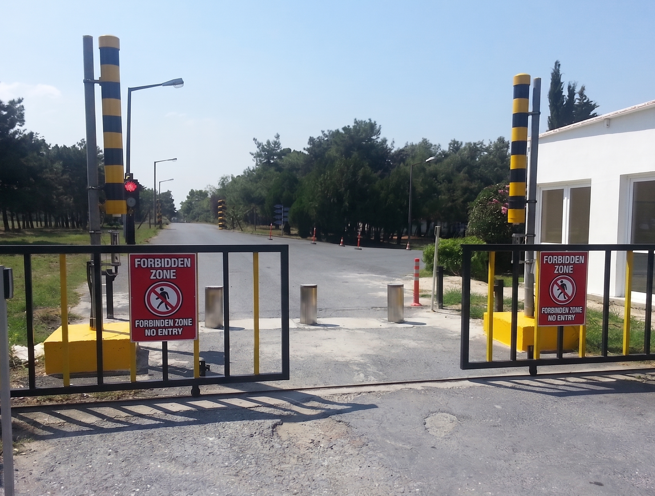
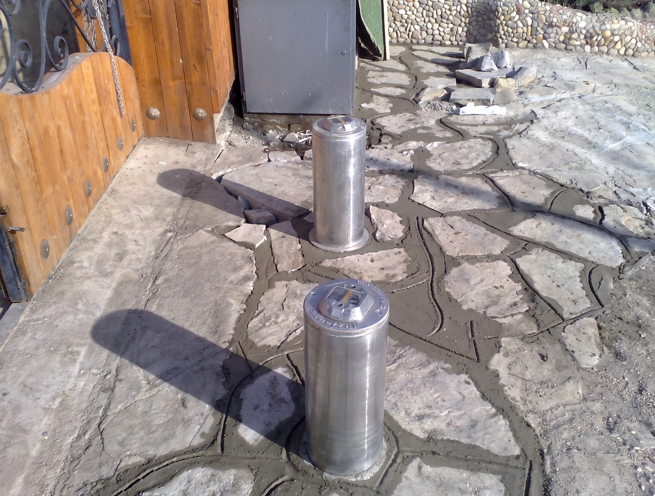
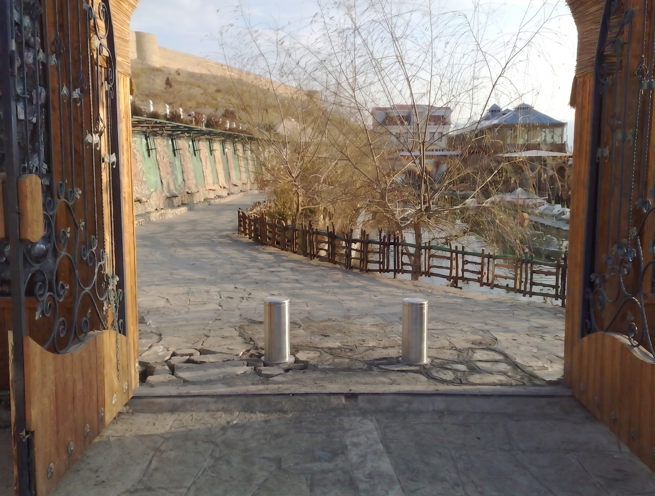
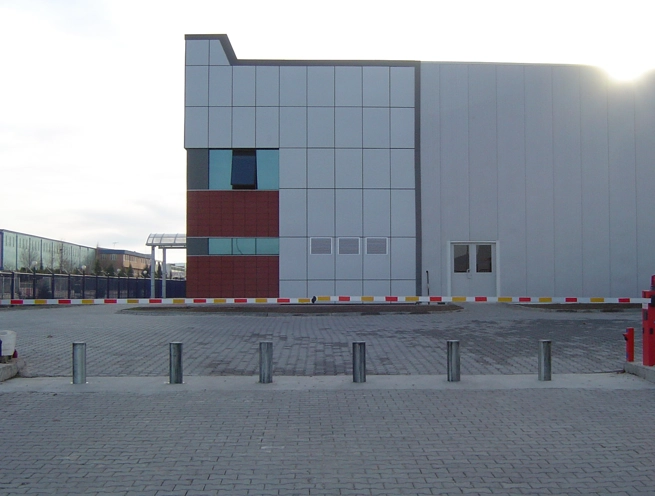
Please provide your technical specifications and project requirements for the Pneumatic Rising Bollards. Our engineers will review your application and provide a detailed manufacturing quote, including exact pricing and lead times.
Pneumatic Rising Bollards
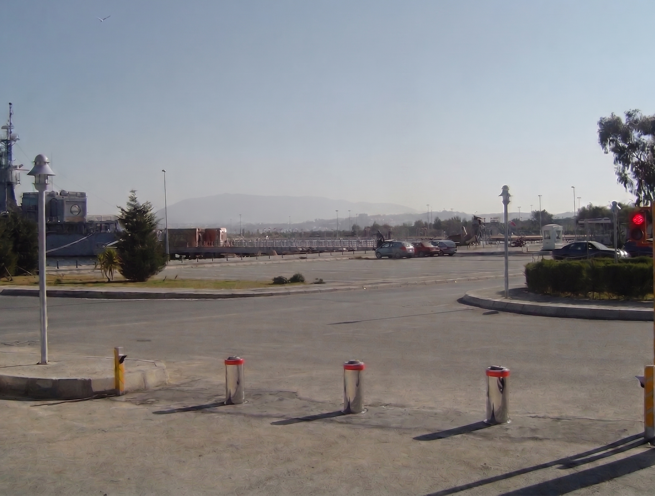
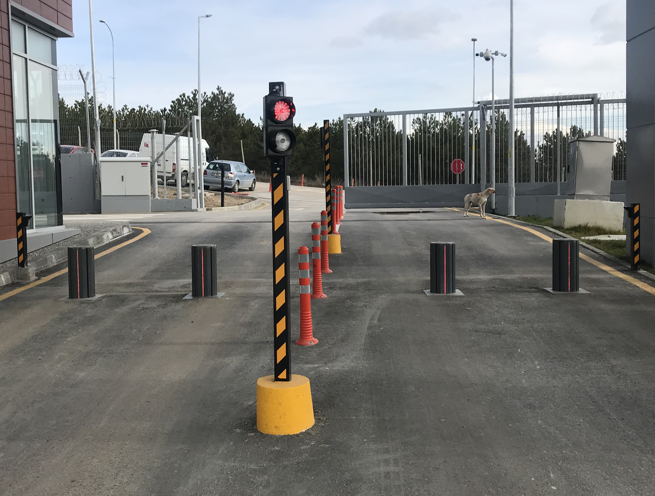
The Madoors USA Pneumatic Rising Bollard is an automatically driven pneumatic access control bollard designed for high-security vehicle entrances, military installations, industrial facilities, government buildings, commercial premises, and streets closed to vehicle traffic during specified hours — with K12 and PAS 68 certified strength, 3-second standard raise/lower time and 1.5-second emergency response capability, self-lubricating special plastic sealing and guide rings, full integration with any existing access control and security system, and a high-security and commercial variant range sharing identical underground construction and mechanical specification. Built to the highest standards, easy to maintain, and aesthetically designed to complement any installation environment, the Madoors USA Pneumatic Rising Bollard provides the simplicity, accuracy, minimal maintenance, and cost efficiency of compressed air drive for the highest-frequency automatic bollard deployment applications.
TECHNICAL SPECIFICATIONS
The Madoors USA Pneumatic Rising Bollard uses compressed air to move a piston in linear motion within the cylinder — raising and lowering the bollard column with the accuracy, simplicity, and speed required for high-traffic access control positions where bollard deployment frequency is at its highest. The pneumatic drive principle provides the advantages of mechanical simplicity — fewer components than hydraulic systems, no hydraulic fluid management — and operational accuracy for consistent raise/lower positioning at every cycle.
The standard raise/lower time is 3 seconds — providing rapid access control response for normal authorized vehicle flow. Emergency or high-threat response configuration achieves raise/lower in 1.5 seconds — enabling immediate bollard deployment in the most time-critical access denial scenarios.
Both High Security and Commercial variants use identical underground construction — the same bollard body thickness, foundation design, self-lubricating sealing and guide rings of special plastic, pneumatic piston specification, flange thicknesses and diameters, pneumatic connections, installation procedure, and drainage provision. The only difference between the variants is the above-ground raised height — High Security bollards are taller for maximum vehicle impact engagement height, and Commercial bollards are shorter for standard access control applications where the reduced height is appropriate for the traffic and threat profile.
The self-lubricating sealing and guide rings made from special plastic types provide maintenance-free bearing and sealing function throughout the operational service life — the self-lubricating property eliminates the scheduled relubrication requirement that standard bearing and seal materials impose, directly reducing the maintenance burden at high-cycle installations.
The system integrates completely with any existing access control or security components — card readers, biometric readers, loop detectors, traffic lights, remote controls, intercom systems, and building management systems all interface with the Madoors USA pneumatic bollard control system. Finite element analysis of the bollard and foundation structure can be supplied on request for engineering submission and procurement documentation.
The Madoors USA bollard range also includes hydraulic and electronic piston drive systems — hydraulic providing the highest force output at approximately 25 times greater force than pneumatic for the heaviest crash-rated applications, and electronic piston providing the highest precision control and quietest operation for premium architectural and sensitive noise environments.
KEY FEATURES
K12 & PAS 68 Standards — High Security & Commercial Variants
K12 and PAS 68 design standards for both High Security and Commercial variants confirms that the complete bollard specification — underground construction, piston, flanges, sealing, and foundation — is engineered to the crash-rated standard regardless of above-ground height variant. This identical specification confirms that the Commercial variant is not a reduced-specification product but a full-specification bollard with an above-ground height appropriate for standard commercial access control applications.
3-Second Standard — 1.5-Second Emergency Response
The 3-second standard raise/lower time provides rapid response for normal access control operation — the bollard raises and lowers quickly enough to maintain smooth vehicle flow at high-traffic entrances without creating queue build-up from slow bollard cycling. The 1.5-second emergency response capability provides the fastest available bollard deployment for active threat scenarios — the bollard reaches the fully raised impact-ready position in the minimum time available from a threat vehicle detection event.
Pneumatic Drive — Simplicity, Accuracy & Minimal Maintenance
The compressed air pneumatic drive provides three operational advantages over alternative drive systems — simplicity of the compressed air mechanism with fewer components than hydraulic systems, accuracy of the linear piston motion for consistent raise/lower positioning, and minimal maintenance requirement from the straightforward pneumatic circuit without the fluid management, filter changes, and seal replacements that hydraulic systems require. This minimal maintenance characteristic directly reduces the total ownership cost of the bollard installation at high-cycle access control positions.
Self-Lubricating Sealing & Guide Rings — Maintenance-Free Operation
The self-lubricating special plastic sealing and guide rings provide maintenance-free operation throughout the bollard service life — the self-lubricating property maintains consistent bearing and sealing performance without scheduled relubrication visits. At high-traffic installations where the bollard cycles hundreds of times per day, the elimination of lubrication maintenance directly reduces the service cost and maintenance downtime of the installation.
High-Traffic Frequency Operation — Access Control Efficiency
The pneumatic drive system is specifically identified as ideal for high-traffic areas where automatic bollard deployment and retraction frequency is highest — the simplicity and durability of the compressed air mechanism provides the reliable high-cycle operation required at busy vehicle entrances without the wear accumulation that affects more mechanically complex systems at high cycle rates.
Complete Access Control Integration
The complete integration with any existing access control or security components and systems eliminates the compatibility concern for facilities with established access control infrastructure — the Madoors USA pneumatic bollard connects to any card reader, biometric system, loop detector, traffic light, remote control, or building management platform without requiring replacement of existing components. This universal integration directly reduces the installation cost of adding pneumatic bollards to an existing access control system.
Aesthetic Design — Any Installation Environment
The aesthetic design of the Madoors USA pneumatic bollard complements the visual character of any installation environment — from premium architectural urban streetscapes and corporate entrance forecourts to functional industrial and military access points. This aesthetic quality allows the bollard to be specified for the most visually sensitive installation positions without the industrial appearance that purely functional bollard designs present.
DRIVE SYSTEM COMPARISON
Pneumatic — Compressed air linear piston. Simplicity, accuracy, minimal maintenance, lower cost. Ideal for high-frequency access control. 3-second standard, 1.5-second emergency.
Hydraulic — Incompressible fluid pump and cylinder. Highest force output — approximately 25 times greater than pneumatic. Maximum crash performance for the heaviest certified impact applications.
Electronic Piston — Electric motor driven piston. Highest precision control. Quietest operation. Premium architectural and noise-sensitive environments.
ASSEMBLY & INSTALLATION SEQUENCE
Site Assessment & Variant Selection
High Security or Commercial variant, bollard spacing for the required access lane width, pneumatic supply routing, access control integration, drainage provision, and surface construction are confirmed.
Foundation Excavation
Excavation to the confirmed foundation depth at all bollard positions. Drainage provision installation within the foundation is completed.
Foundation & Bollard Cassette Installation
Foundation construction to the specified design — concrete mix, reinforcement, and drainage — is completed. Bollard cassette is positioned and anchored.
Pneumatic Supply Connection
Compressed air supply lines are routed from the compressor to each bollard cassette. Pneumatic connections are made and system pressure is tested.
Access Control Integration
All access control devices — card readers, loop detectors, traffic lights, remote controls — are connected and programmed. Raise/lower function through all control interfaces is tested.
Cycle Testing & Commissioning
Complete raise/lower cycle testing at standard 3-second and emergency 1.5-second response times is conducted. Self-lubricating sealing and guide ring function is verified. Drainage function is confirmed.
Handover Documentation
K12 and PAS 68 design standard documentation, finite element analysis where specified, installation records, and maintenance guide are compiled into the project handover package.
DEPLOYMENT SCENARIOS & USE CASES
Madoors USA Pneumatic Rising Bollards are specified for any high-frequency vehicle access control position requiring K12/PAS 68 standard rising bollard with minimal maintenance and rapid response.
- Military base high-traffic vehicle entrance bollards
- Government building and ministry vehicle access control
- Embassy and diplomatic compound vehicle entry bollards
- Industrial facility and factory vehicle access control
- Airport terminal vehicle access pneumatic bollards
- Commercial building and office campus vehicle control
- City center streets with timed vehicle access restrictions
- Pedestrian precinct timed-closure vehicle bollards
- University and educational campus vehicle access
- Hospital and healthcare facility vehicle access bollards
- Hotel and hospitality property vehicle access control
- Shopping center and retail park vehicle access bollards
- Sports stadium and arena vehicle access control
- Corporate headquarters vehicle access pneumatic bollards
- Any high-frequency vehicle access control position requiring K12/PAS 68 standard pneumatic rising bollard
- Category: Automatic Rising Bollard