Mobile Surface Mounted Under Vehicle Inspection System
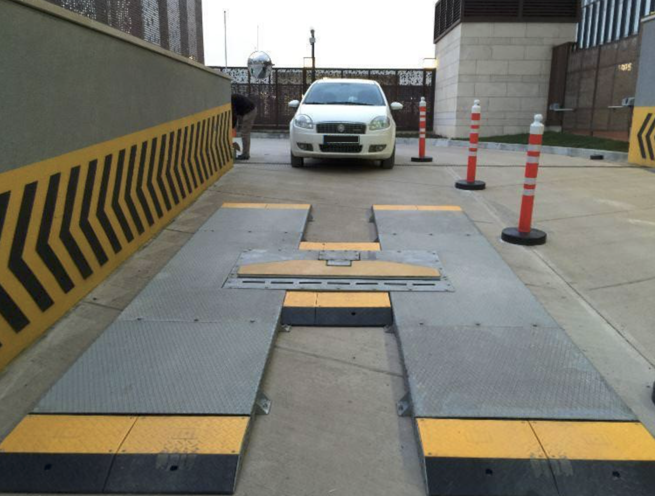
The Madoors USA Mobile Surface Mounted Under Vehicle Inspection System provides the highest resolution images of any under-vehicle scanning system — using line-scanning full color camera technology to deliver complete 100% coverage of the entire vehicle underside in real time, for any vehicle type including cars, motorbikes, articulated lorries, coaches, vehicles with trailers, and trains. Operated remotely from anywhere on site for maximum operator safety — removing the operator from danger when explosives are a suspected threat — with ANPR automatic number plate recognition maintaining a detailed vehicle database and automatically comparing every new scan against the previous scan of the same vehicle, alerting the operator to any changes on the underside.
Available in static permanent installation and mobile rapidly deployable rubber ramp configurations, integrable with any CCTV suite, command and control software, and security network, and supported by expert installation and training with remote software updates, the Madoors USA UVIS provides stand-off identification of suspicious items attached to vehicle undersides with minimal impact on vehicle flow through security control points.
TECHNICAL SPECIFICATIONS
The Madoors USA UVIS uses line-scanning full color camera technology — building the complete undercarriage image progressively line by line as the vehicle travels over the camera array. Line scanning provides uniformly high resolution across the full vehicle length — from front bumper to rear axle — at the same pixel density for every line of the image regardless of vehicle speed variation. This uniform resolution across the complete image is the technical advantage of line scanning over area-scanning alternatives, where resolution varies across the image field and vehicle speed variation causes image distortion.
Full color imaging provides the operator with the maximum available visual information for foreign object identification — color differences between vehicle components and attached objects are often more discriminating than grayscale density differences, and natural color reproduction allows the operator to apply the same visual identification skills used in physical inspection to the camera image.
100% underside coverage eliminates the center-section blind spot that affects mirror-on-a-stick inspection — where the physical geometry of a hand-held mirror prevents the inspector from obtaining a direct line of sight to the center of the vehicle undercarriage between the axles. The UVIS camera array covers the full underside width continuously — every point of the underside from side to side and front to back is captured in the scan image.
The ANPR system reads the vehicle license plate at the checkpoint entry position and retrieves the stored baseline undercarriage scan for that plate from the vehicle database — automatically comparing the current scan against the baseline and alerting the operator to any detected differences. This automatic comparison is performed for every vehicle at every scan — maintaining consistent detection performance regardless of traffic volume, operator fatigue, or shift changes.
Remote operation from anywhere on the site removes the operator from the vehicle position during scanning — the operator controls and monitors the UVIS from a remote workstation connected to the system via the site network. In explosive threat scenarios, remote operation is the critical safety provision — the operator is never at the vehicle position where a device detonation would cause injury.
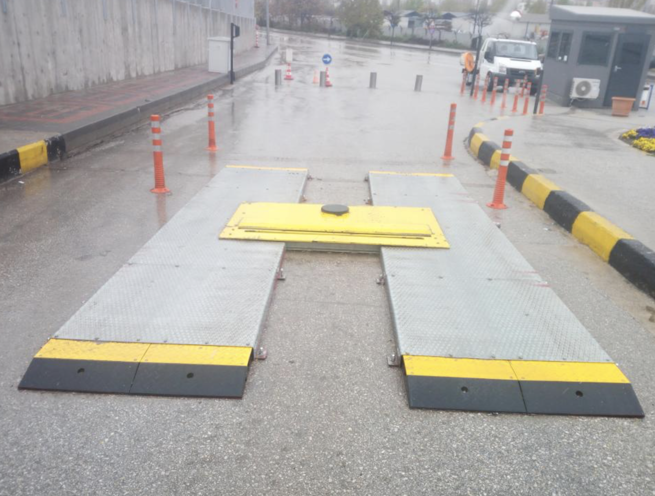
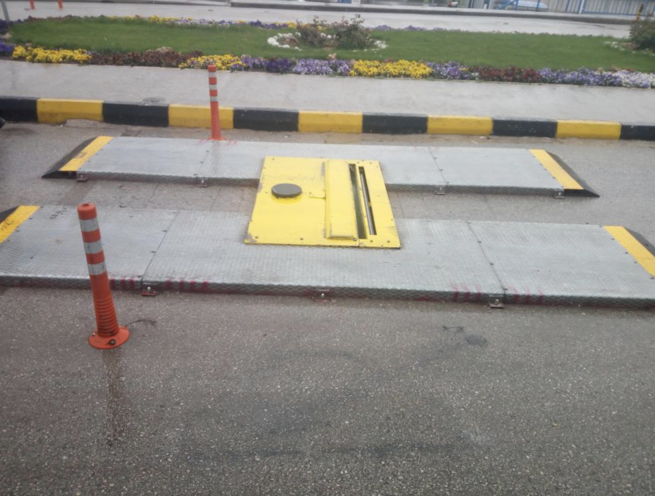
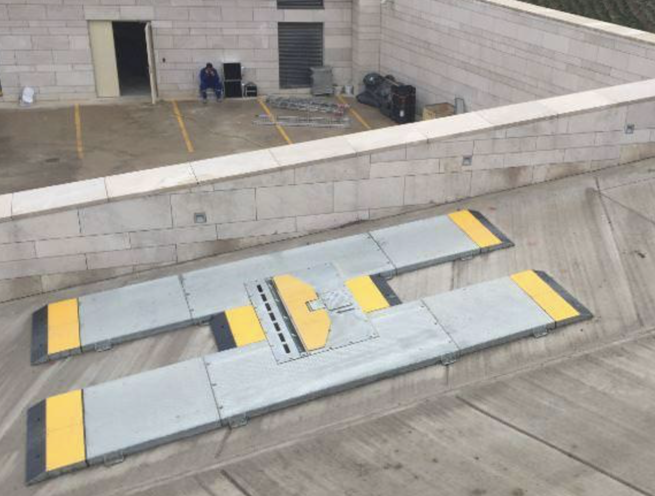
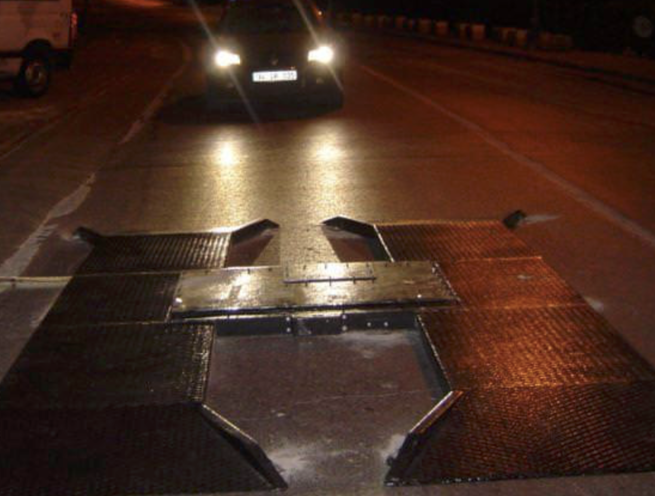
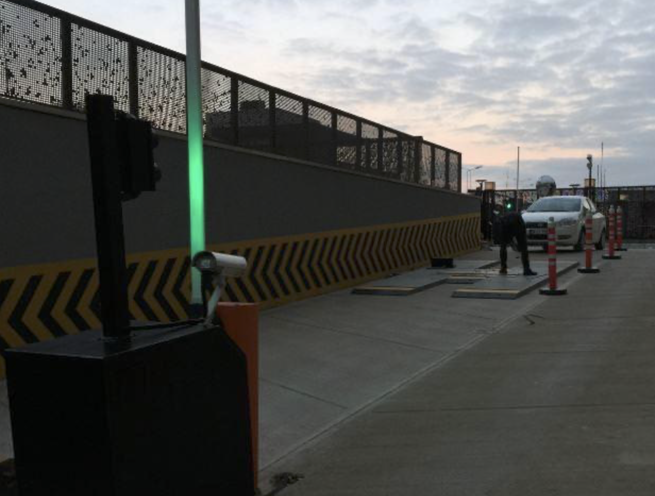
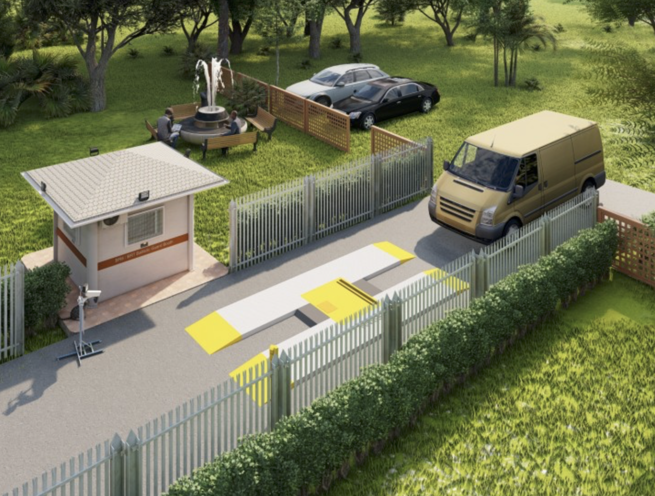
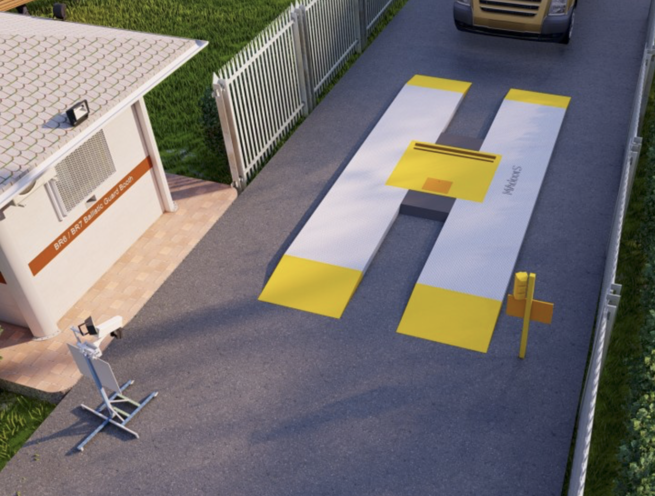
Static configuration — permanently installed on or below the road surface at a fixed checkpoint. Mobile configuration — integrated into a heavy-duty rubber ramp assembly for rapid deployment at temporary checkpoints, event security, and any location where permanent installation is not available.
UVIS software integrates with any CCTV suite, command and control system, and security network — the versatile software architecture allows adaptation to any existing security infrastructure without replacing the surrounding systems. Multi-language user interface operation supports deployment at international facilities and checkpoints with multilingual operating staff. Remote software updates ensure the latest software version is always available without on-site engineer visits.
KEY FEATURES
Highest Resolution — Line-Scanning Full Color Camera
The highest resolution of any under-vehicle scanning system — delivered through line-scanning full color camera technology — provides the operator with the best possible image quality for foreign object identification. Higher resolution directly increases the probability of detecting small, professionally constructed concealment devices that lower-resolution systems would display as indistinguishable from legitimate vehicle components. Full color imaging adds the chromatic dimension to resolution — the operator sees color differences between the vehicle structure and attached objects that grayscale systems cannot reveal.
100% Coverage — Eliminates Center-Section Blind Spot
The 100% underside coverage is the fundamental operational advantage over mirror-on-a-stick inspection that defines the value of a camera-based UVIS — every point of the underside is captured in the scan image without the center-section gap that limits manual mirror inspection. The center section of the vehicle undercarriage — between the front and rear axles, between the frame rails, above the exhaust system — is precisely the area where experienced threat device placers conceal objects, exploiting the known limitation of mirror inspection. The UVIS eliminates this exploitation opportunity.
Remote Operation — Operator Safety in Explosive Threat Scenarios
Remote operation from anywhere on the site is the critical safety provision for UVIS deployment in explosive threat environments — the operator is never physically present at the vehicle position during scanning, completely eliminating the injury risk from detonation of a device that the scanning process is intended to detect. This remote operation capability directly enables the deployment of the UVIS in the threat scenarios where it is most needed — high-security checkpoints where vehicle-borne explosive devices are the primary threat.
ANPR Vehicle Database — Automatic Baseline Comparison & Alert
The ANPR vehicle database with automatic baseline comparison and change alert is the operational intelligence system that transforms the UVIS from a manual inspection tool into an automated threat detection system — the operator receives an automatic alert to every detected change in the vehicle underside rather than having to manually identify differences between the current and previous scans. This automatic comparison capability maintains consistent detection performance at any traffic volume — the comparison is performed in milliseconds for every vehicle at every scan without operator fatigue affecting detection accuracy.
Static & Mobile Configurations — Any Deployment Scenario
The static permanent installation for fixed checkpoints and the mobile rubber ramp assembly for rapid deployment directly cover the two primary UVIS application scenarios — the permanent security checkpoint requiring maximum integration with the checkpoint infrastructure, and the temporary, event, or emergency security checkpoint requiring immediate deployment without permanent installation. Both configurations provide the same camera, software, ANPR, and remote operation capability — the deployment form factor is matched to the specific operational requirement.
Universal Vehicle Coverage — Cars to Trains
The capability to scan any vehicle type — cars, motorbikes, articulated lorries, coaches, trailers, and trains — from a single system eliminates the need for different scanning systems for different vehicle types at mixed-traffic checkpoints. Universal vehicle coverage directly simplifies checkpoint equipment management and ensures that no vehicle type passes through the checkpoint without undercarriage inspection due to equipment incompatibility.
CCTV, Command & Control & Security Network Integration
The versatile software integration with any CCTV suite, command and control software, and security network allows the UVIS to become a component of the complete site security management system — scan images, ANPR records, and change alerts are available within the unified security operations picture alongside CCTV footage, access control events, and perimeter sensor alerts. This integrated data provides the security operations center with a comprehensive vehicle access intelligence picture rather than isolated UVIS alerts.
Remote Software Updates — Always Current System
Remote software delivery of system updates ensures that the UVIS software is always the most current version without requiring on-site engineer visits — new threat recognition algorithms, image processing improvements, and system feature additions are deployed remotely to all installed systems simultaneously. This remote update capability directly maintains the detection performance and feature currency of the installed system throughout its service life.
MOBILE RUBBER RAMP DEPLOYMENT SEQUENCE
Transport to Deployment Location
The mobile UVIS rubber ramp assembly is transported to the checkpoint location — the heavy-duty rubber ramp integrates the camera system in a portable unit that can be transported in a standard vehicle.
Ramp Positioning
The rubber ramp is positioned at the vehicle scanning position perpendicular to the vehicle approach direction — the ramp profile guides the vehicle wheels over the camera array at the correct height and angle for full underside coverage.
Remote Workstation Connection
The remote operator workstation is connected to the UVIS via the site network or portable wireless connection. Camera image, ANPR, and software functions are confirmed operational.
Vehicle Database Initialization
For new deployment locations, initial baseline scans are recorded for vehicles that have previously been cleared — building the comparison database for subsequent automatic change detection.
Operational Scanning Commencement
The checkpoint is operational — vehicles approach and drive over the rubber ramp, the UVIS captures the full underside scan, the ANPR reads the plate, the baseline comparison is performed, and any detected change triggers an operator alert.
DEPLOYMENT SCENARIOS & USE CASES
Madoors USA Mobile Surface Mounted Under Vehicle Inspection Systems are specified for any vehicle security checkpoint requiring complete underside coverage with remote operator safety.
- Military installation vehicle entry underside inspection
- Government building and ministry vehicle checkpoints
- Embassy and diplomatic compound vehicle screening
- Airport terminal and perimeter vehicle inspection
- Port and maritime terminal vehicle entry inspection
- Prison and correctional facility vehicle entry inspection
- Nuclear and critical infrastructure vehicle screening
- Corporate campus and business park vehicle inspection
- Stadium and sports venue event vehicle screening
- Court complex and justice facility vehicle inspection
- Border crossing vehicle underside inspection systems
- Hotel and hospitality facility vehicle security inspection
- Shopping center and retail park vehicle entry inspection
- VIP protection event temporary vehicle checkpoints
- Any vehicle security checkpoint requiring 100% underside coverage with ANPR baseline comparison