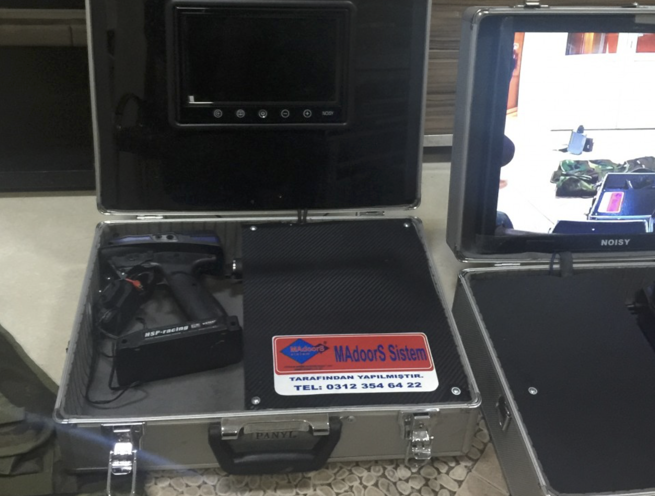
Please provide your technical specifications and project requirements for the Light Backpack Camera Robot. Our engineers will review your application and provide a detailed manufacturing quote, including exact pricing and lead times.
Light Backpack Camera Robot
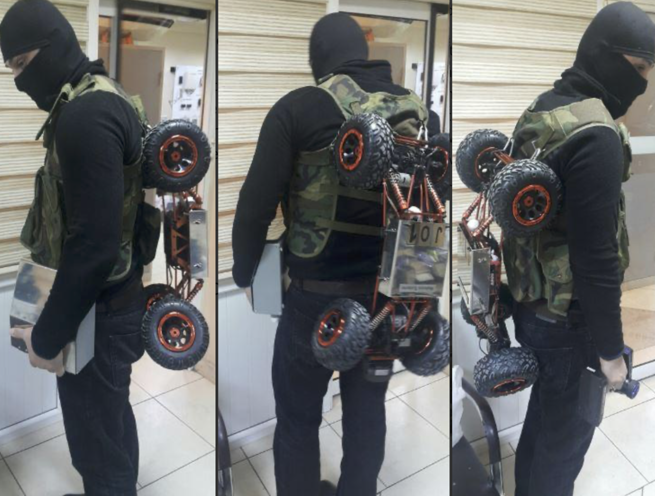
The Madoors USA Light Backpack Camera Robot is a very lightweight 4-wheel drive EOD and reconnaissance robot system designed to be carried on the back and deployed instantly in emergency situations — hand-removed from the backpack and thrown into position by the operator without risk of damage. With a gyro switch system that detects reversal and maintains constant control directions even when the robot is upside down, thermal and infrared camera compatibility, real-time audio and video transmission to a remote point, 1-hour continuous operation with spare battery included, and production in 3 different sizes and weights, the Madoors USA Backpack Camera Robot provides military and security forces with immediate, portable reconnaissance, audio surveillance, EOD support, building clearing, and confined space investigation capability in emergency situations where rapid deployment from a single operator without setup time is the critical operational requirement.
TECHNICAL SPECIFICATIONS
The Madoors USA Backpack Camera Robot is built on a 4-wheel drive platform — providing the traction and ground contact required for operation across all surface types encountered in military and security force emergency deployment scenarios — rubble, wet surfaces, loose soil, carpet, concrete, and any other indoor and outdoor surface. The 4-wheel drive provides continuous traction even when wheel contact is uneven or reduced on rough terrain.
The gyro switch orientation system is the critical navigation technology of the backpack robot — the gyroscope detects the robot's orientation in 3D space at all times, including the inverted position when the robot has been overturned. When the gyro detects that the robot is inverted, the control system automatically reverses all drive commands — the operator's forward command continues to drive the robot forward as observed from the operator's perspective regardless of whether the robot is right-side-up or upside-down. This gyro-corrected control eliminates the disorientation problem that affects robots without orientation compensation when overturned — the operator maintains consistent, intuitive control at all times.
The robot continues to advance when reversed — forward motion is maintained in the intended direction regardless of physical orientation. This operational continuity directly prevents mission failure from inadvertent overturn, which is particularly important in the confined and obstructed environments of EOD operations, building clearing, and rubble investigation where overturning is a frequent event.
The robot is designed for immediate hand deployment — the operator removes it from the backpack by hand and throws it to the investigation position without needing to place it carefully. The impact-resistant, drop-proof construction confirmed by the manufacturer ensures that this throw-deployment method does not damage the robot or its camera and transmission systems.
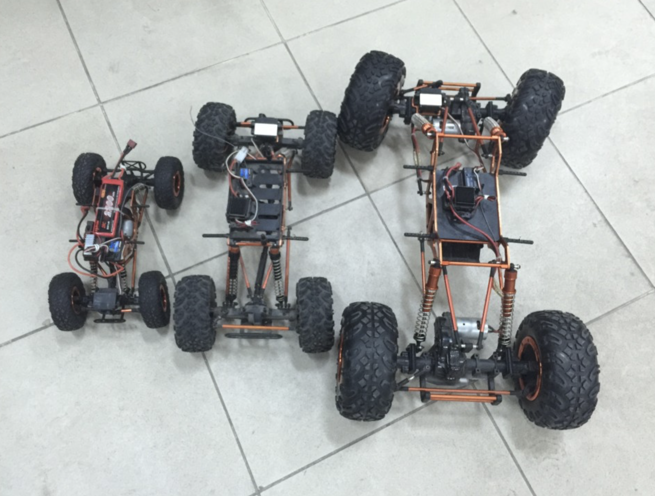
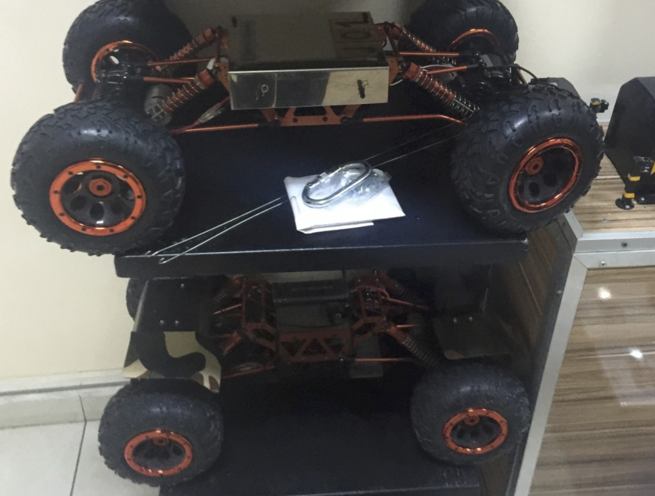
Three size and weight options cover different mission requirements — smaller, lighter versions for maximum portability and confined space access, larger versions for longer range, heavier payload, and extended operational endurance. All three sizes are backpack-portable.
Thermal camera and infrared camera compatibility extends the robot's reconnaissance capability to low-light, no-light, and smoke-obscured environments — providing thermal imaging of personnel, explosive devices, and structural features that are invisible to standard visible-light cameras in the dark and smoke conditions of emergency and EOD operations.
Audio transmission provides sound capture and relay to the remote operator — enabling listening missions where audio intelligence from inside a structure, vehicle, or confined space is required without direct personnel entry.
Battery life is 1 hour of continuous operation — sufficient for the majority of immediate emergency reconnaissance and EOD support missions. Spare battery delivery with every system allows battery exchange in the field for extended operations beyond the single charge duration.
KEY FEATURES
Backpack Portable — Hand-Throw Deployment
The backpack portable design and hand-throw deployment capability are the defining operational advantages of the Madoors USA Backpack Camera Robot over all larger robot systems — a single operator carries the robot as standard personal equipment without additional logistics, removes it by hand, and deploys it by throwing it to the investigation position. This deployment speed and simplicity — measured in seconds rather than minutes — directly supports the emergency scenarios where reconnaissance information is needed immediately without setup time.
Gyro Switch — Constant Control When Inverted
The gyro switch orientation system that maintains constant control direction when the robot is inverted is the critical operational continuity feature for throw-deployed robots that are frequently overturned in rough terrain, rubble, and confined space environments. Without gyro compensation, an overturned robot requires the operator to reverse all control inputs to maintain the intended direction — a cognitively demanding task under the stress of an emergency situation. With gyro compensation, the operator maintains the same intuitive control regardless of robot orientation, directly supporting accurate navigation to the investigation target.
Drop-Proof Impact-Resistant Construction
The confirmed drop-proof, impact-resistant construction that does not break when thrown directly enables the throw-deployment method that makes the backpack robot uniquely rapid to deploy. A robot that cannot be thrown into position requires the operator to approach close enough to place it carefully — exposing the operator to the threat environment that the robot is intended to investigate from a safe distance. Drop-proof construction directly enables the standoff deployment that keeps the operator at maximum safe distance from the threat.
Thermal & Infrared Camera — Low-Light & Smoke Operations
The thermal and infrared camera compatibility extends the reconnaissance capability to the full range of emergency lighting conditions — complete darkness in power-failed buildings, smoke-obscured interiors during fire incidents, and night operations where visible-light cameras provide no useful image. Thermal imaging specifically supports the detection of concealed personnel, body heat signatures through thin barriers, and explosive device thermal signatures in EOD operations.
Audio Transmission — Remote Listening
The audio transmission to a remote point extends the robot's intelligence gathering beyond visual reconnaissance — sounds within the investigated space, conversations, mechanical operation, and any other audio information are transmitted to the operator's remote control unit for assessment. This audio capability is particularly valuable for hostage rescue operations where audio confirmation of occupant location and condition provides critical intelligence for the tactical response.
3 Sizes & Weights — Mission-Matched Selection
The three size and weight options allow selection of the appropriate robot for the specific mission profile — the smallest, lightest version for confined space entry, ventilation duct inspection, and maximum operator portability across extended distances, the medium version for standard room clearing and EOD support, and the largest version for the greatest range, payload capacity, and operational endurance. Having all three options within the same backpack-portable design family allows a unit to deploy the most appropriate size for each specific mission requirement.
1-Hour Continuous Operation — Spare Battery Included
The 1-hour continuous operation battery and included spare battery provide the operational endurance required for the majority of emergency reconnaissance and EOD support missions — 1 hour is sufficient for systematic room-by-room building clearing, complete vehicle and package investigation, and extended audio surveillance operations. The included spare battery directly extends the maximum single-deployment operational duration to 2 hours with an in-field battery exchange, covering the most extended emergency operation scenarios.
Military & Security Force Emergency Support
The specific design for military and security force emergency situation support confirms the operational context — EOD operations, building clearing, hostage rescue reconnaissance, confined space investigation, and any emergency situation where immediate deployment of a reconnaissance robot before personnel entry reduces the risk to first responders. The robot serves as the eyes and ears of the operator in the threat environment before the decision is made to commit personnel.
OPERATIONAL MISSIONS
EOD Support — Pre-Entry Reconnaissance
The robot is thrown into the suspected IED or explosive device area — providing visual and thermal reconnaissance of the suspicious package, device, or vehicle from a safe operator standoff distance before the EOD team commits to a closer approach.
Building Clearing — Room Reconnaissance
The robot is deployed under each closed door and into each room before personnel entry — providing real-time video of the room interior, thermal detection of concealed personnel, and audio intelligence of activity within the room. The gyro control system maintains reliable navigation through the under-door deployment and room interior investigation.
Hostage Rescue — Position Intelligence
The robot provides audio and video intelligence of the room, vehicle, or structure where hostages are held — confirming the number, position, and condition of occupants and the number and position of threat actors before the tactical team makes entry.
Confined Space Investigation — Hazardous Environment Entry
The robot enters confined spaces — pipes, ventilation ducts, vehicle undercarriages, tunnels, and collapsed structure voids — that are too small or too hazardous for personnel entry, providing visual and audio reconnaissance of conditions and occupant presence.
Urban Operations — Structure Assessment
The robot is deployed ahead of advancing forces in urban terrain for assessment of building interiors, vehicles, and confined positions before personnel exposure to the interior threat environment.
DEPLOYMENT SEQUENCE
Backpack Transport
The operator carries the Backpack Camera Robot as standard personal equipment in the backpack configuration — no additional vehicle, trailer, or support equipment is required for deployment.
Camera & Transmission Activation
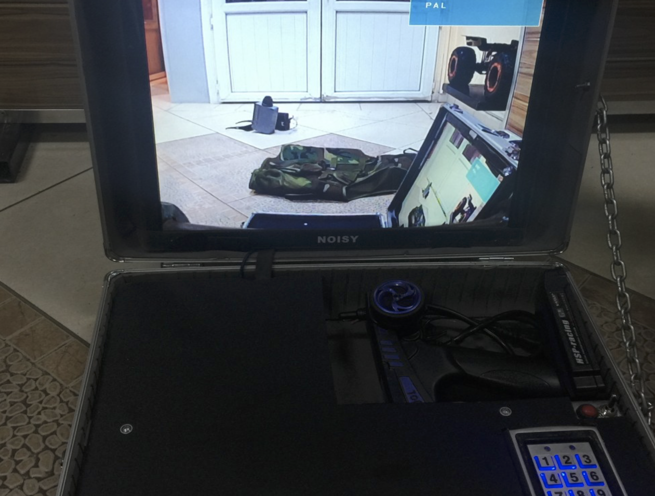
At the deployment decision point, the operator activates the camera and transmission system — confirming live video, thermal, and audio feed to the remote control unit.
Hand-Throw Deployment
The robot is removed from the backpack by hand and thrown to the investigation position — the impact-resistant construction confirms operational continuity after the throw landing.
Gyro-Compensated Navigation
The operator navigates the robot to the investigation target using the remote control — the gyro switch system maintains constant, intuitive control direction regardless of robot orientation after landing.
Reconnaissance & Audio Surveillance
Real-time video, thermal, and audio transmission provides the operator with continuous intelligence from the investigation position. The operator assesses the information and makes the tactical decision for personnel entry or continued robot investigation.
Battery Exchange if Required
Spare battery exchange is completed in the field if the initial battery charge is exhausted during an extended operation — the second hour of operation commences immediately after exchange.
DEPLOYMENT SCENARIOS & USE CASES
Madoors USA Light Backpack Camera Robots are deployed across the full range of military and security force emergency reconnaissance operations.
- EOD pre-entry suspicious package and device reconnaissance
- Military building clearing pre-entry room reconnaissance
- Hostage rescue tactical position intelligence
- Counter-terrorism confined space investigation
- Police tactical unit building entry reconnaissance
- Vehicle and cargo suspicious object investigation
- Collapsed structure void and victim location
- Military convoy suspicious vehicle investigation
- Border security tunnel and confined space reconnaissance
- Hostage negotiation room audio surveillance
- Nuclear and chemical facility confined space inspection
- Disaster response confined space victim search
- Military urban operations structure assessment
- Special forces advance reconnaissance deployment
- Any emergency scenario requiring immediate backpack-deployable reconnaissance robot
- Category: Bomb Disposal Robotics