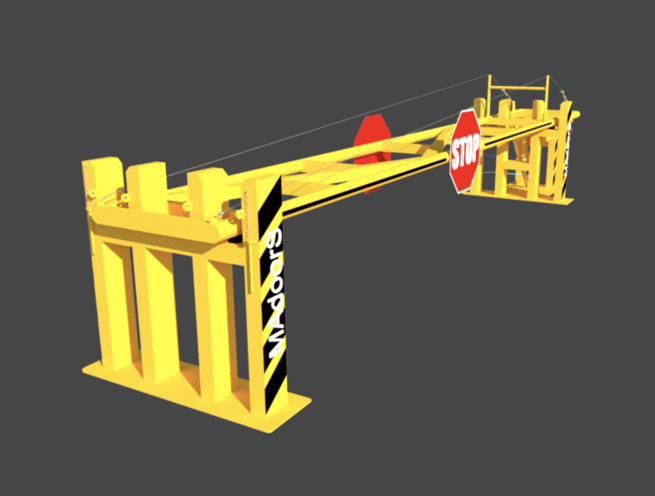
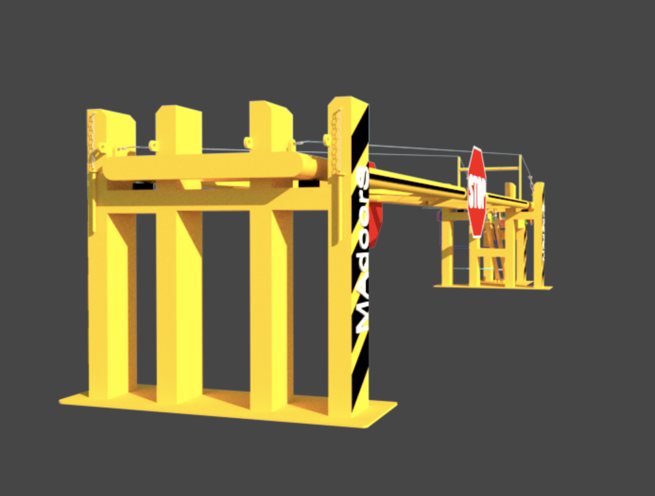
K12 M50 Crash Tested Mechanic Manual Drop Arm Barrier
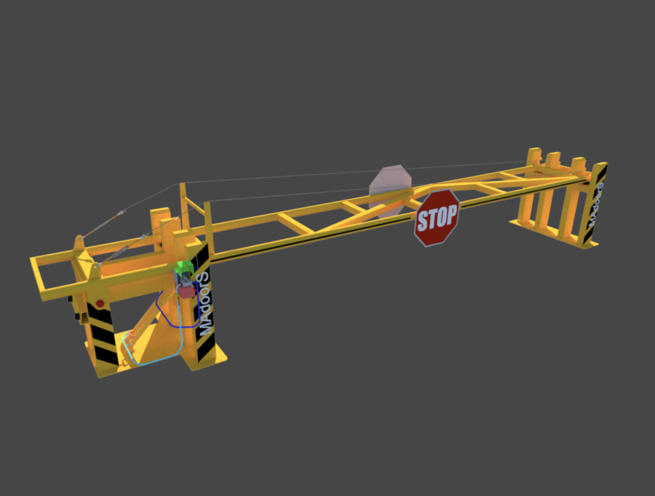
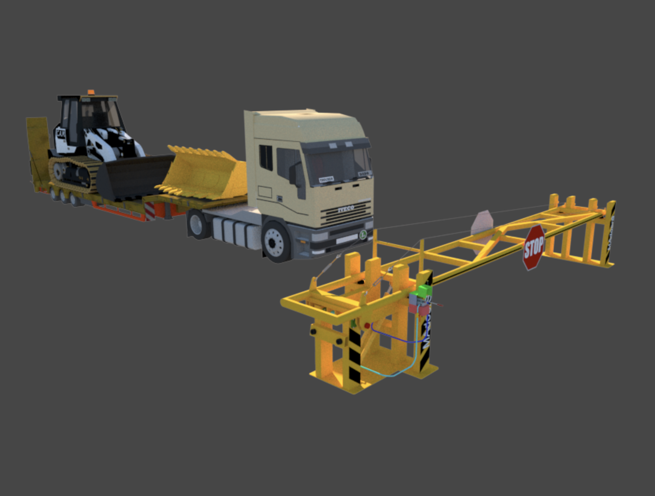
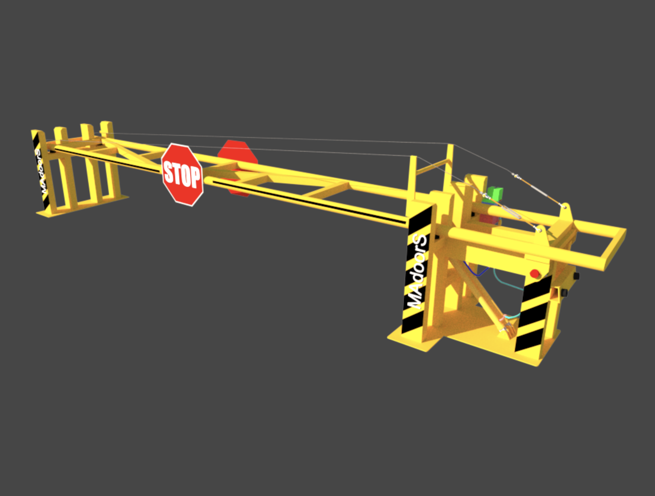
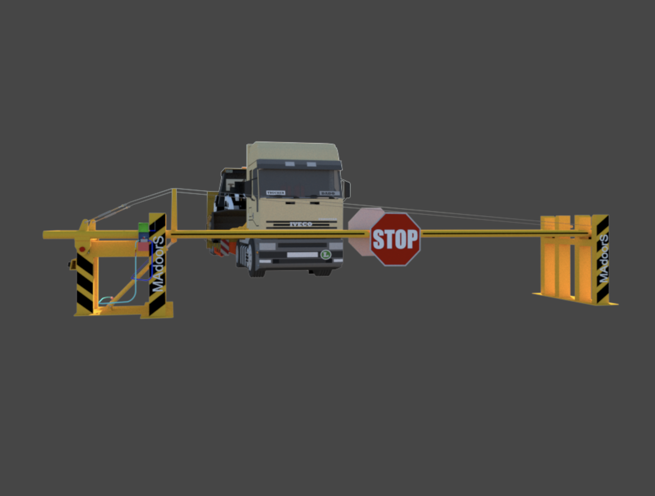
The Madoors USA CT-MCKB-2000 K12 M50 PAS68 Crash Tested Mechanical Manual Drop Arm Barrier is a high-security, independently crash-tested anti-terrorism rising arm barrier certified to K4, K8, K12, M50, and PAS 68 impact standards — capable of withstanding direct impact forces in excess of 720 kJ and providing shallow-mounted VBIED protection at entrances where no electrical power supply is available, where central roadway foundations are not practical, and where the highest certified crash protection must be achieved through purely mechanical, manpower-operated means. Independently physically tested in full-scale crash tests conducted by the Transport Research Laboratory (TRL) in accordance with PAS 68, assembled from heavy gauge materials for maximum strength and durability, and designed according to PAS 68 parameters with Finite Element Analysis validation, the CT-MCKB-2000 delivers the same certified crash protection level as hydraulically driven barriers through strong foundation and structural design rather than powered actuation.
TECHNICAL SPECIFICATIONS
The Madoors USA CT-MCKB-2000 Manual Drop Arm Barrier is certified to K4, K8, K12, M50, and PAS 68 — providing independently verified impact resistance in excess of 720 kJ through full-scale physical crash testing conducted by the Transport Research Laboratory (TRL) in accordance with PAS 68 test procedures. K12 and M50 ratings confirm stopping performance at the highest available impact classification — 50 mph for a 15,000 lb test vehicle — for a manually operated, shallow-mounted barrier system. PAS 68 certification provides the internationally recognized independent vehicle security barrier standard documentation required by government, military, and critical infrastructure security procurement authorities.
The barrier is designed according to PAS 68 parameters with Finite Element Analysis — the same rigorous computational structural analysis methodology applied to hydraulically driven crash-rated barriers — ensuring that the manual arm, pivot mechanism, and foundation achieve the certified performance through structural engineering rather than mass or powered restraint alone. Heavy gauge material assembly in Madoors USA fabrication facilities provides the maximum strength and durability required for certified K12 and M50 crash performance in a shallow-mounted configuration without deep central roadway foundations.
The CT-MCKB-2000 is operated by manpower without any electrical power requirement — making it the definitive specification for off-grid security access control points, construction sites without established power infrastructure, remote checkpoints, emergency temporary installations, and any high-security entrance where electrical power cannot be guaranteed. Vehicle traffic throughput may be slower than at powered barrier positions due to manpower-operated control, but the certified crash protection strength is equivalent to hydraulically driven barriers at the same K12 and M50 rating.
The barrier provides shallow-mounted protection — a critical installation advantage where central roadway foundations are not possible or practical, and where existing underground services, paved surfaces, or structural constraints prevent the deep excavation required by conventional crash-rated foundation designs.
KEY FEATURES
K4, K8 & K12 — M50 & PAS 68 Multi-Standard Certification
The CT-MCKB-2000 carries independent crash test certification at K4, K8, K12, M50, and PAS 68 — the complete range of hostile vehicle mitigation standards used by government, military, and critical infrastructure procurement authorities globally. Multi-standard certification across both the US K-rating system and the UK/international PAS 68 standard eliminates the need for separate crash-rated barriers for projects with different national or institutional certification requirements.
720 kJ Direct Impact Resistance — VBIED Protection
The independently verified 720 kJ direct impact resistance covers the kinetic energy of a 15,000 lb vehicle at the specified test speed — stopping the most credible VBIED attack scenarios and providing the highest available level of physical protection against vehicle-borne explosive device attacks at manual barrier access points. The 720 kJ resistance confirms that the CT-MCKB-2000 stops and immobilizes the attacking vehicle before it can penetrate the protected zone, regardless of driver intent.
TRL Independent Full-Scale Crash Testing — PAS 68 Procedure
The CT-MCKB-2000 has been independently physically tested in full-scale crash tests conducted by the Transport Research Laboratory — the internationally accredited crash test authority for PAS 68 vehicle security barrier testing. TRL-conducted PAS 68 testing provides the highest available independent test credibility for crash-rated barrier certification, confirming that the claimed performance is verified by physical testing under controlled conditions at an internationally recognized test facility.
No Electrical Power Required — Complete Off-Grid Operation
The CT-MCKB-2000 operates entirely without electrical power — controlled by manpower through the mechanical manual arm mechanism. This complete electrical independence provides certified K12 crash protection at construction sites without power infrastructure, remote military and security checkpoints, emergency temporary access control deployments, humanitarian mission perimeters, and any high-security location where electrical supply cannot be relied upon or has not yet been established.
Equivalent Crash Strength to Hydraulic Barriers
From a certified crash protection performance perspective, manual drop arm barriers achieve the same strength as hydraulically driven barriers at equivalent crash ratings — the structural design of the arm, pivot mechanism, and foundation delivers the K12 and M50 certified impact resistance regardless of whether the actuation mechanism is manual or powered. This equivalence is confirmed by TRL independent testing rather than engineering assertion — providing procurement authorities with verified confidence that the manual barrier meets the same protection standard as its hydraulic equivalent.
Shallow-Mounted — No Central Roadway Foundation Required
The shallow-mounted design eliminates the requirement for central roadway foundations — allowing certified K12 and M50 installation where underground services, paved roadway structures, or site constraints prevent deep central excavation. This shallow-mount capability brings the highest available manual crash barrier certification to sites that are otherwise unable to accommodate crash-rated barriers due to subsurface infrastructure constraints.
PAS 68 Parameters with Finite Element Analysis
Design to PAS 68 parameters with Finite Element Analysis validation provides mathematical confirmation of the structural performance under the dynamic loading conditions of a K12 crash impact event — ensuring the arm, pivot, and foundation achieve the certified protection level consistently and reliably across the full range of attack vehicle masses and speeds within the K12 envelope.
Heavy Gauge Material Assembly — Maximum Strength & Durability
Assembly from heavy gauge materials in Madoors USA fabrication facilities provides the structural mass and material strength required for K12 and M50 certified impact performance in the shallow-mount configuration. Heavy gauge specification determines the barrier's resistance to structural deformation under the 720 kJ impact energy — maintaining the barrier's position and structural integrity throughout the complete vehicle attack event.
Highly Dependable — Wide Control Equipment Interface
The CT-MCKB-2000 is a highly dependable security product that interfaces with a wide range of control equipment — extending the access management capability beyond simple push-pull arm operation to include remote control, communication systems, and guard control equipment where operational requirements demand more sophisticated access management at manual barrier positions.
Traditional Anti-Terrorism Rising Arm Configuration
The traditional rising arm barrier configuration is universally understood by vehicle operators — presenting a clear, unambiguous physical barrier across the road when raised and an unobstructed clear path when lowered. This universally recognized format requires no operator instruction or vehicle-mounted equipment to comply with, making the CT-MCKB-2000 appropriate for public road access control points where approaching vehicle operators may be unfamiliar with the specific barrier type in use.
COMPARISON WITH MDAB-6500
The CT-MCKB-2000 and MDAB-6500 are both Madoors USA manual crash-rated drop arm barriers. The CT-MCKB-2000 is certified to K4, K8, K12, M50, and PAS 68 with TRL independent testing and 720 kJ direct impact resistance — the highest available manual barrier crash certification with the most demanding independent test authority validation. The MDAB-6500 is certified to M30, K8, and K4 — providing a lower impact rating at a reduced structural specification suitable for lower-threat access control points. The CT-MCKB-2000 is the specified product for the highest-threat VBIED protection scenarios requiring K12 and M50 certification with TRL-validated PAS 68 compliance.
ASSEMBLY & INSTALLATION SEQUENCE
Site Assessment & Shallow Foundation Design
The installation position, available foundation depth without central roadway excavation, underground service positions, and access control interface requirements are confirmed. The shallow foundation design parameters are verified as providing the structural anchorage required for K12 and M50 certified impact performance. FEA documentation requirements for procurement are confirmed.
Shallow Foundation Excavation & Concrete Works
Foundation excavation is completed to the shallow depth confirmed by the FEA-validated design — without central roadway excavation. Reinforced concrete foundation is cast with anchor bolt positions set to the structural engineering specification. Foundation concrete achieves full design strength before barrier installation.
Barrier Housing & Pivot Installation
The heavy-gauge barrier housing and arm pivot mechanism are installed on the cast foundation anchor bolts and secured. Housing alignment, level, and structural connection to the shallow foundation are verified to the installation engineering specification.
Manual Arm Mechanism Installation
The manual arm mechanism is installed and connected to the pivot drive. Arm raise and lower travel range, mechanical stop positions, and manual operation effort are verified. Control equipment interface connections are made and verified.
Barrier Arm Installation & Structural Verification
The crash-rated heavy-gauge barrier arm is installed on the pivot mechanism. Arm balance, travel geometry, and structural connection at the certified K12 and M50 design specification are confirmed. Foundation-to-arm structural load path integrity is verified.
Operational Testing & Certification Handover
Manual operation through multiple complete raise and lower cycles is conducted and arm hold position under simulated lateral loading is verified. K4, K8, K12, M50, and PAS 68 crash test certification documentation, TRL independent test records, and FEA design documentation are compiled into the project handover package.
DEPLOYMENT SCENARIOS & USE CASES
Madoors USA CT-MCKB-2000 K12 M50 Crash Tested Manual Drop Arm Barriers are specified for any high-security or off-grid vehicle access control point requiring K12 certified crash protection without electrical power.
- Construction site vehicle access control requiring K12 certification
- Remote military checkpoint and forward position K12 barriers
- Emergency temporary VBIED protection access control deployment
- Off-grid border security and patrol base certified barriers
- Mining and remote industrial site K12 vehicle access control
- Disaster relief and humanitarian mission vehicle access barriers
- Sites with central roadway foundation depth restrictions
- Backup manual K12 access control at powered barrier locations
- Military installation temporary or permanent manual K12 barriers
- Embassy and diplomatic compound emergency manual barriers
- Government facility vehicle entrance without power infrastructure
- Infrastructure construction site K12 security access barriers
- Remote critical infrastructure vehicle access protection
- Any K12 certified crash protection requirement without available power
- Urban streetscape installation with underground service constraints