
Please provide your technical specifications and project requirements for the Hydraulic Road Blocker. Our engineers will review your application and provide a detailed manufacturing quote, including exact pricing and lead times.
Hydraulic Road Blocker
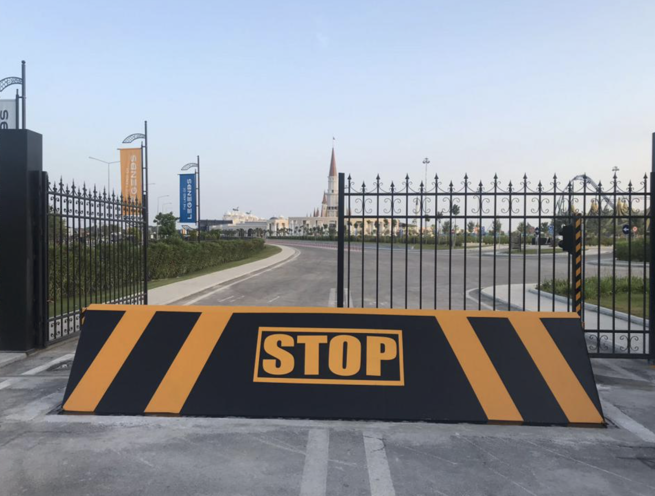
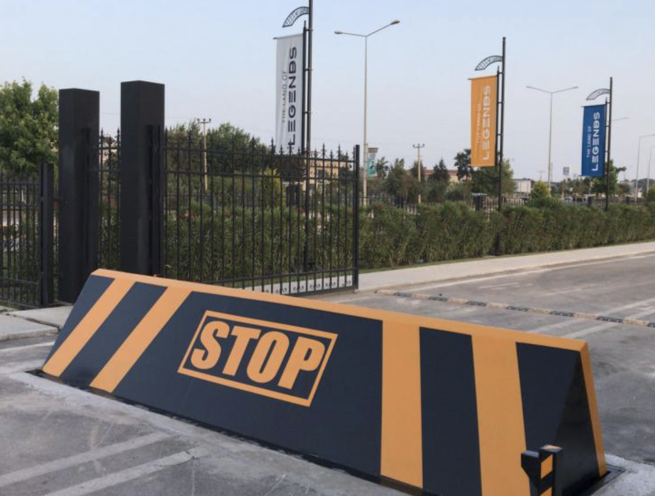
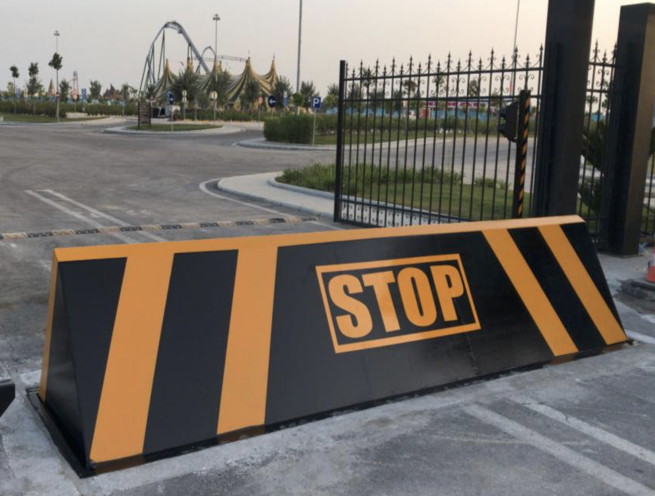
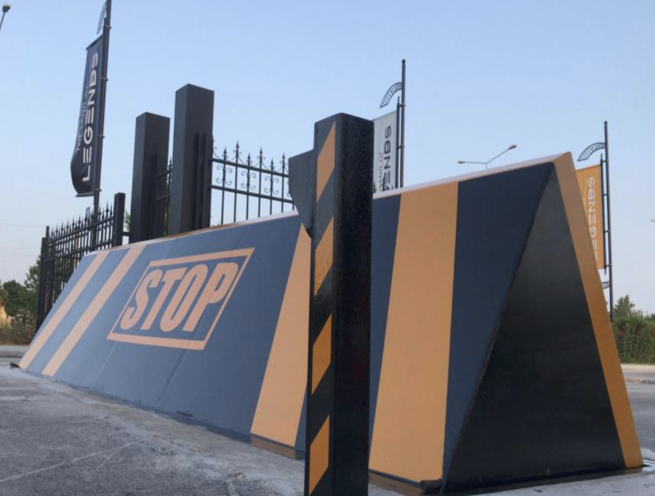
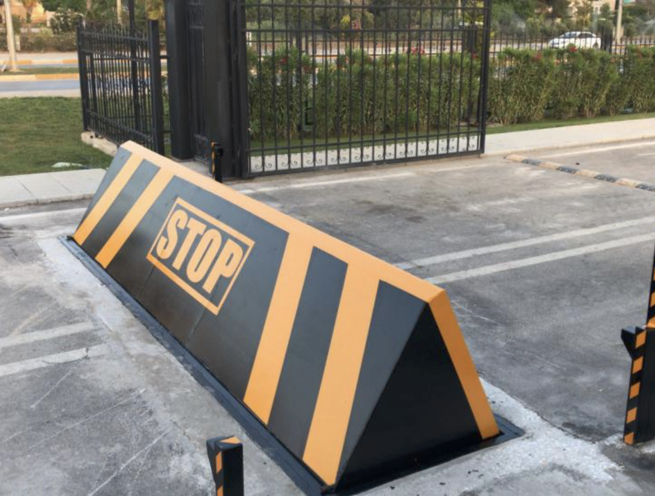
The Madoors USA Hydraulic Road Blocker is a K12-standard, crash-tested, electro-hydraulic vehicle stopping system specifically designed for entrance points with vehicle attack threats and high-security access control requirements — providing the most secure vehicle barrier solution available regardless of the tonnage or speed of the attacking vehicle. When a hostile vehicle strikes the raised road blocker, the blocker delivers damaging force to the vehicle's front end, wheels, and underside simultaneously, stopping even high-tonnage vehicles at high speeds and making forward movement impossible.
Designed by Madoors USA to K12 standards with finite element model analysis available on request, the hydraulic road blocker operates on a standard 3-second raise and lower cycle — reducible to 1.5 seconds for emergency response — with PLC control compatible with card readers, biometric readers, radio controls, and key switches, and manual hand pump operation available during power failure. At a typical weight of 2 to 2.5 tons, the road blocker provides the physical mass required for certified hostile vehicle mitigation as a standalone first-line barrier or as a second line of defense operating in combination with automatic gates, automated barriers, or bollard systems.
TECHNICAL SPECIFICATIONS
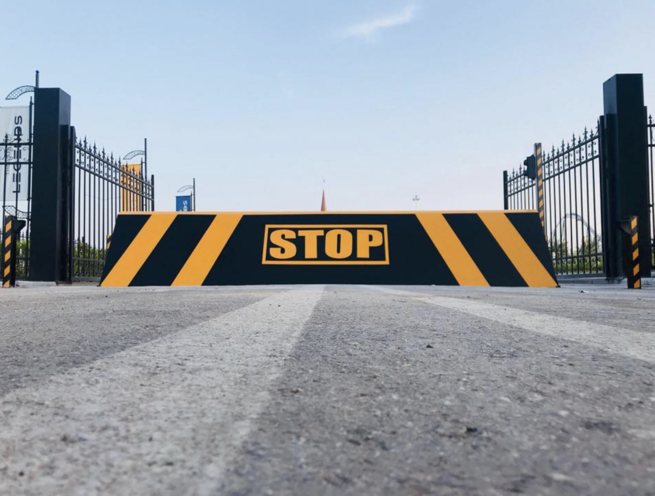
The Madoors USA Hydraulic Road Blocker is operated by a hydraulic ram with the hydraulic power unit (HPU) positioned locally within an externally rated cabinet. The blocker mechanism is fully encased in a sheet steel enclosure with access points for ducting of hydraulic hoses and control cables. The heavy-duty durbar top plate is coated with safety markings and fitted with removable access covers for efficient installation and servicing access.
The electro-hydraulic drive system provides standard 3-second raise and lower cycle times, with emergency operation capability at 1.5 seconds for critical threat response scenarios. In the event of mains power failure, the road blocker can be lowered or raised manually using the integrated hand pump — maintaining access management capability without electrical supply. Typical road blocker weight is 2 to 2.5 tons depending on the specific model and road width configuration.
PLC programmable logic control manages all raise, lower, and access control functions — integrating with card readers, biometric readers (fingerprint and hand shape), radio controls, on/off key switches, photocell safety sensors, inductive loop vehicle detectors, flashing warning lights, and red and green traffic signal lights. Push-button hold-to-run control is provided as standard with full customization for any access control system interface.
A full site risk assessment is required at design stage to ensure all relevant safety systems are incorporated. The road blocker is designed for vehicle use only — pedestrians, cyclists, and motorcycles should not use a blocker-controlled roadway. Where the control point is remote from the installation, CCTV, traffic lights, and safety loop systems are strongly recommended.
KEY FEATURES
K12 Standard — Crash Tested Performance
The Madoors USA Hydraulic Road Blocker is designed to K12 hostile vehicle mitigation standards and independently crash tested — providing verified stopping performance against the highest vehicle threat classification used in international security procurement specifications. K12 certification confirms the road blocker stops a 6,800 kg vehicle at 80 km/h, delivering irreversible vehicle damage to the front end, wheels, and underside that prevents continued forward movement regardless of driver intent.
Stops Any Vehicle — Any Tonnage or Speed
The crash-tested blocking performance of the Madoors USA road blocker is effective regardless of the tonnage or speed of the attacking vehicle — making it the most comprehensive vehicle threat solution available. Even high-tonnage trucks and heavy goods vehicles at high speeds cannot overcome the road blocker's physical stopping resistance, as the blocker's design specifically targets the mechanical vulnerabilities of any wheeled vehicle — front end, wheel assemblies, and underside — that make continued movement impossible after impact.
2 to 2.5 Ton Blocker Mass
The typical 2 to 2.5 ton road blocker mass provides the physical inertial resistance required to stop attacking vehicles without deflection or displacement — ensuring that the blocker remains in position under vehicle impact and delivers its full stopping capability against the most aggressive hostile vehicle attack scenarios.
3-Second Standard — 1.5-Second Emergency Response
The standard 3-second raise and lower cycle provides fast, responsive access control operation for normal high-traffic security entrance management. The 1.5-second emergency response capability allows the road blocker to be raised at maximum speed in response to an imminent threat — providing the fastest possible physical barrier deployment between the control command and the vehicle threat arrival at the blocker position.
Electro-Hydraulic Drive — Manual Hand Pump Backup
The electro-hydraulic drive delivers consistent, high-force blocker actuation with reliability across the full range of outdoor temperature and contamination conditions. The integrated hand pump provides manual raise and lower capability during mains power failure — ensuring that the road blocker can be managed safely regardless of electrical supply status and cannot become an unintended obstruction to authorized emergency vehicles during a power outage.
PLC Control — Universal Access Control Integration
The PLC programmable logic control system integrates with the complete range of access control devices — card readers, biometric fingerprint and hand shape readers, radio remote controls, and on/off key switches. This universal integration capability allows the road blocker to be incorporated into any existing or new site security management infrastructure without compatibility constraints.
Hydraulic Power Unit in Externally Rated Cabinet
The HPU is housed in an externally rated cabinet positioned locally to the road blocker — providing weatherproof protection for all hydraulic components in the outdoor installation environment and maintaining convenient access for maintenance and servicing without requiring entry into the road surface or traffic area.
Heavy-Duty Durbar Top Plate — Safety Markings & Access Covers
The heavy-duty durbar top plate provides the non-slip surface required for safe vehicle tire contact during both normal pass-over operation and blocker-up stopping events. Safety markings on the plate surface alert vehicle operators to the blocker presence. Removable access covers provide servicing access to the mechanism without requiring road surface excavation.
Sheet Steel Enclosure — Full Mechanism Protection
The sheet steel enclosure surrounding the blocker mechanism provides protection against debris, vehicle fluids, and ground contamination entering the mechanism during normal vehicle traffic pass-over operations — maintaining reliable hydraulic and mechanical performance across the full service life of the installation without the contamination-related component failures that affect unenclosed mechanism designs.
Second Line of Defense — Integrates with Gates, Barriers & Bollards
The Madoors USA road blocker is specifically designed to operate as a second line of defense in combination with automatic gates, automated barriers, and bollard systems — providing a physical vehicle stopping capability behind the primary access control system for scenarios where the primary system is compromised, bypassed, or overwhelmed by a determined vehicle-borne attack. The road blocker stops the vehicle where the gate or barrier may only delay it.
Safety System Integration — Photocells, Loop Detectors & Traffic Lights
All standard vehicle access control safety systems — photocell obstruction detection, inductive loop vehicle detectors, flashing warning lights, and red/green traffic signal lights — integrate directly into the PLC control system. CCTV system compatibility is standard, with CCTV installation strongly recommended for remote control point configurations.
Finite Element Model Analysis — Available on Request
Finite element model analysis documentation is available on request for engineering compliance, procurement specification, and facility safety case submission purposes — providing the structural performance verification documentation required by government, military, and critical infrastructure security procurement authorities.
ASSEMBLY & INSTALLATION SEQUENCE
Site Risk Assessment & Engineering Design
A full site risk assessment is conducted to identify vehicle threat scenarios, required K12 performance parameters, safety system requirements, and access control integration needs. The road blocker position, HPU cabinet location, control point position, and CCTV and traffic light placement are determined. Finite element analysis is commissioned where required for procurement documentation.
Excavation & Foundation Works
Excavation is completed at the road blocker pit position to the specified depth and plan dimensions. Drainage provisions are constructed within the pit. Hydraulic hose and control cable ducting conduits are installed between the pit and the HPU cabinet position before backfill.
Pit Liner & Mechanism Installation
The sheet steel enclosure and blocker mechanism are installed within the prepared pit. Mechanism alignment, hydraulic ram connection, and access cover positions are verified before the surround concrete is placed.
Heavy-Duty Durbar Top Plate Installation
The durbar top plate is installed at road surface level with safety markings and removable access covers in place. Top plate flush alignment with the surrounding road surface in both the lowered and raised positions is verified.
HPU Cabinet Installation & Hydraulic Connection
The hydraulic power unit is installed in the externally rated cabinet at the specified position. Hydraulic hose connections from the HPU to the blocker mechanism are made through the pre-installed ducting conduits. The hydraulic system is filled, bled, and pressure-tested through multiple full raise and lower cycles.
Electrical & PLC Control System Installation
Mains electrical supply is connected to the HPU cabinet. PLC control system is installed and all access control interfaces — card readers, biometric readers, radio controls, key switches — are connected and wired. Inductive loop detectors are installed in the road surface and connected to the PLC.
Safety System Installation & Integration
Photocell sensors, flashing warning lights, red and green traffic signal lights, and CCTV system infrastructure are installed and connected to the PLC control system. All safety system responses — blocker halt on obstruction detection, traffic light sequencing, and emergency stop — are tested and verified.
Raise/Lower Speed Setting & Emergency Response Calibration
Standard 3-second raise and lower cycle time is set and verified. Emergency 1.5-second response capability is calibrated and tested. Manual hand pump raise and lower operation during simulated power failure is tested and confirmed functional.
Certification Documentation Handover
K12 crash test certification, finite element model analysis, site risk assessment documentation, and full installation records are compiled into the project handover package.
DEPLOYMENT SCENARIOS & USE CASES
Madoors USA Hydraulic Road Blockers are specified for any high-security vehicle entrance where K12 crash-rated vehicle stopping performance — as standalone or second-line defense — is required.
- Military base and army installation main vehicle access points
- Government building and ministry vehicle entrance road blockers
- Embassy and diplomatic compound vehicle access blockers
- Critical national infrastructure — nuclear, power, water facility entrances
- Airport perimeter and airside vehicle access road blockers
- Prison and correctional facility vehicle entrance blockers
- Petrochemical plant and refinery main vehicle entrance
- Banking and financial institution headquarters vehicle access
- Counter-terrorism facility vehicle entrance protection
- Port and maritime terminal secure vehicle access blockers
- Border crossing and checkpoint hostile vehicle mitigation
- VIP compound and protected residence vehicle access
- Stadium and arena event vehicle access control
- Court complex and justice facility vehicle entrance blockers
- Shopping center and public space vehicle attack prevention
- Category: Road Blocker