Fire Fighting Drone - Fire Extinguisher Drone Systems
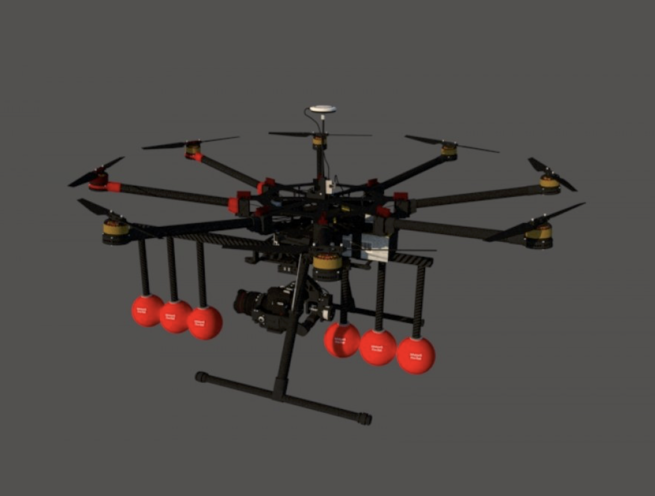
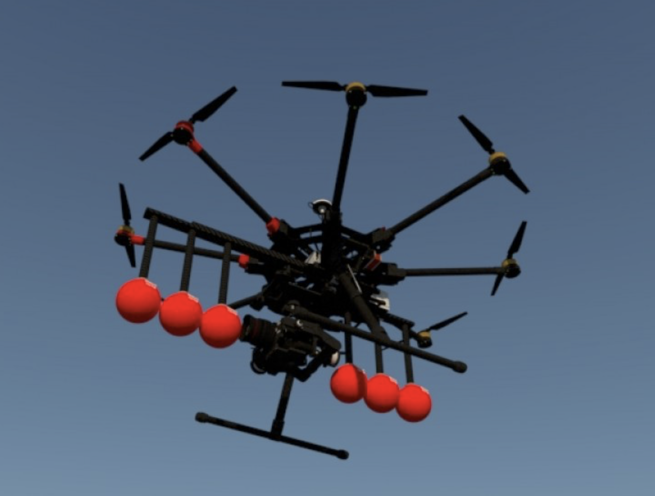
The Madoors USA Fire Fighting Drone is a rapid-response fire extinguisher drone system carrying 6 fire extinguisher balls via electromagnetic magnet attachment — deploying chemical fire suppression agent at the fire area through controlled ball release and explosion-dispersal mechanism to extinguish fires at the initial dispersal stage before they spread. Particularly effective in forested areas, inaccessible hillside and mountainous terrain, areas with no road access, and high-rise residential building fires where fire fighting vehicles and fire departments have difficulty entering, the Madoors USA firefighting drone reaches the fire area quickly at the onset of the fire — dropping extinguishing balls that disperse chemical suppression agent through explosion, extinguishing the fire from its initial stage and preventing life and property loss.
For high-rise building fires where firefighters cannot access balconies and roofs and fire escape ladders cannot be advanced, a trained drone pilot inserts the drone through windows and doors to suppress interior fires — or uses the optional spring-loaded launch system to throw fire extinguisher balls into the fire area from outside the building.
TECHNICAL SPECIFICATIONS
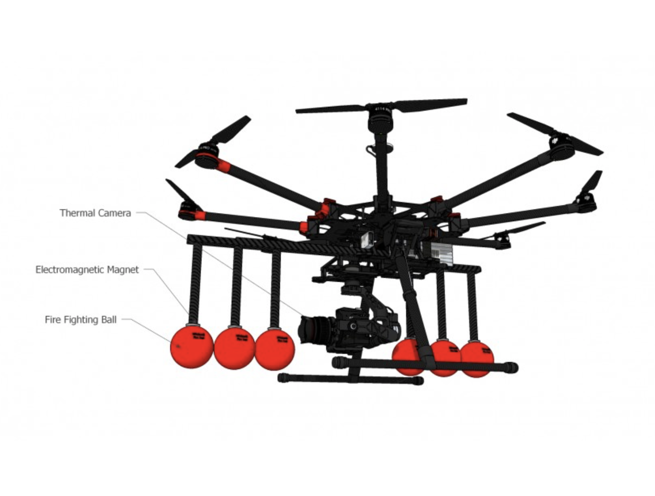
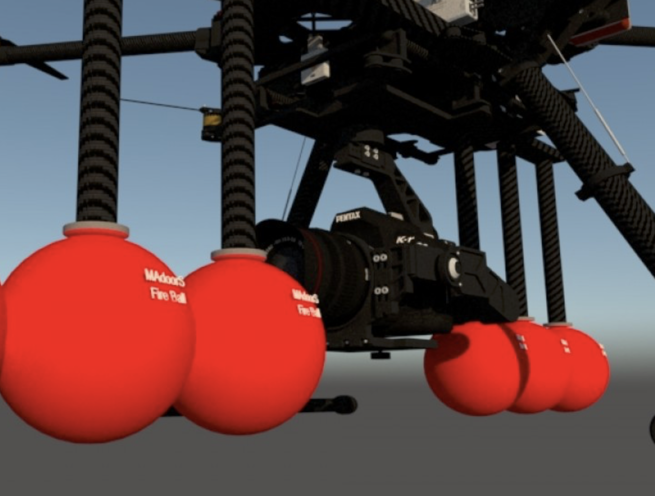
The Madoors USA Fire Fighting Drone carries 6 fire extinguisher balls secured by an electromagnetic magnet system — the magnets hold the balls on the drone during transport flight and release them with precision on the target fire area under operator control. Each ball contains chemical fire suppression agent that is dispersed across the fire area through a controlled explosion mechanism on contact — the explosion creates a cloud of chemical suppression agent over the fire zone, saturating the fire with extinguishing agent across a wider coverage area than a direct stream application could achieve from the drone's flight altitude.
The explosion-dispersal mechanism is specifically effective at the initial dispersal stage of a fire — the chemical agent cloud created by each ball's detonation suppresses the fire across its current extent before the fire spreads to adjacent fuel. Early intervention at the dispersal stage — before the fire has established a large, deeply burning fuel load — maximizes the effectiveness of the 6-ball payload and provides the greatest probability of complete fire suppression from a single drone deployment.
The optional spring-loaded launch system connects to the drone and launches fire extinguisher balls through windows, doors, and other openings into building interiors — providing interior fire suppression capability at points the drone cannot directly enter. This launch capability extends the effective coverage of the drone to fires in closed rooms and interior spaces visible through windows from the drone's external flight position.
Trained drone pilot operation is required for all firefighting drone deployments — Madoors USA provides pilot training for the specific operational requirements of firefighting drone deployment, including precision ball release, building approach and interior insertion, and coordination with ground firefighting teams.
KEY FEATURES
6 Fire Extinguisher Balls — Electromagnetic Secure Attachment
The 6-ball payload capacity provides multiple suppression deployments from a single flight — the electromagnetic magnet system secures all 6 balls during transport flight and releases them individually or in combination at the operator's command. Multiple balls allow the operator to address multiple fire centers, re-engage a partially suppressed fire, or cover a larger fire area with multiple deployment points. The electromagnetic release provides controlled, precise deployment — each ball is released at exactly the commanded position over the fire area rather than dropped unpredictably.
Chemical Dispersal Through Explosion — Wide Coverage Area
The explosion-dispersal mechanism of each fire extinguisher ball creates a chemical agent cloud that covers a significantly wider area than the ball's point of impact — the explosion distributes the suppression agent laterally across the fire zone, increasing the effective coverage per ball beyond what a passive chemical release would achieve. This wide-area dispersal is the primary effectiveness advantage of the ball-and-explosion delivery method over direct stream or foam application from drone altitude — the explosion creates the mixing and distribution energy required to penetrate the thermal convection above an active fire.
Initial Stage Intervention — Before Spread
The drone's speed of deployment to the fire location allows it to arrive and deliver the first suppression payload at the initial dispersal stage — the critical early phase when the fire is still small enough to be completely suppressed by the chemical agent payload. Early-stage suppression prevents the fire from establishing the large, self-sustaining combustion zone that cannot be suppressed by a 6-ball payload — the same payload that suppresses a small initial fire is insufficient against a well-established large fire. Rapid drone deployment to exploit the initial stage is the core operational principle of the Madoors USA firefighting drone system.
Forested & Inaccessible Terrain — No Road Required
The drone's aerial access capability eliminates the road access requirement that limits firefighting vehicle deployment in forested areas, hillside terrain, and mountainous regions — the drone reaches any point visible from the air without requiring any ground access infrastructure. This aerial accessibility directly addresses the primary operational limitation of conventional firefighting at wildland fires where the fire front is advancing in terrain that firefighting vehicles cannot reach before the fire spreads beyond control.
High-Rise Balcony & Roof Access — Preventing Drooping & Jumping
The drone provides fire suppression capability at high-rise building balconies and roofs that fire escape ladders cannot reach — delivering extinguisher balls to the fire at these points before occupants in the fire zone are forced to droop from windowsills or jump from ledges to escape. This life-saving application directly addresses the most tragic high-rise fire scenario — occupants trapped at heights above the maximum ladder extension with no escape route. The drone reaches these points within minutes of the fire start, potentially suppressing the fire before the occupants' situation becomes life-threatening.
Window & Door Interior Insertion
For interior fires visible from outside through windows and doors, the trained drone pilot inserts the drone through the opening — deploying fire extinguisher balls directly into the burning interior space for the most effective direct contact with the fire source. Interior insertion capability is particularly valuable for apartment fires where the fire origin is in an interior room that cannot be reached by exterior ladder or aerial water streams.
Optional Spring-Loaded Launch System
The optional spring-loaded launcher connected to the drone provides precision ball delivery through windows and other openings without requiring the drone to enter the building interior — the launcher fires balls into the opening at the correct trajectory for interior deployment. This launch capability is useful when the opening is too small or structurally compromised for safe drone entry, when the interior fire conditions are too severe for drone survival, or when the opening angle does not allow direct drone access to the fire area.
DEPLOYMENT SCENARIOS & USE CASES
Madoors USA Fire Fighting Drones are deployed for any fire requiring rapid aerial fire suppression in inaccessible, high-altitude, or otherwise vehicle-inaccessible locations.
- Wildland and forest fire initial stage aerial suppression
- Hillside and mountainous terrain fire suppression
- Rural fire area rapid response drone deployment
- No-road-access fire area aerial suppression
- High-rise building balcony and roof fire suppression
- Apartment building interior fire drone suppression
- Urban residential fire high-level access suppression
- Industrial facility roof fire aerial suppression
- Vehicle fire rapid drone response
- Agricultural and crop fire initial stage suppression
- Remote infrastructure fire rapid aerial response
- Disaster response fire suppression aerial deployment
- Military forward position fire suppression drone
- Critical infrastructure roof and elevated fire suppression
- Any fire requiring aerial chemical suppression before ground access is available