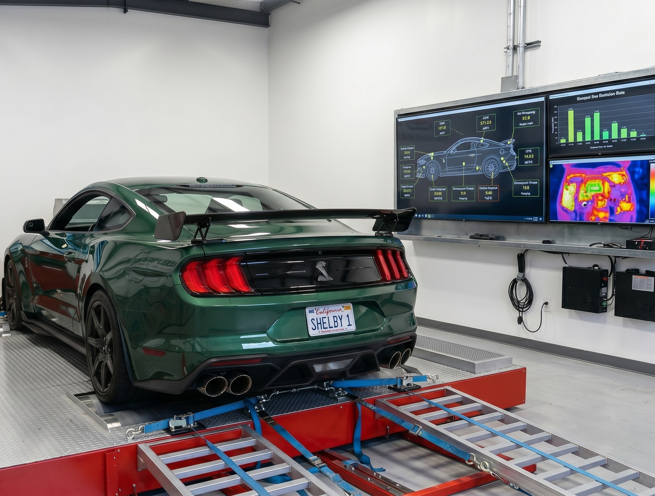
Dynamometer Auto – Automobile – Vehicle Test Appraisal Solutions
The Madoors USA Dynamometer Auto Vehicle Test Appraisal System is a computer-connected dyno test dynamometer system that measures the engine power output and horsepower of any vehicle — comparing the measured wheel power against the vehicle's nominal catalog specification to identify engine problems, performance deficiencies, and mechanical system faults including pressure lining wear, clutch system failure, engine wear, and turbo pressure issues. The system uses steel drum rollers that vehicle wheels sit on and spin at high speed, connected to an electric dynamo that measures the electrical energy produced per hour from the wheel power, with proprietary auto-reporting software automatically generating complete buyer and seller reports in 2 copies directly from computer output. The Madoors USA Dynamometer Appraisal System is the definitive objective engine performance documentation tool for auto expertise centers, used car dealers, fleet management, and any vehicle assessment application requiring certified power measurement.
TECHNICAL SPECIFICATIONS
The Madoors USA Dynamometer operates on the chassis dynamometer principle — the vehicle's driven wheels are positioned on steel cylindrical drum rollers that can rotate 360 degrees. The vehicle is secured on the rollers with restraint belts on the right and left sides — preventing the vehicle from moving forward or laterally during the high-speed test cycle. The rollers are connected to an electric dynamo — as the vehicle engine drives the wheels at high speed, the wheels rotate the steel drums, and the drums drive the electric dynamo.
The electric dynamo measures the electrical energy produced per hour from the rotational power of the vehicle wheels — this electrical output measurement is converted by the system software into horsepower and kilowatt values representing the power actually delivered to the wheels by the engine and drivetrain system. This wheel-power measurement method captures the actual power available for vehicle propulsion after all drivetrain losses — distinguishing it from engine-only dynamometers that measure engine output before transmission, differential, and wheel bearing losses.
The computer system connected to the dynamometer processes the real-time power measurement data and generates the software efficiency analysis of the engine performance throughout the test cycle. The measured power at each engine speed and load point is compared against the vehicle manufacturer's catalog specification for the same parameters — deviations below catalog values indicate specific mechanical system problems that the software analysis identifies and reports.
The power comparison analysis identifies the specific system responsible for power loss based on the pattern and magnitude of the deviation — clutch slippage reduces power delivery at high torque points, turbo pressure problems reduce power at high engine speeds, engine wear produces general power reduction across all speed ranges, and transmission losses create characteristic deviation patterns that the software distinguishes from engine-originated power loss.
The proprietary auto computest expertise reporting software automatically generates the complete vehicle test report from the computer output — the expert reviews the software analysis, confirms the conclusions, and the system produces the final report in 2 copies for delivery to buyer and seller. The report presents the measured power data, catalog comparison, and identified deficiencies in a professional documented format.
KEY FEATURES
Wheel Power vs Catalog Specification — Objective Performance Comparison
The fundamental diagnostic value of the Madoors USA Dynamometer System is the objective comparison between the measured wheel power and the vehicle manufacturer's nominal catalog power specification — any deviation below the catalog values is objectively quantified in horsepower and kilowatts, providing the buyer and seller with documented evidence of the performance gap rather than a subjective assessment of vehicle condition. This objective comparison is the engineering basis for the identification of specific mechanical system faults from the power loss pattern.
Electric Dynamo Measurement — Precision Wheel Power Quantification
The electric dynamo measurement of electrical energy produced from wheel rotation provides the most accurate available quantification of wheel power — the dynamo output is a direct electrical measurement of the rotational energy delivered to the drums, converted to power units through the known efficiency of the dynamo. This electrical measurement approach provides precision and reproducibility that mechanical loading methods cannot match, directly enabling the accurate comparison against catalog specification values required for definitive fault identification.
Engine Fault Diagnosis — Clutch, Turbo, Wear & Transmission
The specific fault categories identifiable from the power measurement deviation pattern — pressure lining wear, clutch system failure, engine wear, and turbo pressure deficiency — directly provide the actionable diagnosis required for the auto expertise report. The buyer uses this information to negotiate price adjustment or require pre-sale repair. The seller understands the specific deficiencies that the test has identified. The auto expertise center provides a professionally documented, objective technical assessment that neither party can dispute.
Proprietary Auto Computest Software — Automatic Report Generation
The proprietary auto computest expertise reporting software that automatically generates the complete vehicle test report from computer output eliminates the manual data compilation and report writing that conventional expertise assessment requires — the test data is processed automatically by the software, the performance comparison is generated automatically, the fault conclusions are identified automatically, and the 2-copy report is printed automatically. This automated reporting directly reduces the time required per vehicle assessment and eliminates the transcription errors and inconsistencies of manual reporting.
Two-Copy Buyer & Seller Report — Transaction Documentation
The automatic generation of reports in 2 copies for buyer and seller provides the complete transaction documentation function of the dynamometer test — both parties receive the same professionally documented performance assessment with measured data, catalog comparison, and identified deficiencies, creating the objective shared reference that protects both buyer from undisclosed performance problems and seller from disputed post-sale claims. This dual-copy documentation directly supports the legal standing of the expertise assessment in any post-transaction dispute.
360-Degree Cylindrical Steel Drums — Universal Vehicle Compatibility
The 360-degree rotating cylindrical steel drums accommodate any vehicle wheel diameter and track width — the drum geometry provides consistent wheel contact and power transfer for all vehicle types from small passenger cars through SUVs, vans, and light commercial vehicles. This universal vehicle compatibility makes the Madoors USA Dynamometer appropriate for the mixed vehicle fleet encountered at any auto expertise center without requiring drum configuration changes between different vehicle types.
Right & Left Restraint Belt Safety — High-Speed Test Security
The right and left vehicle restraint belts that secure the vehicle to the dynamometer during high-speed testing provide the essential safety measure for chassis dynamometer operation — a vehicle unsecured at the wheel positions during high-speed drum rotation would be propelled off the rollers with dangerous force. The restraint system directly enables safe high-speed power measurement at the engine RPM levels required for accurate catalog power comparison.
FAULT DIAGNOSIS REFERENCE
Power loss at high torque
Clutch system slippage or pressure lining wear. The clutch cannot transmit the full engine torque to the drivetrain under high torque loading, reducing measured wheel power at the torque peak.
Power loss at high engine speed
Turbo pressure deficiency in turbocharged engines. The turbocharger cannot maintain the specified boost pressure at high speeds, reducing engine power output below the catalog specification at the upper RPM range.
General power reduction across all speeds
Engine wear. Progressive internal engine wear reduces compression, combustion efficiency, and mechanical friction losses, producing a general power deficit across the entire RPM range.
Characteristic drivetrain losses
Transmission, differential, and wheel bearing wear patterns produce characteristic power loss signatures that the software distinguishes from engine-originated losses.
ASSEMBLY & INSTALLATION SEQUENCE
Pit or Surface Installation Assessment
The dynamometer installation type — pit-mounted for flush vehicle drive-on or surface-mounted on a drive-on ramp — floor loading capacity, electrical supply for the electric dynamo, and computer workstation position are confirmed.
Drum & Dynamo Assembly Installation
The steel cylindrical drum rollers and electric dynamo assembly are installed at the confirmed pit or surface position. Drum level, alignment for vehicle centerline positioning, and dynamo connection are verified.
Restraint Belt System Installation
Right and left vehicle restraint belt systems are installed at the wheel positions. Belt attachment points, tensioning system, and release mechanism are tested.
Computer System & Proprietary Software Installation
Computer system and auto computest expertise reporting software are installed at the operator workstation. Dynamo output data connection, real-time power measurement display, catalog comparison database, and automatic 2-copy report generation are confirmed operational.
Calibration & Reference Power Testing
Calibration is completed with reference vehicles of known catalog power specification — confirming that the dynamometer measurement and software analysis produce accurate catalog comparison results across the vehicle type and power range of the expertise center's assessment volume.
Operator Training & Handover
Complete operator training on vehicle positioning, restraint belt securing, test cycle initiation, software analysis review, and 2-copy report generation is completed. Installation handover documentation is compiled.
DEPLOYMENT SCENARIOS & USE CASES
Madoors USA Dynamometer Auto Vehicle Test Appraisal Systems are deployed across the full range of vehicle performance assessment applications.
- Auto expertise center complete engine power assessment
- Used and second-hand car dealer vehicle performance testing
- Insurance company vehicle performance claim assessment
- Auction house pre-sale vehicle power documentation
- Fleet vehicle lease return performance assessment
- Accident claim vehicle performance change documentation
- Import vehicle customs performance inspection
- Government vehicle fleet performance assessment
- Automotive warranty claim engine performance testing
- Police and traffic authority vehicle performance inspection
- Leasing company vehicle return performance appraisal
- Pre-purchase private buyer professional power assessment
- Rental car company fleet performance management
- Franchise dealership certified pre-owned performance testing
- Any auto expertise operation requiring objective computer-documented engine power comparison against catalog specification