Double Chock Vehicle Wheel Restraint
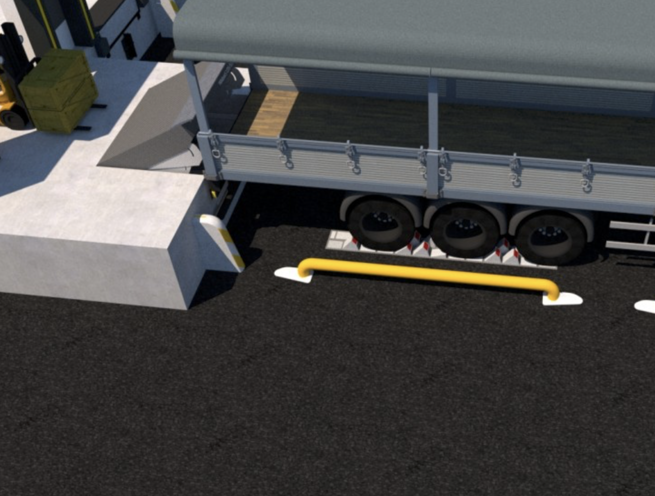
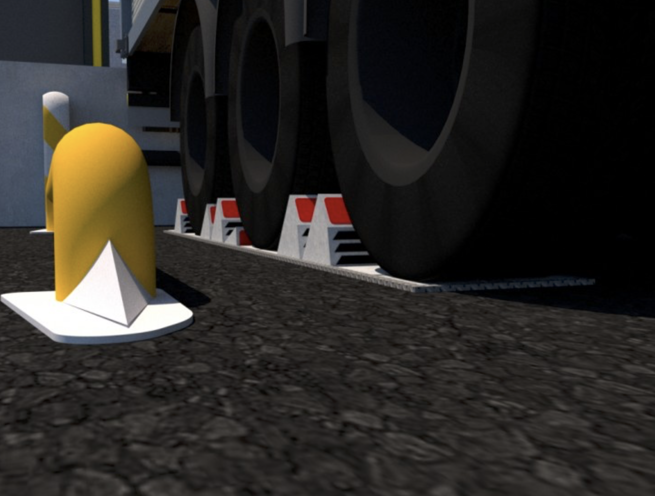
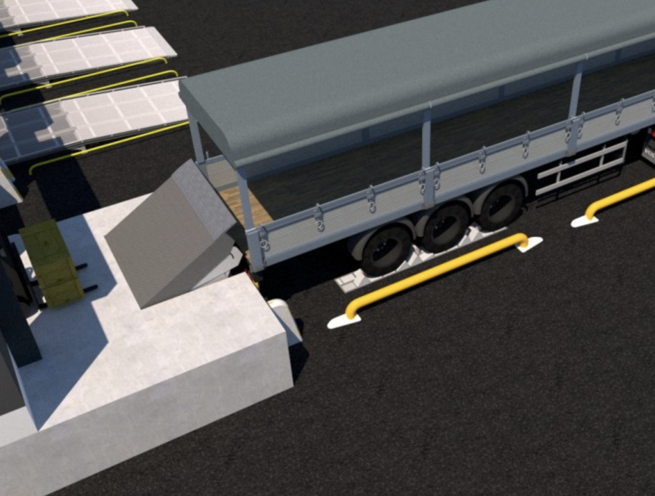
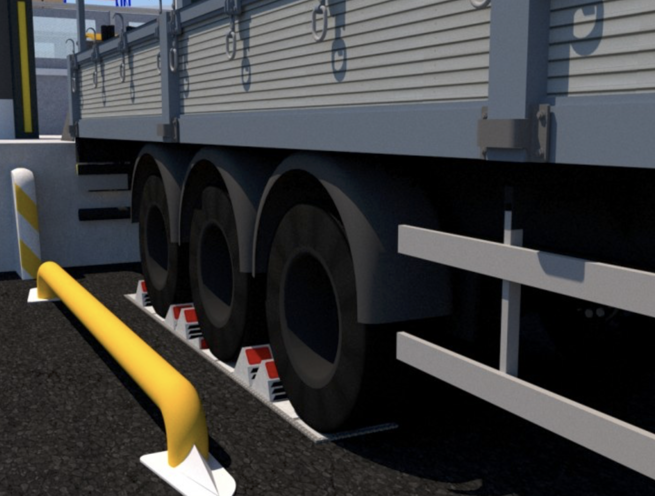
The Madoors USA DVRS-3800 Double Chock Vehicle Wheel Restraint is a double-row, automatic pneumatic air-type wheel locking and vehicle tire chock system engineered specifically for loading dock and factory loading area applications where vehicles with significantly different wheelbase distances arrive at the same loading position. The defining operational advantage of the DVRS-3800 over single-row wheel restraint systems is its double-row, axially spaced chock configuration with a double drive mechanism buried in the lower chassis — ensuring that regardless of wheelbase size differences between vehicles, at least one row of chocks always engages the vehicle tire securely when a locking command is sent, even when the vehicle has stopped with its axle misaligned relative to the primary chock row.
Operating on the same proven security interlock logic as the Madoors USA VR-450 and WH-200 wheel restraint systems — with dock leveler and sectional door three-way interlock preventing premature truck departure throughout the loading cycle — the DVRS-3800 is guaranteed for 2 years with a 10-year spare parts guarantee, and is customizable through PLC panel software to integrate with factory air supply systems where the facility has its own air generation infrastructure.
TECHNICAL SPECIFICATIONS
The DVRS-3800 operates on pneumatic air pressure — lifting the double-row wheel chock wedges from the pit floor to tire contact position when the locking command is activated. Air pressure is provided by the system's own integrated compressor unit as standard. At factory sites where a facility air generation system is already installed and available, the DVRS-3800 can be fed directly from the factory air supply — eliminating the need for the system's own compressor. The PLC panel automation software is configured to match the factory air supply interface and customer operational requirements in such cases.
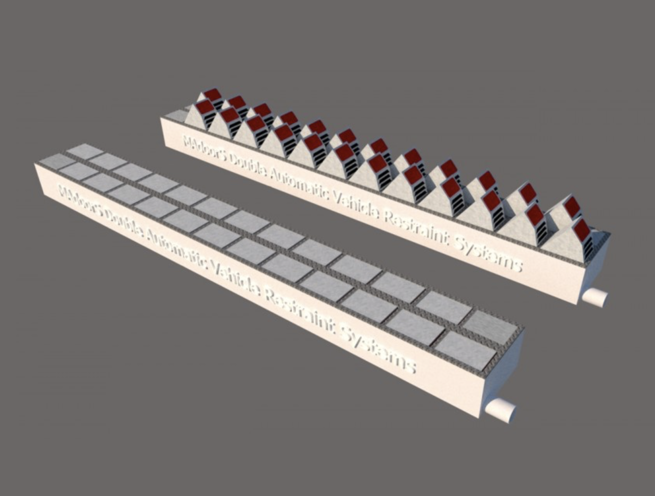
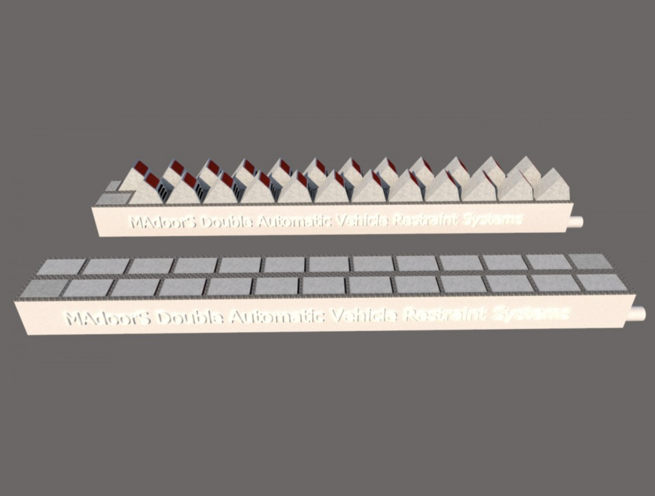
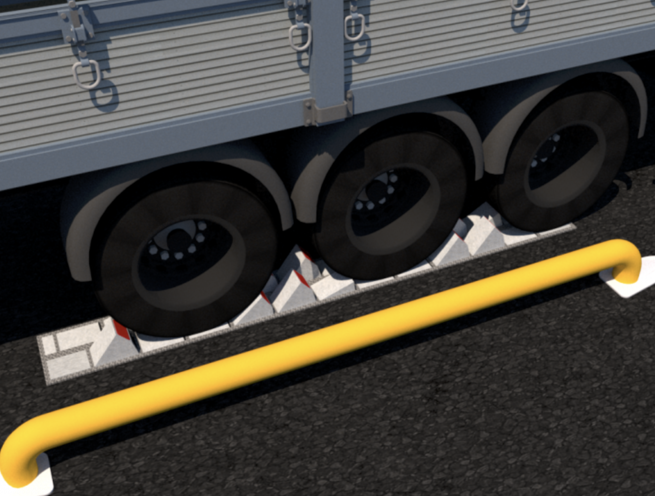
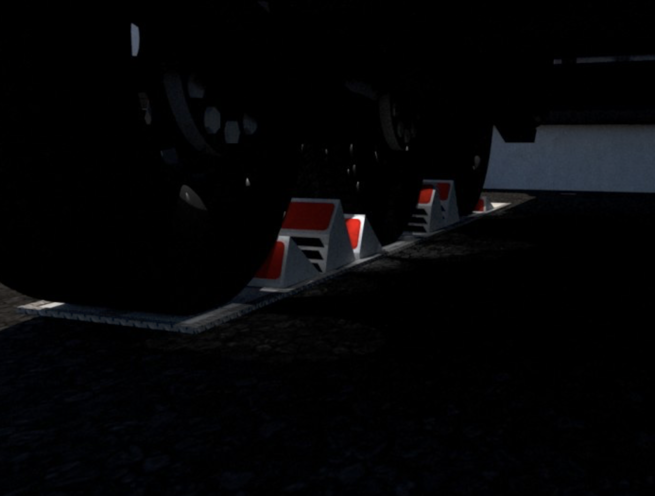
The double-row design uses narrower wheel holder tire ramps than single-row systems, arranged in two rows that are axially spaced relative to each other. Both rows are driven by a double drive mechanism in the lower chassis buried in the ground. When a vehicle stops at the loading position with its axle misaligned relative to one row of chocks — as occurs when different vehicles have significantly different wheelbase distances from the dock face — the axially spaced double-row configuration ensures that the opposite row captures the tire and locks the vehicle securely, even if the primary row cannot make positive contact due to the axle offset position.
This misaligned engagement capability is the critical performance advantage of the DVRS-3800 in mixed-vehicle fleet loading environments — providing secure, reliable wheel locking for every vehicle regardless of where it stops relative to the chock positions, without requiring the driver to reposition the vehicle for a specific chock alignment.
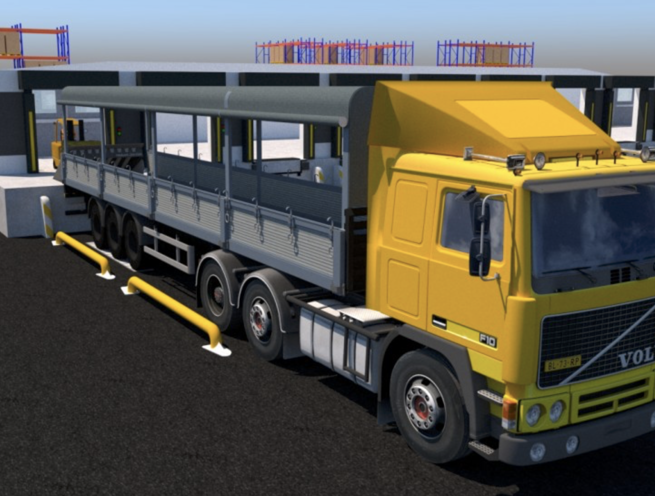
The system is compatible with trucks, containers, trailers, and cargo vehicles of all wheelbase configurations. The PLC panel automation system manages all operational functions — locking command, unlock command, dock leveler interlock, and sectional door interlock — with software fully customizable to customer operational requirements and factory air system integration specifications.
KEY FEATURES
Double-Row Axially Spaced Chock Configuration — Universal Wheelbase Compatibility
The two rows of tire chocks are positioned at different axial distances from the dock face, providing coverage of a wider range of vehicle axle stopping positions than a single-row system. When a vehicle stops with its axle between the two rows, one row is always in a position to make positive contact with the tire and lock the vehicle — regardless of the specific wheelbase distance or the exact stopping position of the vehicle relative to the dock.
Misaligned Engagement Capability — No Vehicle Repositioning Required
The double-row double-drive mechanism ensures that even when a vehicle's axle is misaligned relative to one chock row — as occurs with different vehicle types stopping at the same dock position — the opposite row engages the tire and secures the vehicle. This misaligned engagement capability eliminates the operational requirement for drivers to reposition vehicles to align with single-row chock systems, reducing loading turnaround time and eliminating the vehicle maneuvering incidents that occur when drivers are required to make precise dock approach alignments.
Double Drive Mechanism — Underground Installation
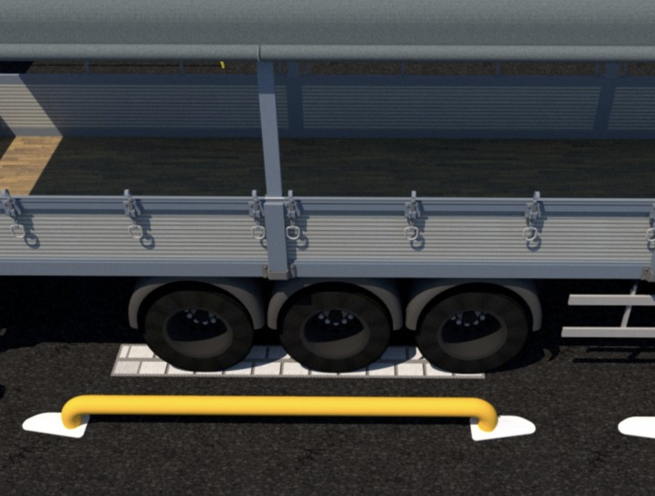
The double drive mechanism for both chock rows is installed in the lower chassis buried in the ground — providing a completely flush pit installation that carries normal vehicle traffic loading across the chock pit during non-loading periods without surface obstruction. Underground installation of the drive mechanism protects all mechanical components from vehicle contact, contamination, and impact damage during normal dock approach and departure operations.
Pneumatic Air Operation — Self-Contained or Factory Air Fed
The pneumatic air operation provides rapid, reliable chock engagement and release response across all ambient temperature conditions encountered at indoor and outdoor loading dock environments. The self-contained compressor unit provides operational independence from factory air infrastructure for standard installations. Factory air supply feed capability — with PLC software customization for the specific factory air system interface — eliminates compressor procurement and maintenance for facilities with existing air generation infrastructure, reducing system cost and maintenance overhead.
PLC Panel Automation — Fully Customizable Software
The PLC panel automation system manages all DVRS-3800 operational functions with software fully customizable to customer operational requirements — covering locking and unlock command logic, dock leveler and sectional door interlock sequences, factory air system interface, and any site-specific access control or operational management integration required by the customer. This software customization capability ensures that the DVRS-3800 integrates precisely with the specific operational workflow of each loading facility.
2-Year Guarantee — 10-Year Spare Parts Guarantee
The 2-year operational guarantee and 10-year spare parts guarantee provide the most comprehensive long-term support commitment in the Madoors USA wheel restraint range — confirming the availability of all required replacement components for the full 10-year period following installation and providing clients with confidence in the long-term operational reliability of the DVRS-3800 system.
Same Proven Security Logic — Consistent with VR-450 & WH-200
The DVRS-3800 operates on the same proven security interlock logic as the Madoors USA VR-450 and WH-200 wheel restraint systems — with dock leveler and sectional door three-way operational interlock preventing premature truck departure and ensuring that the loading cycle cannot be interrupted by unintended vehicle movement at any stage. This consistent security logic across the Madoors USA wheel restraint range allows facility operators familiar with other Madoors USA systems to apply the same operational procedures to the DVRS-3800 without additional training.
Suitable for All Cargo Vehicle Types — Trucks, Containers, Trailers
The DVRS-3800 is specified for loading dock applications where trucks, containers, trailers, and cargo vehicles of all configurations arrive at the same loading position — covering the full range of commercial vehicle types from short-wheelbase rigid trucks through to long-wheelbase articulated semi-trailers and container chassis vehicles.
COMPARISON: DVRS-3800 VS VR-450 VS WH-200
The Madoors USA DVRS-3800, VR-450, and WH-200 all operate on the same three-way security interlock logic with pneumatic or hydraulic chock actuation, but differ in chock row configuration and the vehicle fleet scenarios they are optimized to serve.
The DVRS-3800 uses two rows of narrower chocks in an axially spaced double-row configuration with double drive mechanism — optimized for loading facilities receiving vehicles with significantly different wheelbase distances where single-row chock systems cannot reliably engage all vehicle types.
The VR-450 uses two parallel pits — one on each side of the truck — with one row of chocks per pit — providing bilateral simultaneous wheel engagement on both sides of the truck for balanced restraint across a consistent vehicle fleet.
The WH-200 uses one pit on one side of the truck with two rows of offset chocks — providing single-side engagement with offset row coverage to accommodate variable truck stopping positions across a moderately variable vehicle fleet.
ASSEMBLY & INSTALLATION SEQUENCE
Loading Dock Assessment & Vehicle Fleet Analysis
The loading dock position, arriving vehicle fleet wheelbase range, chock pit dimensions, factory air supply availability, and PLC interface requirements are assessed. The DVRS-3800 double-row configuration is confirmed as the appropriate specification for the specific vehicle fleet wheelbase variation range at the facility.
Pit Excavation & Lower Chassis Installation
The pit excavation is completed to the specified depth and plan dimensions for the double-row double-drive mechanism. The lower chassis housing both drive mechanisms is installed in the pit at the correct depth for flush floor surface alignment. Pneumatic air supply conduits and electrical wiring conduits are installed to the pit from the compressor unit or factory air supply and from the PLC panel during pit preparation.
Double-Row Chock Mechanism Installation
Both rows of tire chock wedges and their individual drive mechanisms within the double lower chassis are installed and verified. Chock travel, engagement height at both rows, and axial spacing between rows are set and verified for the confirmed wheelbase range of the arriving vehicle fleet.
Compressor or Factory Air Supply Connection
For self-contained compressor configurations, the compressor unit is installed at the specified position and air supply lines are connected to the chock mechanism through the pre-installed conduits. For factory air-fed configurations, the factory air supply connection is made and PLC software is configured for the factory air system interface.
PLC Panel Installation & Software Configuration
The PLC panel is installed at the specified operator position. Software is configured to the customer's operational requirements — locking and unlock logic, dock leveler interlock, sectional door interlock, and any factory air system or facility management integration. All software parameters are reviewed and approved by the customer before commissioning.
Three-Way Interlock Wiring & Verification
Interlock wiring is connected between the DVRS-3800 control system, dock leveler control, and sectional door control. All six interlock condition combinations are tested and verified for correct response — confirming that the dock leveler and sectional door cannot operate with the DVRS-3800 unlocked, and that the DVRS-3800 cannot unlock while the dock leveler is active or the sectional door is open.
Misaligned Engagement Testing
The DVRS-3800 is tested with representative vehicles from the full wheelbase range of the arriving vehicle fleet — confirming that at least one chock row makes positive tire engagement for every vehicle type across the full range of stopping positions at the dock. Off-axis engagement of the secondary row is specifically tested for vehicles where the primary row fails to make contact.
Operational Testing & Handover
Complete operational testing across all locking, unlock, interlock, and factory air interface functions is conducted. The 2-year guarantee and 10-year spare parts guarantee documentation are compiled into the project handover package. Customer operational training covering locking sequence, interlock operation, and daily visual inspection is completed.
DEPLOYMENT SCENARIOS & USE CASES
Madoors USA DVRS-3800 Double Chock Vehicle Wheel Restraints are specified for loading dock environments where a wide range of vehicle types with significantly different wheelbase distances arrive at the same loading position.
- Distribution centers receiving mixed commercial vehicle fleets
- Third-party logistics facilities with varied carrier vehicle types
- Manufacturing facilities receiving components from multiple suppliers
- Supermarket and food retail distribution centers with mixed delivery vehicles
- Pharmaceutical and cold storage facilities with specialized vehicle configurations
- Port container depot terminals with mixed container chassis wheelbase configurations
- Automotive parts distribution centers with varied transport vehicle types
- Government and military logistics depots with mixed vehicle fleets
- Construction materials supply depots receiving multiple vehicle configurations
- Chemical and hazardous materials distribution facilities with specialized vehicles
- Airport cargo terminals with mixed ground support and cargo vehicle types
- E-commerce fulfillment centers receiving deliveries from multiple carrier fleets
- Building materials distribution depots with mixed heavy and light vehicle fleets
- Recycling and waste management facilities with varied collection vehicle types
- Food processing and agricultural product distribution with specialized transport