Counter Terror Wedge Bollard Barrier
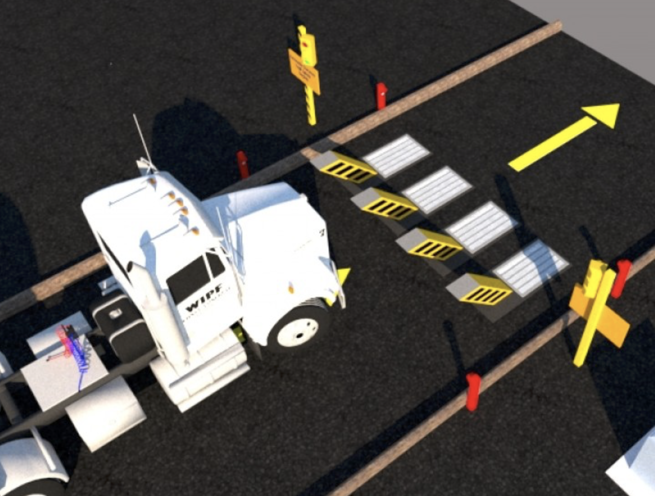
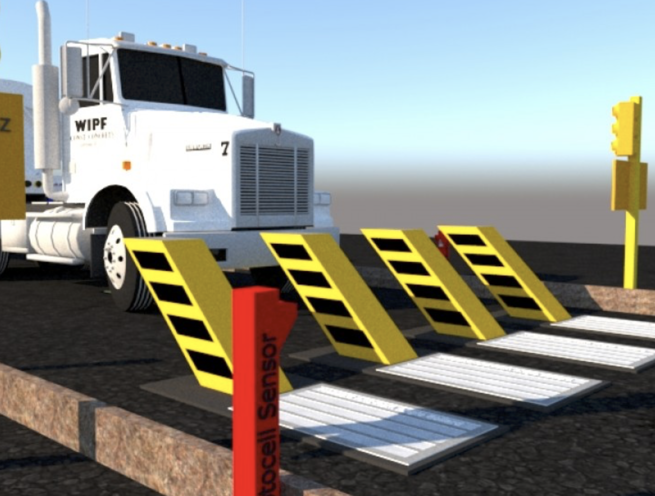
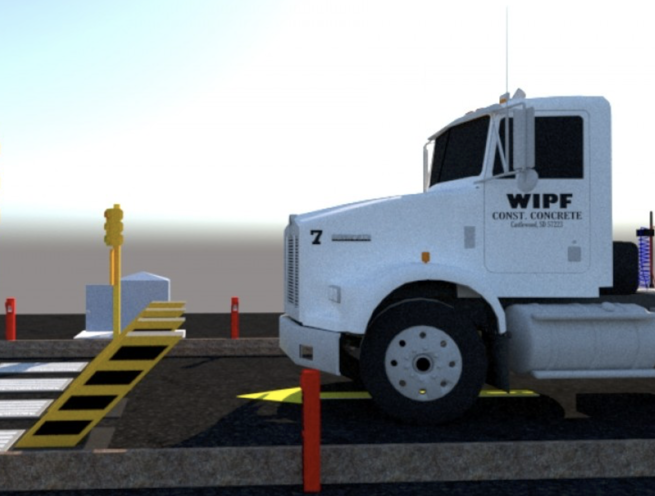
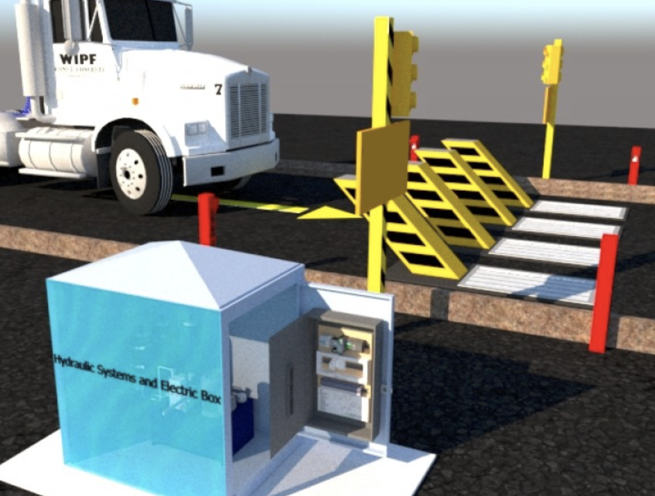
The Madoors USA Counter Terror Wedge Bollard Barrier — Anti-Ram Angle Bollard Barrier — is a patented, company-owned design pile-type anti-ram barrier system certified to ASTM M50, PAS 68, and K12 standards with foreign-approved crash test certificates confirming stopping performance against 8,000 kg vehicles at 85 km/h. Working individually or in groups, mountable in one or two-way closure configurations, and installable at shallow depth despite its long length due to the inclined mounting principle, the Madoors USA Counter Terror Wedge Bollard Barrier provides protection against tank and armored vehicle penetration — stopping heavier vehicles than comparable cylindrical bollard systems through the inclined ground mounting geometry that transmits the entire impact load directly into the ground. Design ownership, patent rights, and design model rights are registered — the design cannot be copied.
TECHNICAL SPECIFICATIONS
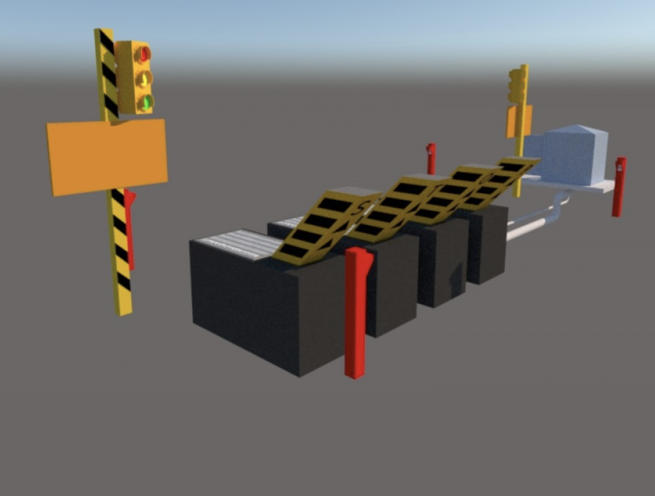
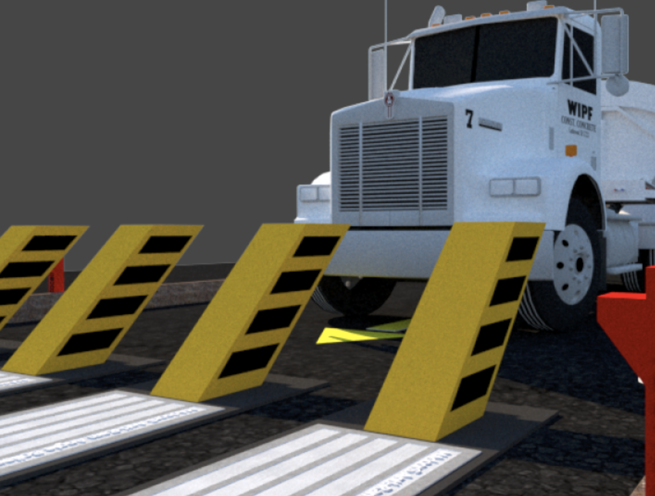
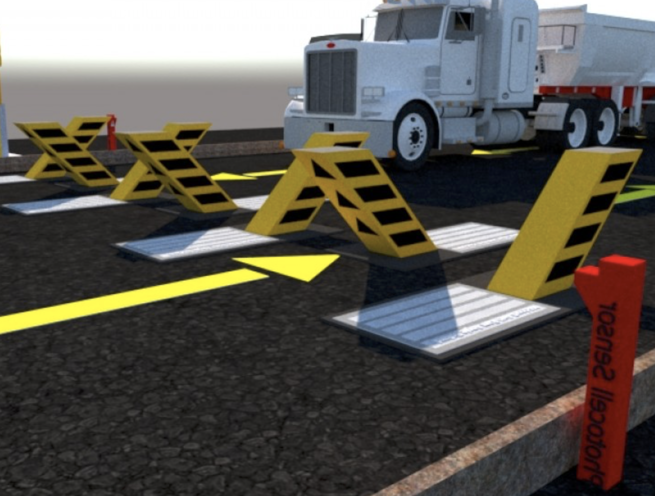
The Madoors USA Counter Terror Wedge Bollard Barrier is a pile-type barrier — an angled, inclined steel structural element that is mounted into the ground at a miter angle rather than vertically. This inclined mounting is the fundamental engineering principle that distinguishes the wedge bollard from conventional vertical cylindrical pipe bollards — the inclined angle presents the barrier face perpendicular to the vehicle approach direction, maximizing the impact force interception geometry, and the inclined pile transfers the entire impact load along the pile axis directly into the ground foundation, utilizing the full bearing capacity of the ground rather than creating a concentrated bending moment at the pile base as vertical bollards do.
The inclined mounting geometry allows the pile length to be maximized — increasing the barrier structural strength and ground bearing area — while maintaining shallow installation depth. The longer pile length provides greater moment resistance against the horizontal impact force of a vehicle attack, and the shallow installation depth reduces the civil works required and the underground service conflict risk compared to conventional deep-foundation bollard systems.
Certification to ASTM M50, PAS 68, and K12 with foreign-approved crash test certificates confirms multi-standard stopping performance against 8,000 kg vehicles at 85 km/h — exceeding the standard M50/K12 test vehicle weight of 7,500 kg and the standard speed of 80 km/h. This above-standard test vehicle weight and speed confirms performance margin above the certified minimum, providing additional confidence in real-world performance against the heaviest available attack vehicles.
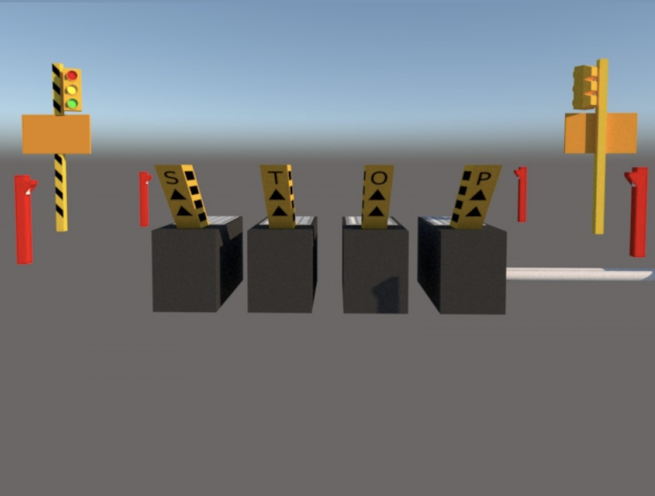
The miter angle between adjacent barriers can be varied — barriers are mounted at different angles to each other to create multi-directional protection configurations that protect the entrance against vehicle approaches from right, left, and direct frontal directions simultaneously.
KEY FEATURES
Patented Inclined Design — Ground Load Transfer
The inclined pile mounting is the patented core engineering innovation of the Madoors USA Counter Terror Wedge Bollard — the angled orientation transmits the entire vehicle impact load along the pile axis directly into the ground, rather than creating the concentrated bending stress at the pile base that vertical bollards generate. This direct load path allows the barrier to stop heavier vehicles than vertical bollards of equivalent steel cross-section — the inclined pile uses the ground's bearing resistance along its full length rather than relying solely on the bending strength of the steel at the ground line.
ASTM M50, PAS 68 & K12 — 8,000 kg at 85 km/h
The multi-standard certification at above-standard test vehicle weight and speed confirms the highest available certified stopping performance from the wedge bollard configuration — 8,000 kg at 85 km/h exceeds the standard 7,500 kg at 80 km/h test parameters, providing a certified performance margin above the minimum specification. Foreign-approved crash test certificates provide the internationally recognized independent testing documentation required for government, military, and diplomatic facility procurement specifications.
Tank & Armored Vehicle Stopping — Pile Type Strength
The specific claim that tank and panzer-type armored vehicles cannot pass through the pile-type barriers reflects the structural advantage of the inclined ground-bearing pile design — the inclined pile array presents a structural obstacle that engages the underside, tracks, and running gear of armored vehicles as well as the front structure of wheeled vehicles. This sub-vehicle engagement capability is a structural advantage of the inclined pile geometry over vertical surface bollards that engage only the vehicle front structure above the ground line.
Multi-Directional Miter Angle Configuration
The ability to vary the miter angle between adjacent barriers — mounting each pile at a different angle to its neighbors — provides multi-directional protection at guard post entrances and access points that must be protected against vehicle approaches from multiple directions simultaneously. This multi-directional configuration directly addresses the primary tactical vulnerability of single-direction barriers — an attacker who approaches at an angle to the protected direction can reduce the effective frontal area of the barrier. The miter angle variation eliminates this angular approach advantage.
Two-Way Road Closure — Opposite Direction Mounting
One-way closure configuration protects against vehicle approach from one direction. Opposite direction mounting of additional barriers provides two-way closure — blocking vehicle approaches from both directions simultaneously for the highest-security access points where threat vehicles may approach from either direction. This two-directional protection capability is essential for road access points where the barrier must prevent both unauthorized entry and unauthorized exit of vehicles.
Shallow Installation Depth — Less Civil Works
The inclined mounting geometry allows a longer pile to be installed at a shallower depth than an equivalent vertical bollard — the inclined pile achieves greater effective structural depth and ground bearing area at less installation depth than a vertical pile of equal length. This shallow installation depth directly reduces the excavation volume, civil works cost, and underground service conflict risk compared to conventional deep foundation bollard systems.
Individual & Group Operation — Flexible Deployment
Individual pile barriers can be deployed as single point obstacles at narrow approach paths, and groups of barriers create continuous barrier lines across wider road widths. Group deployment with varied miter angles between adjacent units creates the multi-directional protection configuration. This individual-to-group scalability allows the barrier to be specified for any access point width from a single narrow pedestrian-vehicle shared path through to full road-width vehicle blockade.
Higher Security Than Cylindrical Bollards
The specific comparison to cylindrical pipe-type bollard barriers — noting that the multi-directional protection feature is less present in cylindrical types — confirms that the wedge bollard's miter angle configurability provides a meaningful security advantage over conventional vertical cylindrical bollards at guard post entrances that face vehicle approach from multiple directions. Cylindrical bollards present the same circular cross-section to impacts from all directions, providing consistent resistance in all directions but without the directional optimization that the wedge bollard's angled configuration achieves.
INSTALLATION CONFIGURATIONS
Single-Direction Frontal Protection
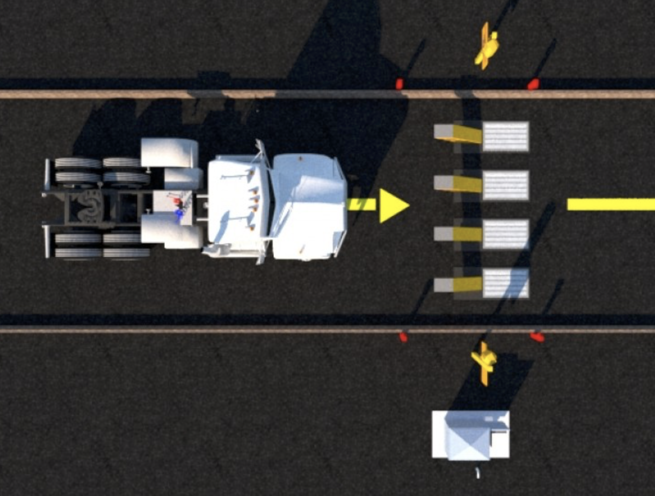
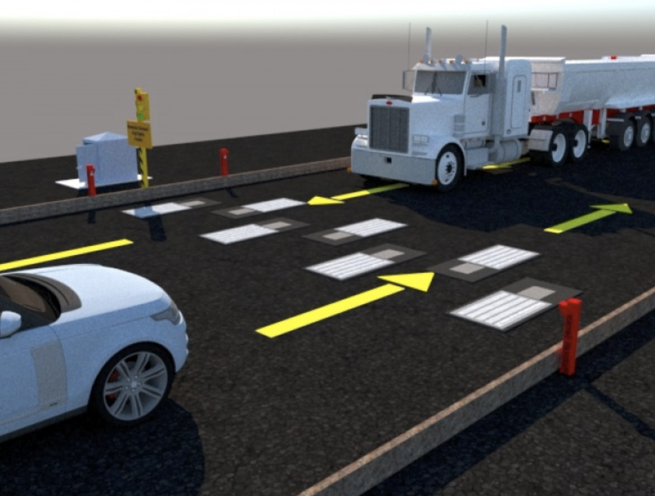
Barriers mounted in a straight line perpendicular to the primary vehicle approach direction — protecting against direct frontal vehicle attack at a straight road approach. Standard configuration for vehicle access control at road centrelines.
Multi-Directional Miter Angle Array
Barriers mounted at varied miter angles in a configured array — protecting against vehicle approaches from right, left, and straight-on directions simultaneously. Specified for guard post entrances that open directly to the road and are vulnerable to vehicle attack from multiple approach angles.
Two-Way Road Closure
Barriers mounted in opposite directions on both sides of the road — closing the road to vehicle passage from both directions simultaneously. Specified for the highest-security road closures where the threat includes vehicles approaching from either direction.
Perimeter Line Configuration
Multiple barriers deployed in a continuous perimeter line — combining the anti-ram stopping performance of the wedge bollard with the continuous perimeter coverage of a barrier wall. Adjacent barriers overlap in protection coverage to eliminate bypass gaps between units.
ASSEMBLY & INSTALLATION SEQUENCE
Site Assessment & Configuration Design
Vehicle approach directions, required protection levels, number of barriers, miter angles between adjacent units, one-way or two-way closure requirement, and installation depth constraints are confirmed.
Excavation at Miter Angle
Pile installation excavations are made at the specified miter angle for each barrier position — the angled excavation depth is less than an equivalent vertical bollard foundation while providing the full pile length for maximum structural performance.
Pile Installation & Foundation
Each wedge bollard pile is installed at the confirmed miter angle into the prepared excavation. Concrete foundation is placed around the pile base — with the inclined pile transferring all impact loading along the pile axis into the concrete and ground bearing.
Ground Surface Restoration
The road or pavement surface is restored around each installed pile — with the above-ground pile section remaining visible at the specified height above the road surface.
Multi-Unit Configuration Verification
The miter angles between adjacent piles are confirmed against the design configuration — ensuring that the combined barrier array provides the required multi-directional protection coverage with no approach direction gaps.
Crash Test Certification Documentation & Handover
ASTM M50, PAS 68, and K12 crash test certification documentation, patent and design registration records, and installation documentation are compiled into the project handover package.
DEPLOYMENT SCENARIOS & USE CASES
Madoors USA Counter Terror Wedge Bollard Barriers are specified for any high-security vehicle access point requiring multi-directional anti-ram pile barrier protection.
- Military base and installation counter-terrorism bollards
- Government building and ministry vehicle access barriers
- Embassy and diplomatic compound perimeter protection
- Presidential and prime ministerial facility barriers
- Critical national infrastructure vehicle protection
- Airport perimeter and terminal vehicle barriers
- Police station and courthouse vehicle protection
- Nuclear facility and power station vehicle barriers
- Port and maritime terminal vehicle access barriers
- Shopping center and public space vehicle protection
- Stadium and arena vehicle approach barriers
- Corporate headquarters anti-ram perimeter barriers
- Military checkpoint multi-directional vehicle barriers
- Guard post entrance multi-angle approach protection
- Any high-security entrance requiring multi-directional certified anti-ram pile barrier protection