Please provide your technical specifications and project requirements for the Burglar Resistant Door Window System. Our engineers will review your application and provide a detailed manufacturing quote, including exact pricing and lead times.
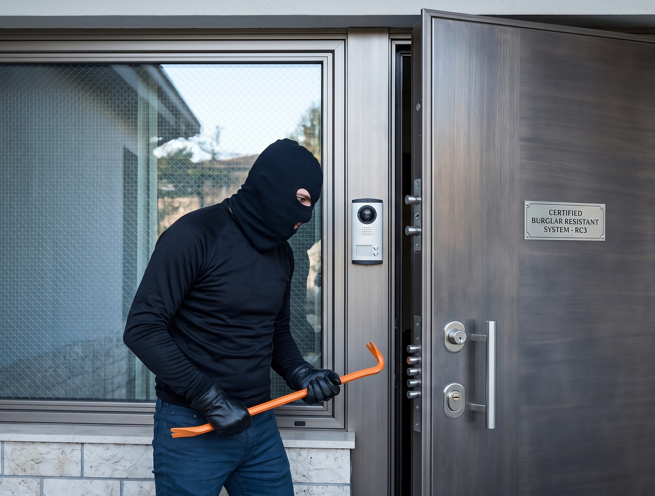
Burglar Resistant Door Window System
The Madoors USA Burglar Resistant Door Window System is a comprehensive EN 1627-certified anti-burglary aluminum and steel door, window, and frame system — available in resistance classes RC1 through RC6 — providing innovative forced entry protection for both modern constructions and historic and heritage buildings while blending harmoniously with any architectural style. With specially reinforced glazing in composite, laminated, tempered, and reflective versions across different thicknesses and resistance classes, anti-burglary fittings including certified hinges, multi-point locks, bolts, handles, and readers, thermal and acoustic insulation meeting passive construction requirements, and a wide range of colors and finishes, the Madoors USA anti-burglary system delivers the right combination of security, aesthetics, and functionality for new buildings, renovation projects, public buildings, and heritage structures.
TECHNICAL SPECIFICATIONS
The Madoors USA Burglar Resistant Door Window System complies with EN 1627 — the European standard specifying six burglary resistance classes from RC1 through RC6, each defined by the tools and techniques used in the resistance test and the minimum time the system must resist forced entry. RC1 provides resistance to physical body force attacks. RC2 provides resistance to simple tools including screwdrivers and pliers. RC3 provides resistance to experienced attackers with crowbars and wedges. RC4 provides resistance to experienced attackers with power tools. RC5 provides resistance to high-powered tools including drills and jigsaws. RC6 provides resistance to the highest available attack tool specification for the most demanding security applications.
The aluminum and steel profile construction provides the structural rigidity and anti-pry resistance required for each specified resistance class — the profile wall thickness, cross-section geometry, and reinforcement elements within the aluminum extrusion are engineered for the specific resistance class. The steel reinforcement inserts within aluminum profiles provide the structural resistance that aluminum alone cannot achieve at RC3 and above, while the aluminum exterior surface maintains the lightweight, corrosion-resistant, and aesthetically refined appearance of aluminum systems.
The specially reinforced glazing options provide the glass-specific contribution to the overall resistance class performance. Laminated glass — multiple glass plies bonded with PVB or SGP interlayer — provides impact resistance by preventing the glass from fragmenting on impact and maintaining the glass opening barrier even after the glass is cracked. Composite glass — combining tempered and laminated constructions — provides the highest available impact and penetration resistance. Tempered glass provides improved impact resistance over annealed glass through the thermal toughening process. Reflective glass provides privacy alongside the selected resistance class construction.
Anti-burglary fittings are certified to the specific requirements of the resistance class — hinges with concealed fixing and anti-pull features, multi-point locking mechanisms that engage the frame at multiple positions simultaneously, anti-drill and anti-pick lock cylinders, and anti-bump key cylinders. The fitting selection is matched to the specific resistance class requirement — RC1 and RC2 fittings differ fundamentally from RC4 and above fittings in the attack resistance they must demonstrate.
Thermal insulation meets the passive construction standard requirements — the aluminum profile system incorporates thermal break construction that separates the interior and exterior aluminum surfaces with low-conductivity polyamide bridges, preventing the heat loss through conductive metal paths that would otherwise defeat the thermal insulation of the building envelope at the door and window positions.
Acoustic insulation is provided by the combined mass of the reinforced glazing, the profile gasket seal, and the multi-point locking perimeter compression — the acoustic performance achieved increases with the resistance class as the glazing thickness, interlayer mass, and sealing performance all increase with the resistance specification.
KEY FEATURES
EN 1627 RC1 to RC6 — Complete Resistance Class Range
The complete EN 1627 resistance class range from RC1 through RC6 allows the resistance specification to be precisely matched to the threat assessment and security requirement of each specific installation position — standard residential and commercial premises at RC2, professional premises with higher theft risk at RC3, high-value retail and financial premises at RC4, and the most demanding security-sensitive facilities at RC5 and RC6. This complete range eliminates the compromise of overspecifying for standard applications or underspecifying for demanding ones.
Specially Reinforced Glazing — Impact, Cutting & Prying Resistance
The specially reinforced glazing in composite, laminated, tempered, and reflective versions provides the glass resistance contribution required for the complete burglar-resistant system performance at each resistance class — the glass must resist the same tool attacks as the frame and fittings, and the glazing specification is matched to the resistance class to confirm that the glazing is not the weakest element of the complete system. This matched glazing-to-class specification directly ensures that the certified EN 1627 resistance class performance is achieved across the complete door or window assembly.
New Buildings & Heritage Renovation — Architectural Versatility
The specific suitability for both modern new construction and historic and heritage building renovation confirms the Madoors USA system's architectural versatility — the anti-burglary system is not a security addition that conflicts with the building's architectural character but a fully integrated architectural element available in modern and industrial design variants, in any color and finish, and adapted to the profile dimensions and aesthetic proportions appropriate for any building style. This architectural integration is the essential quality for heritage building renovation where planning and conservation authority approvals require that security upgrades do not compromise the historic character of the building.
Anti-Burglary Fittings — Hinges, Multi-Point Locks & Readers
The complete certified fitting range — anti-pull hinges, multi-point locking mechanisms, anti-drill and anti-pick cylinders, and electronic reader integration — provides the complete perimeter securing performance required at each resistance class. Multi-point locking that simultaneously engages the frame at the top, bottom, and multiple mid-height points directly prevents the single-point leverage attack that defeats single-bolt locks — the force required to simultaneously overcome all locking points is proportionally greater than the force required for a single point, directly improving resistance to the crowbar and lever attacks that define the RC2 to RC4 test protocols.
Thermal & Acoustic Insulation — Passive Construction Compliance
The passive construction standard compliance for thermal and acoustic insulation confirms that the Madoors USA anti-burglary system provides the complete building envelope performance required for energy-efficient construction — the anti-burglary door and window system contributes to the building's thermal insulation performance rather than compromising it, maintaining the heating and cooling energy efficiency of the building envelope at every protected opening.
Wide Color & Finish Range — Aesthetic Flexibility
The wide range of colors and finishes — powder coat in any RAL color, anodized aluminum in standard and custom anodized colors, wood-effect foil lamination, and brushed and polished metallic finishes — allows the anti-burglary system to complement any architectural vision from contemporary glass and aluminum to traditional heritage building joinery aesthetics. This finish flexibility directly enables anti-burglary protection to be specified for the most architecturally sensitive positions without the visual compromise of security-first industrial appearance.
RESISTANCE CLASS REFERENCE
RC1
Resistance against physical body force. Standard residential lower-risk positions.
RC2
Resistance against simple tools — screwdriver, pliers, wedge. Standard residential and commercial specification. Most common anti-burglary class for new residential construction.
RC3
Resistance against second tool set including crowbar. Commercial premises with moderate theft risk. Public building and heritage building standard.
RC4
Resistance against power tools — drill, jigsaw. High-value retail, jewelers, pharmacies, financial premises.
RC5
Resistance against high-powered tools. High-security government, embassy, and institutional premises.
RC6
Resistance against highest available tool specification. Maximum security premises — armories, vaults, and critical infrastructure.
PRODUCT CONFIGURATIONS
Burglar Resistant Windows
Single and double casement, tilt-turn, and fixed light configurations in RC1 to RC6. Aluminum profiles with steel reinforcement at RC3 and above. Reinforced glazing matched to resistance class.
Burglar Resistant Entrance Doors
Single and double leaf pedestrian entrance doors in RC2 to RC6. Multi-point locking, anti-pull hinges, and certified cylinders. Any architectural finish.
Burglar Resistant Patio & Terrace Doors
Sliding and folding configurations in RC2 to RC4. Anti-lift and anti-pry track systems. Reinforced glazing panels.
Burglar Resistant Shop Fronts
Commercial facade systems in RC3 to RC5 for retail, jewelry, and high-value commercial premises. Large-format laminated and composite glazing panels.
Heritage & Conservation Building Systems
Profile dimensions, section proportions, and surface finishes matched to heritage building conservation requirements. RC2 to RC4 specification within conservation-appropriate visual profiles.
ASSEMBLY & INSTALLATION SEQUENCE
Security Assessment & Resistance Class Selection
Threat assessment, EN 1627 resistance class requirement, glazing type, fitting specification, thermal and acoustic performance requirements, and architectural finish are confirmed.
Structural Opening Preparation
The structural opening is prepared to the confirmed frame dimensions. Structural connection points for the anti-pry frame anchoring at the specified RC class are confirmed.
Frame Installation & Anti-Pry Anchoring
The aluminum-steel reinforced frame is installed and anchored to the structural opening at the positions and with the fixing specification required for the specified resistance class. Frame continuity, level, plumb, and square are confirmed.
Reinforced Glazing Installation
Specially reinforced glazing panels of the specified type — composite, laminated, tempered, or reflective — are installed in the frame. Glazing bead security at the specified RC class is confirmed.
Anti-Burglary Fitting Installation
Certified hinges, multi-point locking mechanism, anti-drill and anti-pick cylinder, and electronic reader are installed. Multi-point locking engagement at all frame positions is confirmed under normal closing force.
EN 1627 Compliance Documentation & Handover
EN 1627 resistance class certification documentation for the complete door or window assembly — frame, glazing, and fittings — thermal and acoustic performance certification, and installation records are compiled into the project handover package.
DEPLOYMENT SCENARIOS & USE CASES
Madoors USA Burglar Resistant Door Window Systems are specified for any building requiring EN 1627 certified forced entry protection with architectural quality.
- Residential new build RC2 anti-burglary windows and doors
- Heritage building conservation-compatible RC3 windows
- Commercial retail premises RC3 and RC4 shop fronts
- Jewelry store and luxury retail RC4 facade systems
- Bank and financial institution RC4 and RC5 entrance systems
- Pharmacy and healthcare premises RC3 anti-burglary doors
- Government building and ministry RC4 and RC5 systems
- Embassy and diplomatic mission RC5 window and door systems
- Museum and cultural institution RC3 and RC4 glazing
- School and educational building RC2 and RC3 systems
- Hotel and hospitality property anti-burglary entrance systems
- Corporate headquarters RC3 and RC4 facade systems
- Data center and secure facility RC5 perimeter systems
- Any building requiring EN 1627 RC1 to RC6 certified anti-burglary aluminum and steel door and window protection with architectural finish flexibility
- Category: Personnel Doors