Please provide your technical specifications and project requirements for the Bullet Resistant Glass. Our engineers will review your application and provide a detailed manufacturing quote, including exact pricing and lead times.
Bullet Resistant Glass
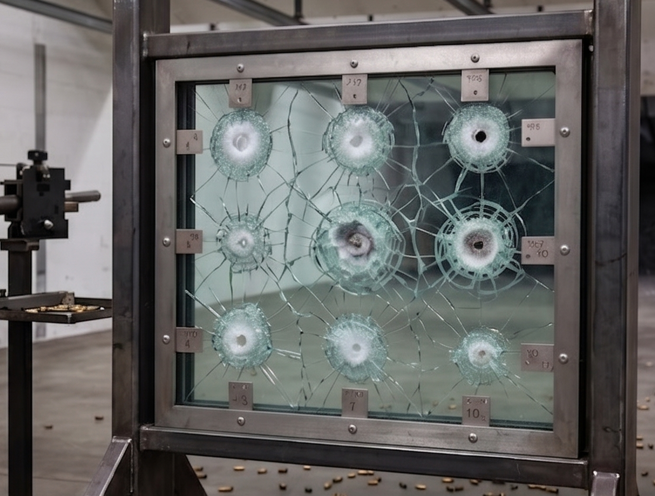
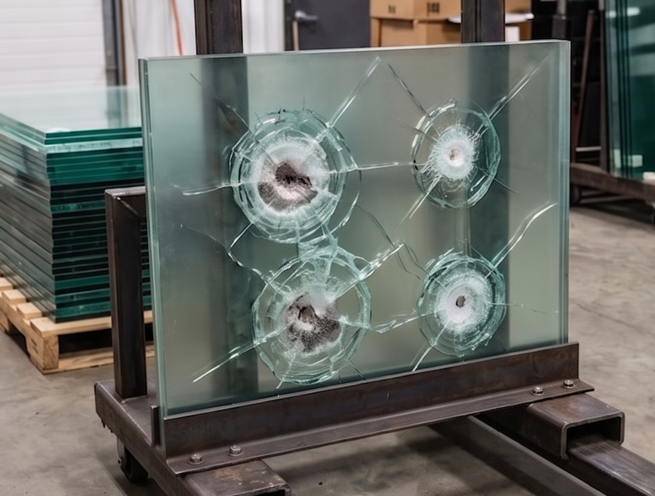
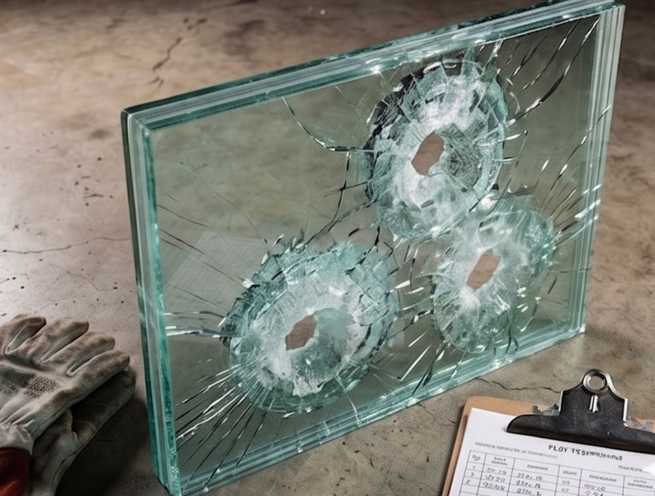
The Madoors USA Bullet Resistant Glass System is a multi-layer laminated glass-polycarbonate ballistic glazing system providing maximum security protection with crystal-clear optical clarity — independently tested and certified to EN 1063 Classes BR1 through BR7, UL 752 Levels 1 through 8, and NIJ 0108.01 military and law enforcement specifications, covering the complete threat spectrum from 9mm handgun rounds through 7.62mm NATO rifle ammunition. With over 35 years of defense and high-security engineering expertise, proven NATO-standard reference projects, global delivery capability, tailored R&D, and custom project design, Madoors USA Bullet Resistant Glass provides the ultimate combination of ballistic protection and architectural elegance for military facilities, embassies, banks, government buildings, high-security villas, and any high-risk location where security is critical.
TECHNICAL SPECIFICATIONS
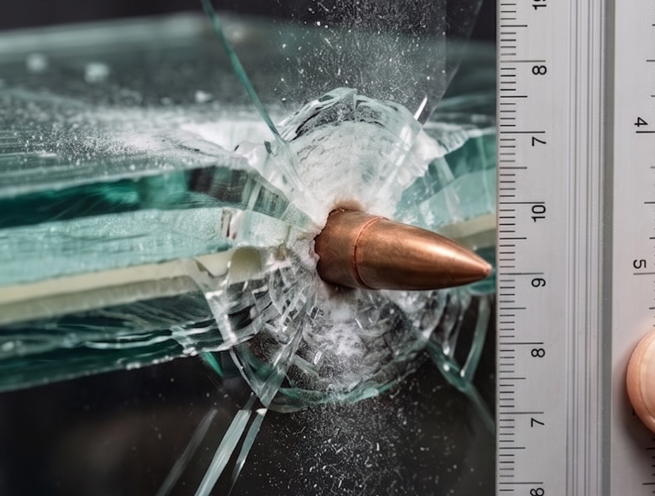
The Madoors USA Bullet Resistant Glass is manufactured using advanced glass-polycarbonate multi-layer lamination technology — alternating layers of glass and polycarbonate are laminated under high pressure and temperature to create a unified panel that absorbs and dissipates ballistic impact energy progressively through the layer stack. When a projectile strikes the panel, the outer glass layers fracture and absorb the initial kinetic energy, the polycarbonate interlayers deform plastically to absorb the remaining energy, and the inner glass layers prevent spall fragmentation from entering the protected space. This progressive energy absorption across multiple layers is the engineering mechanism that achieves ballistic arrest without the panel thickness required by monolithic glass at equivalent protection levels.
The multi-layer lamination maintains high optical clarity and light transmission — the glass and polycarbonate materials are selected and processed for the lowest possible optical distortion, providing the clear, undistorted visibility required for observation windows, vehicle glazing, security booths, and architectural facades where visual quality is essential alongside protection performance.
The EN 1063 certification range from BR1 through BR7 covers the complete European ballistic classification — BR1 and BR2 for 9mm handgun protection, BR3 for .357 Magnum, BR4 for .44 Magnum, BR5 for 5.56×45 NATO, BR6 for 7.62×51 NATO, and BR7 for 7.62×51 NATO hard core armor-piercing. UL 752 Levels 1 through 8 cover the American standard ballistic classification from 9mm through multiple 7.62 rifle rounds. NIJ 0108.01 covers the military and law enforcement specification requirements for ballistic glazing in tactical and protective applications.
UV resistance maintains optical clarity and laminate integrity under sustained ultraviolet radiation exposure — preventing the yellowing, delamination, and optical distortion that UV-sensitive polycarbonate interlayers develop over time in outdoor installation. Thermal resistance across the full ambient temperature range maintains the dimensional stability and laminate bond integrity required for consistent ballistic performance throughout the service life.
Custom project design and tailored R&D allow any ballistic protection level, panel dimension, frame integration specification, and architectural requirement to be addressed — the 35-year defense engineering expertise directly supports the most demanding NATO-standard and government procurement specifications.
KEY FEATURES
EN 1063 BR1–BR7, UL 752 Level 1–8 & NIJ 0108.01 — Complete International Certification
The three-standard certification range covering the complete ballistic protection spectrum — from standard handgun at the lowest levels through armor-piercing rifle ammunition at the highest — provides the most comprehensive international procurement compliance documentation available for ballistic glazing specification. EN 1063 for European and international government procurement, UL 752 for American institutional and commercial procurement, and NIJ 0108.01 for military and law enforcement procurement — all three standards are covered from a single Madoors USA product family.
Multi-Layer Glass-Polycarbonate Lamination — Progressive Energy Absorption
The multi-layer laminated construction is the fundamental ballistic engineering principle that distinguishes bullet-resistant glass from monolithic glass — the progressive energy absorption across multiple alternating glass and polycarbonate layers achieves ballistic arrest at a panel thickness significantly less than monolithic glass would require at equivalent protection levels. This lamination efficiency directly reduces the panel weight and frame loading of the ballistic glazing installation while maintaining the certified protection performance.
Superior Optical Clarity — Undistorted High Light Transmission
The superior optical clarity with high light transmission and low optical distortion is the essential performance characteristic that distinguishes architectural and security ballistic glazing from purely functional ballistic panels — the installation must maintain the visual quality of the architectural opening while providing certified ballistic protection. High optical clarity allows observation window operators, security personnel, and building occupants to see through the glazing with the same visual quality as standard clear glass.
UV & Thermal Protection — Long-Term Outdoor Performance
The UV and thermal resistance maintains the optical clarity, laminate integrity, and ballistic performance of the glazing throughout the full outdoor service life — UV-resistant interlayer materials prevent the yellowing and delamination that reduce optical quality and may compromise ballistic performance in non-UV-stabilized laminated glass products. This long-term performance maintenance directly reduces the replacement cycle cost of ballistic glazing in permanent outdoor installations.
35+ Years Defense Engineering Expertise — NATO Reference Projects
The over 35 years of defense and high-security engineering expertise with proven NATO-standard reference projects provides the technical credibility and project track record that procurement authorities require for high-security glazing specification — not a commercial glazing company applying standard lamination techniques to ballistic requirements, but a defense engineering specialist with three decades of certified ballistic product development and NATO project delivery.
Custom R&D & Project Design — Any Specification Addressable
The tailored R&D and custom project design capability allows any ballistic protection requirement, panel geometry, frame integration specification, and architectural constraint to be addressed through the Madoors USA engineering team. This custom capability is the essential service for the most demanding ballistic glazing applications — armored vehicle glazing, bunker observation windows, specially shaped architectural security glazing, and any non-standard geometry or performance requirement that catalog products cannot satisfy.
Low Maintenance — Standard Cleaning Methods
The easy cleaning using standard methods directly reduces the ongoing maintenance cost of the ballistic glazing installation — no specialist cleaning agents, no delicate surface treatments, and no maintenance procedures that differ from standard architectural glazing. This maintenance simplicity is particularly valuable for large-area ballistic facade installations where cleaning is a regular operational cost.
PROTECTION LEVEL APPLICATIONS
EN 1063 BR1/BR2 — 9mm FMJ handgun protection. Bank teller counters, retail security screens, guard booth glazing, reception security screens.
EN 1063 BR3 — .357 Magnum JSP protection. Police station custody suite glazing, court security screens, commercial high-value retail.
EN 1063 BR4 — .44 Magnum SJHP protection. Bank vault glazing, jewelry store security, high-value asset protection.
EN 1063 BR5 — 5.56×45 NATO protection. Military facility observation windows, embassy security glazing, government building external glazing.
EN 1063 BR6 — 7.62×51 NATO FMJ protection. Military command post glazing, armored vehicle glazing, forward operating base observation.
EN 1063 BR7 — 7.62×51 NATO hard core armor-piercing protection. Highest threat military and diplomatic facility glazing, VIP protection vehicle glazing.
PRODUCT CONFIGURATIONS
Security Screen Panels — Fixed ballistic glazing panels for security counters, teller windows, reception screens, and transaction windows. Standard and custom dimensions. All protection levels.
Observation Window Units — Pre-framed ballistic glazing units for wall installation at guard posts, control rooms, and security positions requiring observation into protected and unprotected areas.
Architectural Facade Glazing — Large-format ballistic laminated glass for building facade applications at embassies, government buildings, and high-security residential properties requiring ballistic protection at the building envelope.
Armored Vehicle Glazing — Custom-shaped ballistic laminated glass for vehicle windscreen, side window, and rear window positions. Custom curvature and frame integration to vehicle-specific geometry.
Security Door Glazing Inserts — Ballistic laminated glass panels for integration into armored door leaf assemblies — providing visual access through the door while maintaining the ballistic protection of the complete door system.
ASSEMBLY & INSTALLATION SEQUENCE
Threat Assessment & Protection Level Selection
The specific ballistic threat, required EN 1063, UL 752, or NIJ protection level, panel dimensions, frame integration, UV exposure, thermal range, and custom project requirements are confirmed through the Madoors USA project design consultation.
Custom Panel Manufacture
Multi-layer glass-polycarbonate lamination is manufactured to the confirmed protection level, panel dimensions, and optical clarity specification. Independent ballistic testing to the confirmed standard and level is completed. Certification documentation is issued.
Frame & Structural Preparation
The installation opening or vehicle frame is prepared to the confirmed panel dimensions and frame integration specification. Structural support for the panel weight and ballistic impact loading is confirmed.
Panel Installation & Frame Sealing
The ballistic glass panel is installed in the prepared frame. All perimeter seals and frame fixings are completed to the specification required for the panel weight and ballistic loading. Optical clarity and frame seal integrity are verified.
Certification Documentation & Handover
EN 1063, UL 752, and NIJ certification test reports, custom project design documentation, 35-year expertise credentials, and NATO reference project references are compiled into the project handover package.
DEPLOYMENT SCENARIOS & USE CASES
Madoors USA Bullet Resistant Glass Systems are specified for any facility or vehicle requiring certified ballistic glazing protection.
- Military base observation windows and control room glazing
- Embassy and diplomatic mission facade ballistic glazing
- Government ministry and building external glazing
- Presidential and VIP protection facility glazing
- Bank teller counter and vault area security glazing
- Jewelry store and high-value retail security screens
- Police station custody suite and interview room glazing
- Court complex and justice facility security screens
- Armored vehicle windscreen and side window glazing
- Corporate headquarters executive protection glazing
- Nuclear facility control room ballistic observation windows
- High-security villa and private estate facade glazing
- Data center and financial institution security glazing
- Airport VIP and security zone ballistic glazing
- Any facility or vehicle requiring EN 1063, UL 752, or NIJ certified ballistic laminated glass protection
- Category: Blast-Resistant & Fireproof Glass