Building Exterior Ballistic Armor Coating
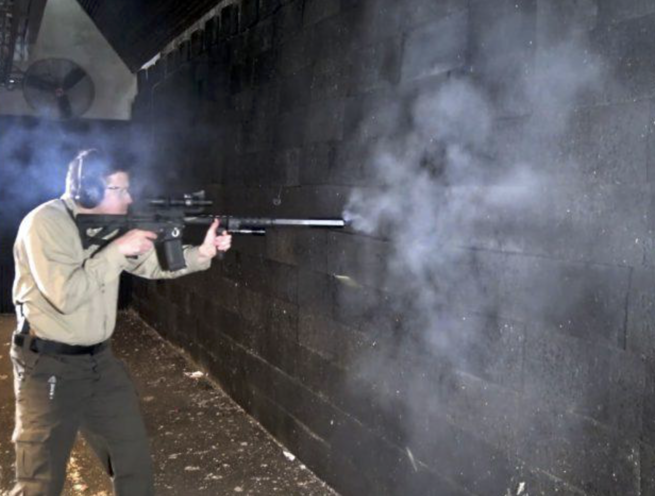
The Madoors USA Building Exterior Ballistic Armor Coating system is a multi-layer, modular armored panel protection system engineered for the exterior surfaces of buildings, dormitories, dining halls, administration buildings, and office structures in military camps, oil and mining camps, border installations, and any location exposed to attack by bullets, high-velocity fragments, assault rifle rounds, and blunt impact threats. Constructed from armored modular container panels assembled to form complete protected living and working areas, the system provides structural ballistic protection for military personnel and civilian workers in high-threat environments — addressing the statistical reality of modern combat casualties where fragments account for up to 59% of casualties, bullets for 19%, and other causes for the remaining 22%.
The ballistic protection performance of the system depends on its ability to absorb energy locally and transfer that absorbed energy efficiently and rapidly across the armor structure — achieved through a multi-layer design combining rigid ceramic or steel interceptor plates with soft textile and composite energy-absorbing layers, and optional shear-thickening colloidal dispersion composite systems for advanced multi-threat protection.
TECHNICAL SPECIFICATIONS
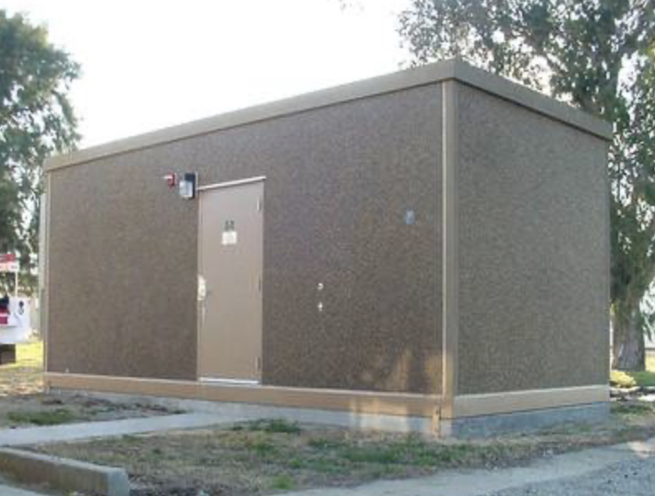
The Madoors USA Building Exterior Ballistic Armor Coating system is based on armored modular container panels that are assembled together to create complete building structures — dormitories, dining halls, administration buildings, and offices — with ballistic armor integrated into the exterior panel structure rather than applied as a retrofit layer over conventional construction. This integrated construction approach ensures that the ballistic protection is structural rather than decorative, with the armor panel forming both the building envelope and the ballistic protection layer simultaneously.
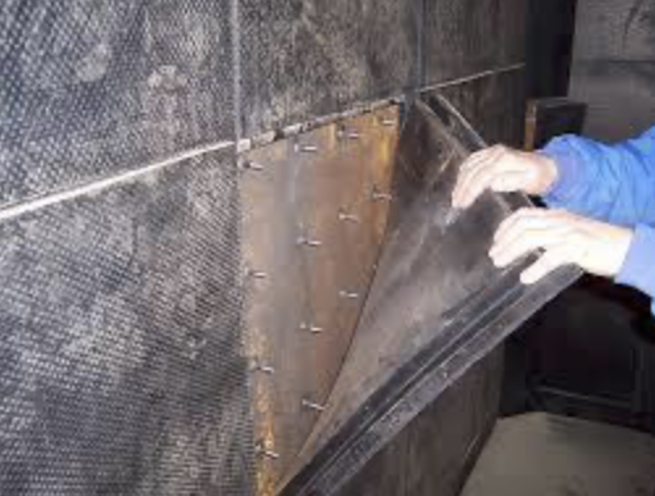
The ballistic protection mechanism operates through a layered energy absorption and dispersion system. The outer rigid plate layer — constructed from ceramic plates, special high-strength steel, or composite rigid plate material — intercepts incoming projectiles and disperses their kinetic energy over a large area, preventing penetration through the hard outer face. The inner soft textile layer — constructed from woven, knitted, or nonwoven high-performance antiballistic fabric, laminates, or composites — absorbs the remaining kinetic energy after the rigid plate interaction, causes deformation of the projectile or fragment prior to it reaching the building interior, and provides blunt impact protection against the shock transmitted through the rigid plate.
Advanced composite systems incorporating high-performance antiballistic fibers combined with shear-thickening colloidal dispersion are available for higher protection level requirements — providing enhanced multi-threat capability against knife attack, handgun rounds, assault rifle bullets, high-velocity bullets, and high-energy fragments through a single composite panel construction.
The modular container assembly system allows building structures of any required floor area, room count, and configuration to be constructed by joining armored container modules together — providing scalable ballistic-protected accommodation and working facilities for military camps, oil and mining exploration sites, and border security installations without requiring conventional construction techniques or foundations.
KEY FEATURES
Fragment Protection Priority — 59% of Combat Casualties
The ballistic armor coating system is specifically engineered with fragment protection as the primary design priority — reflecting the documented statistical reality that fragments cause up to 59% of military combat casualties compared to 19% from direct bullet impact. The multi-layer energy absorption system is optimized to defeat high-velocity fragments across a wide range of fragment sizes, shapes, and impact angles — providing the most operationally relevant protection for military camp buildings and border installation structures in active threat environments.
Multi-Layer Energy Absorption — Rigid Plate & Soft Textile
The rigid outer plate layer intercepts and disperses projectile kinetic energy across a large surface area, while the inner soft textile layer absorbs residual energy and causes projectile deformation before the round can reach the building interior. This two-stage energy absorption mechanism — hard outer face followed by soft inner absorber — is the fundamental design principle of effective multi-threat ballistic armor and provides superior protection against both ballistic projectiles and blast fragments compared to single-material armor solutions.
Ceramic Plate Technology
Ceramic plate components provide the highest weight-to-protection ratio available in rigid plate armor construction — intercepting incoming projectiles through ceramic fracture that destroys the projectile's penetrating tip, dispersing kinetic energy over the full ceramic plate area, and reducing the residual energy to a level manageable by the backing textile layer. Ceramic plate technology is the primary material choice for armor applications where weight and thickness constraints require the highest available protection-to-weight performance.
Advanced Composite — Antiballistic Fiber & Shear-Thickening Dispersion
The advanced composite system combining high-performance antiballistic fibers with shear-thickening colloidal dispersion provides a unique dual-mechanism protection capability — the antiballistic fibers arrest projectile penetration through tensile energy absorption, while the shear-thickening dispersion stiffens under impact to increase energy absorption at the specific impact point. This combined mechanism delivers superior ballistic performance against high-velocity projectiles and fragments compared to conventional fiber-only composite systems of equivalent thickness and weight.
Modular Armored Container Building System
The armored modular container system allows complete ballistic-protected building complexes — dormitories, dining halls, administration buildings, and office facilities — to be constructed by assembling standardized armored container modules. This modular assembly approach enables rapid construction of protected facilities without conventional building trades, foundations, or site infrastructure — providing immediately operational ballistic-protected accommodation and working environments at military camps, oil exploration sites, mining operations, and border installations.
Scalable Protection — Any Building Size & Configuration
The modular container assembly system scales from individual single-room shelter units through to complete multi-building camp complexes — with ballistic protection maintained at the same certified level across all building types, scales, and configurations. Additional modules can be added to expand existing protected facilities as camp population or operational requirements grow.
Multi-Threat Coverage — Bullets, Fragments & Blunt Impact
The multi-layer armor system addresses the complete threat spectrum relevant to military camp and border installation protection — knife attack, handgun rounds, assault rifle bullets, high-velocity bullets, high-energy fragments, and blunt impact — through the combination of rigid plate, soft textile, and optional composite layers selected and configured for the specific threat level assessment of the deployment environment.
Blunt Impact Protection — Shock-Absorbing Materials
Shock-absorbing materials integrated into the armor layer assembly provide blunt impact protection against the behind-armor blunt trauma generated when a projectile or fragment impacts the outer plate — reducing the transmitted shock energy to the building occupants and structural fabric behind the armor panel even when the outer plate successfully prevents ballistic penetration.
Applications Beyond Buildings — Vests, Helmets & Vehicles
The same ballistic protection technology platform covers protective apparel including ballistic vests, armors, and helmets, as well as structural reinforcement for vehicles — providing a consistent, integrated ballistic protection engineering approach across the complete range of personnel and structural protection requirements at military camps and high-threat operational locations.
ASSEMBLY & INSTALLATION SEQUENCE
Threat Assessment & Protection Level Selection
The threat environment at the installation location is assessed — weapon types, projectile calibers, fragment hazard profile, and required protection level are determined. The specific armor panel construction — rigid plate material, textile layer specification, and optional composite system — is selected to meet the confirmed protection level requirement.
Site Preparation
The installation site is prepared for modular container placement — ground leveling, drainage, and site access for container delivery vehicles are confirmed. Foundation requirements are assessed — most modular container systems are self-supporting on adequately prepared flat ground without concrete foundations.
Armored Container Module Delivery & Positioning
Armored container modules are delivered to the installation site and positioned using crane or forklift equipment. Module placement sequence follows the confirmed building layout plan — ground floor modules are positioned first, followed by upper floor modules where multi-story construction is specified.
Inter-Module Connection & Structural Integration
Adjacent modules are connected using the specified inter-module structural connection system, creating a unified building structure from the assembled container modules. Connection integrity and ballistic continuity at inter-module joints are verified — ensuring no unprotected gap exists at module junction lines.
Exterior Armor Panel Verification
The exterior ballistic armor coating panels on all exposed building faces are inspected for installation integrity, panel joint continuity, and armor layer completeness. Any transportation damage to ceramic or composite armor components is identified and remediated before the building is declared operationally ready.
Services Connection & Interior Fitout
Electrical supply, water supply, drainage, HVAC, and communications infrastructure are connected to the assembled building modules. Interior fitout — furniture, lighting, sanitary facilities — is completed to the specified standard for each building type.
Operational Readiness Verification
Complete building structural integrity, armor panel condition, inter-module connection security, and all services systems are verified before the facility is declared operational. Maintenance inspection schedule for armor panel condition monitoring is established and documented.
DEPLOYMENT SCENARIOS & USE CASES
Madoors USA Building Exterior Ballistic Armor Coating systems are deployed for the construction and protection of buildings in any high-threat environment where ballistic and fragment protection of building occupants is a primary design requirement.
- Military forward operating base dormitory and accommodation buildings
- Military camp dining hall and mess facility construction
- Military camp administration and headquarters building protection
- Border security installation building armor protection
- Oil exploration and production camp building protection
- Mining camp personnel accommodation ballistic protection
- Military observation and surveillance post building armor
- Peacekeeping mission camp building construction
- Temporary military headquarters and command building protection
- Disaster relief camp buildings in conflict-affected areas
- Embassy and diplomatic mission temporary protected accommodation
- Critical infrastructure site personnel accommodation protection
- Military training camp building armor protection
- UN and NGO field mission protected accommodation facilities
- Counter-insurgency operation forward base building protection