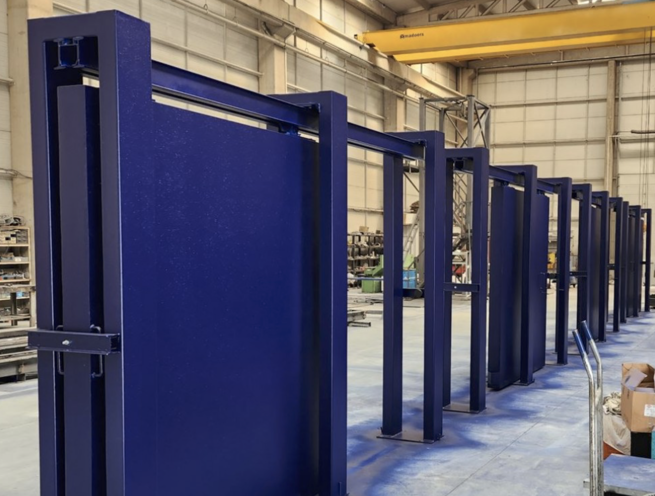
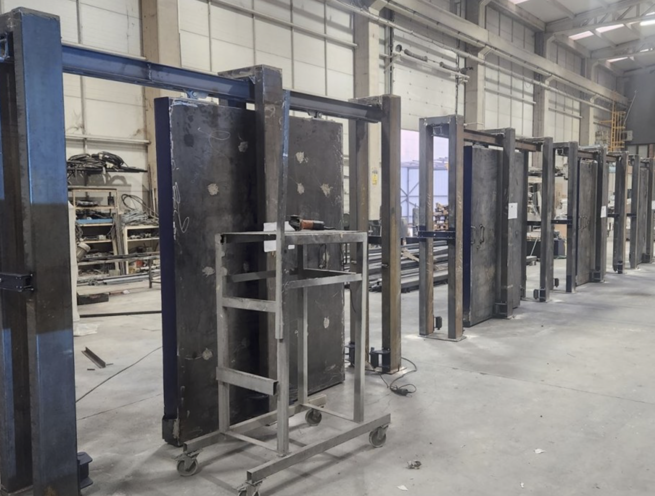
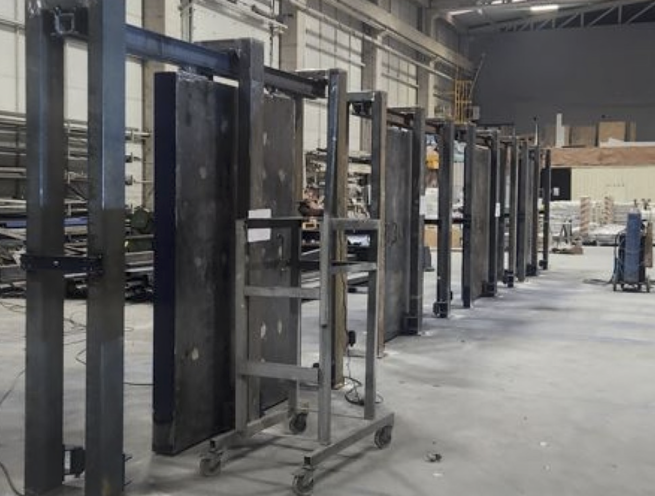
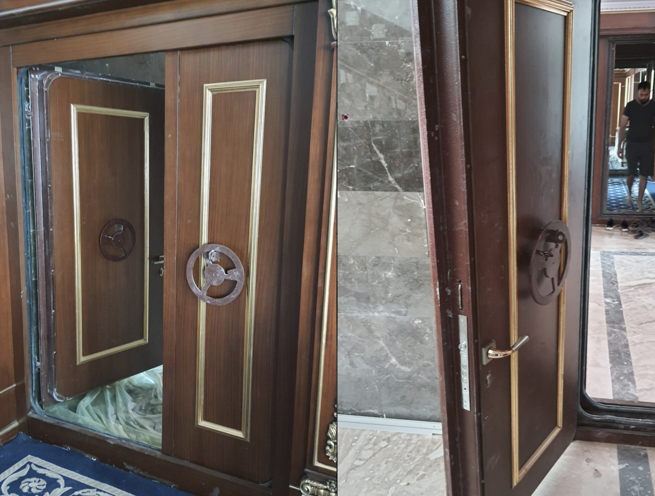
Please provide your technical specifications and project requirements for the Blast-Resistant Door, Explosion-Proof Door. Our engineers will review your application and provide a detailed manufacturing quote, including exact pricing and lead times.
Blast-Resistant Door, Explosion-Proof Door
The Madoors USA Blast-Resistant and Explosion-Proof Door is a custom-engineered, certified personnel door system designed and manufactured in accordance with American and European blast resistance standards — covering positive explosion pressure resistance from 1 bar to 600 bar — for military facilities, ammunition depots, high-security government buildings, petrochemical plants, and any facility where explosion events from inside to outside or outside to inside represent a life safety and structural integrity threat. In service since 2000, Madoors USA's explosion-proof door systems are individually analyzed, structurally calculated, and tested by certified engineers — with every door custom-manufactured to the specific blast pressure level, operating principle, and dimensional requirements of each customer project.
Production is carried out in full conformance with European and American manufacturing quality standards including EN 9100:2009 Quality Management, ISO 3834 Welding Quality Requirements, ISO 15614 Welding Procedure Qualification, EN ISO 9606-1:2013 certified welder qualification, and EN ISO 9712:2012 Level 2 NDT operator qualification — providing clients with independently verified manufacturing quality assurance at every stage of the production process.
TECHNICAL SPECIFICATIONS
Madoors USA blast-resistant and explosion-proof doors are certified to the following explosion-proof door standards. ASTM F2927-12 — Door Systems Subject to Blast Loads, the primary American standard for blast-loaded door system testing and certification. ASTM F2247 — Metal Doors Used in Explosion-Proof Applications using the Equivalent Static Load Method. UFC 4-010-01 — Unified Facilities Criteria for Structures to Resist the Effects of Accidental Explosions, the US Department of Defense standard for military facility blast-resistant design. DOD Guide 6055.09-M — Ammunition and Explosive Safety Standards, the US Department of Defense guide governing ammunition depot and explosive storage facility safety requirements. NATO AASTP-1 — Safety Principles for the Storage of Military Ammunition and Explosives, the NATO alliance standard for ammunition and explosive storage facility safety. CEI EN 60204-1:2006 — Safety and Prevention for electrical and control system components within the door system. EN 13123 — the European standard for explosion resistance of windows, doors, and shutters.
The Madoors USA explosion-proof door range provides certified resistance to positive explosion pressures from 1 bar to 600 bar — the widest blast pressure certification range available from a single door manufacturer, covering every blast pressure scenario from low-pressure industrial explosion hazard applications through to the highest-pressure military ammunition depot and explosive storage facility requirements.
All doors undergo real physical explosion tests as the primary performance verification method, supplemented by mathematical FEM structural analysis models and specialized computer simulation programs. This dual verification approach — real explosion testing confirmed by FEM analysis — provides the highest level of blast resistance performance assurance available, satisfying the most stringent military and government procurement certification requirements.
All structural calculations are performed by Madoors USA's engineering team using finite element method analysis, with the door leaf, frame, hinge, locking system, and structural anchorage all analyzed and dimensioned for the specific blast pressure loading scenario of each project. Globally accepted standards are prioritized throughout the engineering design process.
KEY FEATURES
1 Bar to 600 Bar Certified Blast Pressure Range
Madoors USA holds certified blast-resistant door systems covering positive explosion pressures from 1 bar to 600 bar — the most comprehensive blast pressure certification range available from a single door manufacturer. This complete range coverage allows Madoors USA to supply the correct certified door system for every blast pressure requirement across industrial, petrochemical, government, and military applications from a single engineering and manufacturing source.
Real Explosion Testing — Primary Performance Verification
All Madoors USA explosion-proof doors undergo real physical explosion tests as the primary method of blast performance verification. Real explosion testing — rather than static load testing alone — confirms that the door system performs as designed under the dynamic loading conditions of an actual explosion event, satisfying the most demanding military and government certification requirements that specify real explosion test verification as a procurement condition.
FEM Mathematical Modeling & Computer Simulation
Real explosion testing is supplemented by finite element method structural analysis and specialized computer simulation programs, providing mathematical verification of the door's structural performance across the full range of blast loading conditions relevant to the specific project. FEM analysis allows the engineering team to optimize door geometry, steel specification, locking system design, and frame anchorage for each unique blast pressure requirement before physical testing.
Custom-Manufactured to Project-Specific Requirements
Every Madoors USA explosion-proof door is custom-manufactured to the specific blast pressure level, operating principle, dimensional requirements, and installation conditions of each individual project. No standard catalogue specification is applied across different projects — each door is the result of a complete engineering analysis cycle tailored to the confirmed blast scenario, facility type, and customer specification.
Certified Manufacturing Quality — EN 9100, ISO 3834 & ISO 15614 Production is carried out under EN 9100:2009 Quality Management System certification — the aerospace and defense industry quality management standard — and ISO 3834 Welding Quality Requirements with ISO 15614 Welding Procedure Qualification Records. These manufacturing quality certifications confirm that every weld in every blast-resistant door is performed to verified procedure by qualified welders, providing the weld integrity assurance required for components subject to extreme dynamic loading in explosion events.
EN ISO 9606-1:2013 Certified Welders All welders involved in explosion-proof door manufacture hold test certificates approved in accordance with EN ISO 9606-1:2013 — the European standard for qualification testing of welders for fusion welding of steels. Certified welder qualification ensures that the structural welds in blast-resistant steel door construction are performed by personnel whose welding competence has been independently verified to the applicable standard.
EN ISO 9712:2012 Level 2 NDT Operators Non-destructive testing of structural welds and critical components is performed by NDT operators qualified to Level 2 in accordance with EN ISO 9712:2012 — the European standard for qualification and certification of NDT personnel. Level 2 NDT operators have demonstrated competence to conduct, direct, and report NDT examinations, providing verified inspection quality assurance for the structural integrity of blast-resistant door components.
Inside & Outside Explosion Scenarios
Madoors USA explosion-proof doors are designed for both inside-to-outside and outside-to-inside explosion scenarios — with the structural configuration, hinge design, locking system, and frame anchorage all optimized for the correct load direction based on the specific explosion scenario of each installation. Bi-directional blast resistance is also available for applications where the explosion hazard direction cannot be predetermined.
ASTM F2927, ASTM F2247, UFC 4-010-01, DOD 6055.09-M & NATO AASTP-1 Compliance The complete range of American and NATO military procurement blast door standards is covered by Madoors USA's certification portfolio — allowing the doors to be specified for US government, US Department of Defense, and NATO allied nation defense procurement projects without requiring separate product certification for each national or institutional standard.
Customer Coordination Throughout Engineering Process
The engineering process at Madoors USA begins with detailed determination of the customer's specific requirements and continues in direct coordination with the customer throughout the design, calculation, testing, and manufacturing stages. This collaborative engineering approach ensures that the delivered door system precisely matches the customer's facility requirements, blast pressure specification, and installation constraints — with no gap between the door as designed and the door as required.
In Service Since 2000 — Proven Track Record
Madoors USA has been designing and manufacturing blast-resistant and explosion-proof door systems since 2000, with a 25-year track record of successful projects across military facilities, ammunition depots, petrochemical plants, government buildings, and defense installations worldwide. This extensive project experience is applied to every new customer engagement, supporting efficient engineering, accurate specification, and reliable delivery performance.
BLAST PRESSURE CERTIFICATION RANGES
The Madoors USA explosion-proof door range provides certified blast resistance across the following pressure bands, with each range serving specific application categories.
1 to 10 bar — standard industrial explosion hazard applications including petrochemical control rooms, chemical storage facility blast doors, and industrial process area personnel doors where relatively low positive overpressure levels govern the design.
10 to 50 bar — high-pressure industrial and government facility applications including refineries, gas processing facilities, government secure room blast doors, and military facility perimeter building blast doors where higher overpressure levels reflect proximity to larger explosive sources or higher stored energy quantities.
50 to 200 bar — military ammunition storage and handling facility blast doors where the stored explosive quantity and proximity create high blast pressure design scenarios requiring specialized door construction with enhanced steel specification, concrete fill, and locking systems.
200 to 600 bar — the highest blast pressure certification range available, covering the most demanding military explosive storage, testing facility, and ammunition depot applications where the door must withstand extreme overpressure loading from large-quantity explosive storage or detonation test scenarios.
ASSEMBLY & INSTALLATION SEQUENCE
Blast Scenario Determination & Customer Requirement Analysis
The specific explosion scenario is analyzed — explosive substance type, stored quantity, facility geometry, standoff distance, and required blast pressure resistance class are determined. Operating principle — single or double leaf, swing or sliding, manual or motorized — is confirmed. Inside-to-outside or outside-to-inside explosion direction is confirmed. Customer-specific dimensions, finish requirements, and certification standard obligations are documented.
Engineering Design & FEM Structural Analysis
The door leaf, frame, hinge system, locking mechanism, and structural anchorage are designed and structurally analyzed using FEM modeling for the confirmed blast pressure loading scenario. Computer simulation is used to verify structural performance across the full dynamic loading cycle — positive phase overpressure, negative phase rebound, and impulse. Design documentation is reviewed with the customer before manufacture commences.
Manufacturing Under Certified Quality Management Door components are manufactured in accordance with EN 9100:2009 Quality Management System procedures. All structural welds are performed by EN ISO 9606-1:2013 certified welders to ISO 3834 welding quality requirements and ISO 15614 qualified procedures. NDT inspection by EN ISO 9712:2012 Level 2 qualified operators is conducted on structural welds and critical components.
Real Explosion Testing
The manufactured door system undergoes real physical explosion testing at the confirmed blast pressure rating, with test conditions matching the design blast scenario specifications. Test results are documented and verified against the ASTM F2927, ASTM F2247, or EN 13123 certification requirements for the applicable standard.
Structural Opening Preparation
The structural opening in the blast-rated wall is prepared to the confirmed frame dimensions and depth. Structural anchor positions for the blast-rated frame-to-wall connection are prepared to the engineering specification — conventional anchor specifications are insufficient for blast-rated frame anchorage and are not used.
Frame Installation & Blast-Rated Anchorage
The blast-resistant door frame is installed in the prepared opening and anchored to the surrounding blast wall structure using blast-rated anchor systems at all specified fixing positions. Frame alignment is verified and all anchor bolts are torqued to the blast-rated installation specification.
Door Leaf & Locking System Installation
The blast-resistant door leaf is installed on the frame hinge system. The custom locking system is assembled and adjusted for correct bolt engagement force and travel against the blast-rated frame sealing surface. Door alignment, frame seal contact, and locking system function are verified.
Certification Documentation Handover
Complete blast resistance certification documentation — ASTM F2927, ASTM F2247, EN 13123, UFC 4-010-01, DOD 6055.09-M, and NATO AASTP-1 certifications as applicable — is compiled with real explosion test reports, FEM analysis documentation, manufacturing quality records, and weld inspection reports into the project certification and handover package.
DEPLOYMENT SCENARIOS & USE CASES
Madoors USA Blast-Resistant and Explosion-Proof Doors are specified for any facility where personnel door systems must withstand explosion overpressure loading from 1 bar to 600 bar.
- Military ammunition depot and explosive storage facility blast doors
- NATO and allied nation ammunition storage blast door systems
- Military bunker and hardened shelter personnel blast doors
- Petrochemical plant and refinery explosion zone personnel doors
- Chemical processing facility hazardous storage blast doors
- Oil and gas production and processing facility blast doors
- Nuclear facility blast-resistant personnel access doors
- Government secure room and classified facility blast doors
- Military range and explosive testing facility blast doors
- Offshore platform hazardous zone explosion-proof doors
- Industrial vapor cloud explosion hazard facility doors
- Airport fuel storage and handling facility blast doors
- LNG terminal and cryogenic facility blast-resistant doors
- Military command and operations bunker personnel doors
- Research and development explosive testing facility blast doors
- Category: Personnel Doors