Please provide your technical specifications and project requirements for the Automatic Vehicle Restraint. Our engineers will review your application and provide a detailed manufacturing quote, including exact pricing and lead times.
Automatic Vehicle Restraint
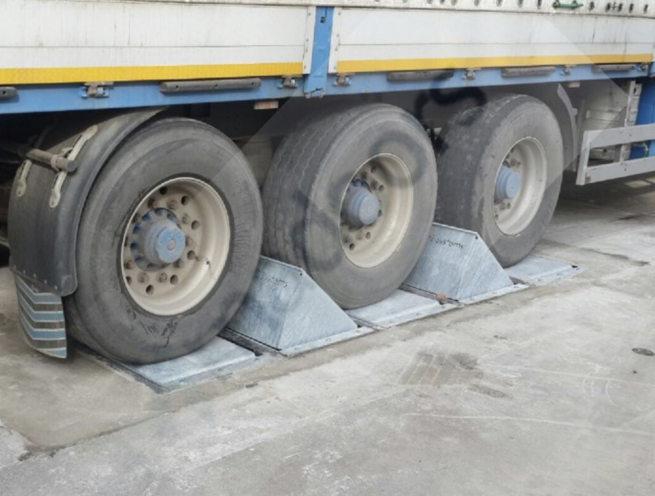
The Madoors USA Automatic Vehicle Restraint Truck Wheel Stopper — WH-200 Series — is a pneumatic and hydraulic loading dock wheel chock system engineered to prevent truck movement during loading and unloading operations, eliminating the risk of sudden vehicle departure, dock leveler accidents, and personnel injury at loading bays, factories, warehouses, and garages. With 60 tonnes of axle load resistance, single control panel operation, no tools required for chock removal, and full interlock control with the dock leveler and sectional door, the Madoors USA WH-200 makes it physically impossible for a truck to depart before loading and unloading operations are complete — protecting personnel, goods, and facility infrastructure throughout every loading cycle.
Loading dock vehicle movement is one of the most significant causes of workplace accidents in industrial and logistics facilities. Trucks can move unexpectedly during loading — whether from driver error, drivetrain creep, or brake failure — causing dock leveler collapse, forklift falls, personnel entrapment, and cargo damage. The Madoors USA WH-200 Automatic Vehicle Restraint eliminates this risk through automatic wheel chocking that locks the truck in position from the moment the dock leveler is activated until loading is complete and the system is manually released by the operator.
TECHNICAL SPECIFICATIONS
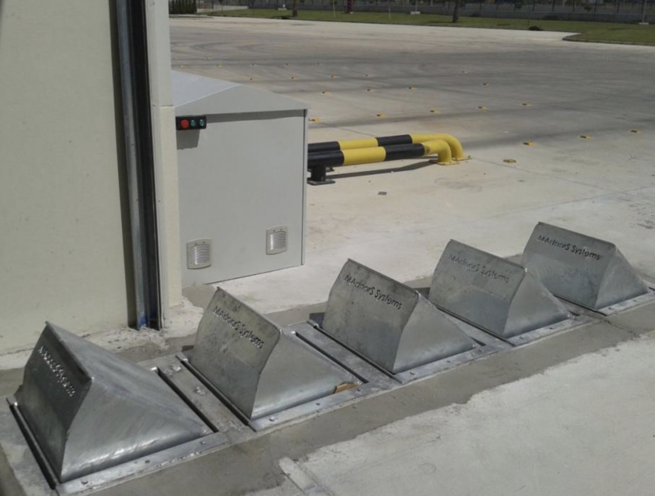
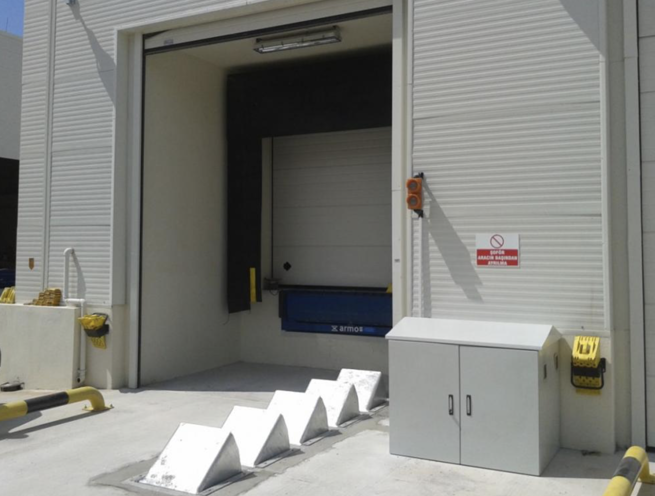
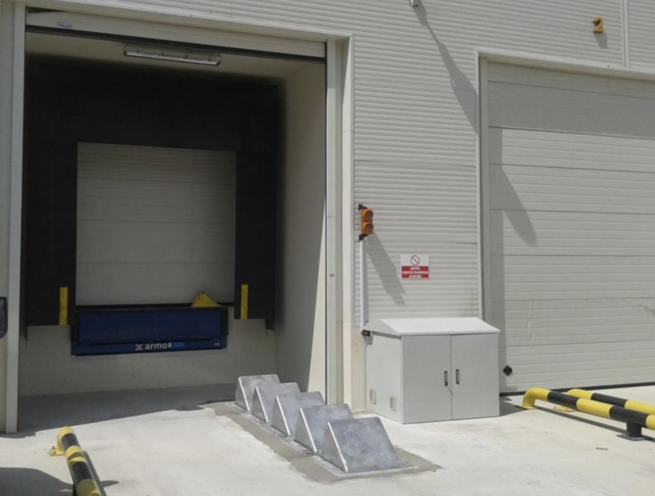
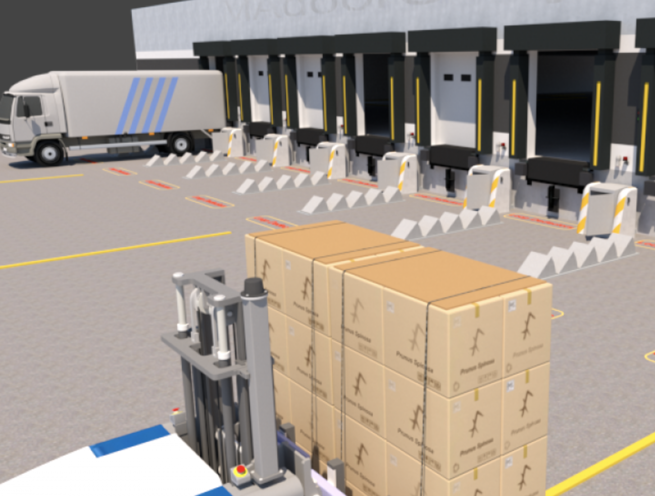
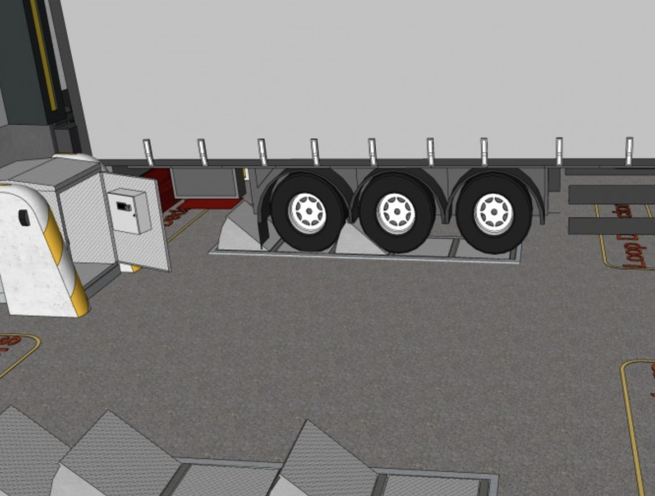
The Madoors USA WH-200 Automatic Vehicle Restraint system consists of one pit installation per loading bay, positioned on one side of the truck approach lane. Within each pit, two rows of offset wheel chocks are installed, providing full wheel contact engagement regardless of the specific stopping position of the truck at the dock. The pneumatic or hydraulic lifting mechanism raises the chocks against the truck wheels when activated, locking the vehicle in position through mechanical wheel restraint rather than friction or braking dependence.
The system is manufactured in both pneumatic and hydraulic drive configurations. Pneumatic operation provides rapid chock engagement and release response. Hydraulic operation provides high-force chock engagement for the heaviest truck axle loads. Both configurations deliver 60 tonnes of axle load resistance — sufficient for the full range of heavy goods vehicles, articulated trucks, and semi-trailers encountered at commercial and industrial loading dock applications.
The system operates on 380V or 220V AC power supply, providing compatibility with standard industrial electrical supply configurations without requiring dedicated power infrastructure. The complete assembly is hot-dip galvanized and fully rust-proof, providing long service life in the wet, contaminated, and chemically aggressive environment of active loading dock operations.
The WH-200 is interlocked with both the dock leveler and the sectional door through a three-way safety interlock sequence that controls the operational relationship between all three systems. The wheel stopper can only be operated — locked or unlocked — when the dock leveler is in the rest position and the sectional door is closed. The sectional door can only be opened when the WH-200 is in the locked position with the truck secured. The dock leveler can only be operated when the WH-200 is in the locked position with the truck secured. This three-way interlock makes it physically impossible for the truck to depart before loading and unloading operations are complete and the system has been formally unlocked by the operator.
Automatic chock profile design eliminates sharp edges at all wheel contact surfaces, preventing tire puncture and tread damage during chock engagement and release — protecting vehicle tires and eliminating the liability associated with tire damage caused by loading dock restraint equipment.
KEY FEATURES
60-Tonne Axle Load Resistance
The WH-200 provides 60 tonnes of axle load resistance, covering the full range of heavy goods vehicles, articulated trucks, and semi-trailers encountered at commercial and industrial loading dock operations. This axle load rating ensures that the wheel chock engagement force is sufficient to prevent vehicle movement under all drive, brake, and creep forces that could be generated by the restrained vehicle during loading operations.
Pneumatic & Hydraulic Drive Options
The system is available in pneumatic and hydraulic drive configurations. Pneumatic drive provides rapid chock engagement and release response suited to high-cycle loading dock operations. Hydraulic drive provides maximum force output for the heaviest axle load applications. Both configurations are operated via a single control panel, providing consistent operator interface regardless of the drive system specification.
Three-Way Safety Interlock — Dock Leveler & Sectional Door
The WH-200 three-way interlock system controls the operational relationship between the wheel stopper, the dock leveler, and the sectional door. The wheel stopper can only lock or unlock when the dock leveler is in rest position and the sectional door is closed, preventing chock operation while the loading bay is active. The sectional door can only be opened when the WH-200 is locked, preventing door opening before the truck is secured. The dock leveler can only be operated when the WH-200 is locked, preventing leveler deployment before the truck is secured. This three-way interlock makes premature truck departure physically impossible throughout the loading cycle.
Two-Row Offset Wheel Chock Configuration
Two rows of offset wheel chocks are installed in the pit on one side of the truck approach lane, providing wheel contact engagement across the full range of truck stopping positions at the dock. The offset row configuration ensures that at least one row of chocks makes positive wheel contact regardless of where the truck wheel comes to rest relative to the pit position — eliminating the coverage gaps that single-row chock systems present when truck stopping positions vary between deliveries.
Single Control Panel Operation
The complete WH-200 system — chock lock, chock release, and interlock status — is operated from a single control panel, providing a simple, clear operator interface that requires no specialized training and eliminates the procedural complexity associated with multi-panel or multi-step restraint system operation.
No Tools Required — Fast Chock Release
Chock removal and release requires no tools — the pneumatic or hydraulic release mechanism disengages the chocks through control panel operation alone. This tool-free release eliminates the time delay and manual effort associated with mechanical chock removal, supporting fast loading bay turnaround times at high-volume logistics and distribution facilities.
All-Weather Operation
The WH-200 system is designed and manufactured for reliable operation in all weather conditions encountered at outdoor and semi-outdoor loading dock environments — including rain, temperature extremes, ice, and contamination from vehicle fluids and cleaning operations. All-weather performance is a fundamental requirement for loading dock safety restraint equipment that must function reliably every cycle regardless of environmental conditions.
Low Maintenance — No Motor, Bearings, Chains or Pinions
The WH-200 is designed for low maintenance operation with no motor, no bearings requiring lubrication, no chains, and no pinions in the chock drive mechanism. A visual check of chock position and system status is sufficient to confirm correct operation before each loading cycle — eliminating the scheduled lubrication, adjustment, and component replacement requirements that increase maintenance costs and operational downtime in more mechanically complex restraint systems.
No Sharp Edges — Tire Protection
The automatic chock profile is specifically designed to eliminate sharp edges at all wheel contact surfaces, preventing tire puncture and tread damage during chock engagement and release. This tire-protective design eliminates the vehicle damage liability and driver complaints associated with conventional chock systems that can cause tire sidewall cuts and tread punctures during engagement.
Hot-Dip Galvanized — Fully Rust-Proof
The complete WH-200 assembly — including pit frame, chock mechanisms, guide rails, and hardware — is hot-dip galvanized for full rust and corrosion resistance in the wet, chemically contaminated environment of active loading dock operations. Hot-dip galvanization provides long-term corrosion protection without surface treatment maintenance across the full service life of the installed system.
380V & 220V AC Compatibility
The system operates on standard 380V or 220V AC industrial power supply, providing electrical compatibility with the existing power infrastructure of any industrial or commercial facility without requiring dedicated or specialized electrical supply installation.
ASSEMBLY & INSTALLATION SEQUENCE
Loading Bay Assessment & System Configuration
Loading bay dimensions, truck approach lane geometry, truck axle load profile, existing dock leveler and sectional door specifications, and power supply availability are assessed. Pit position relative to the truck wheel stopping zone is confirmed. Drive system — pneumatic or hydraulic — is selected based on axle load requirements and facility infrastructure. Interlock connection points with the dock leveler and sectional door control systems are identified.
Pit Excavation & Frame Installation
Pit excavation is completed at the specified position in the loading bay floor. The hot-dip galvanized pit frame is installed into the excavation and set to the correct depth for flush floor surface alignment. The frame is anchored to the surrounding floor structure and leveled.
Chock Mechanism & Drive System Installation
The two rows of offset wheel chocks and the pneumatic or hydraulic drive mechanism are installed within the pit frame. Chock travel, engagement height, and retraction depth are set and verified. Pneumatic air supply or hydraulic supply connections are made to the drive mechanism.
Electrical Connection & Control Panel Installation
Power supply connections — 380V or 220V AC as specified — are made to the drive system and control panel. The single control panel is installed at the specified operator position adjacent to the loading bay entrance. All electrical connections are verified for correct polarity and circuit integrity.
Three-Way Interlock Wiring & Configuration
Interlock wiring connections are made between the WH-200 control system, the dock leveler control system, and the sectional door control system. The three-way interlock logic — wheel stopper operable only with dock leveler at rest and door closed; door openable only with wheel stopper locked; dock leveler operable only with wheel stopper locked — is configured and verified through the control system programming.
Operational Testing — Full Interlock Cycle Verification
Complete operational testing is conducted across the full three-way interlock cycle sequence. All six interlock condition combinations — locked/unlocked wheel stopper against door open/close and dock leveler operation attempts — are tested and verified for correct interlock response. Chock engagement against simulated wheel contact, chock release, and all-weather operation are verified.
Handover & Operator Training
WH-200 system operation, interlock sequence, visual status check procedure, and emergency release procedure are demonstrated to facility operators and loading dock supervisory staff. Maintenance schedule documentation is completed and handed over.
DEPLOYMENT SCENARIOS & USE CASES
Madoors USA Automatic Vehicle Restraint Truck Wheel Stopper Systems are specified for any loading dock where truck movement during loading and unloading operations presents a risk to personnel, goods, or facility infrastructure.
- Logistics and distribution center loading dock safety restraint
- Manufacturing facility goods inward and dispatch dock restraint
- Warehouse and storage facility loading bay truck locking
- Supermarket and retail distribution center dock safety
- Pharmaceutical and food production facility loading dock
- Cold storage and temperature-controlled warehouse dock restraint
- Automotive parts distribution center loading dock safety
- Airport cargo facility truck loading dock restraint systems
- Port container depot loading dock truck restraint
- Printing and paper distribution facility loading dock safety
- Chemical and hazardous materials facility loading dock restraint
- Hospital and healthcare facility goods delivery dock safety
- Government and military logistics facility loading dock restraint
- E-commerce fulfillment center high-volume loading dock safety
- Category: Road Blocker