Please provide your technical specifications and project requirements for the Automatic Revolving Door. Our engineers will review your application and provide a detailed manufacturing quote, including exact pricing and lead times.
Automatic Revolving Door
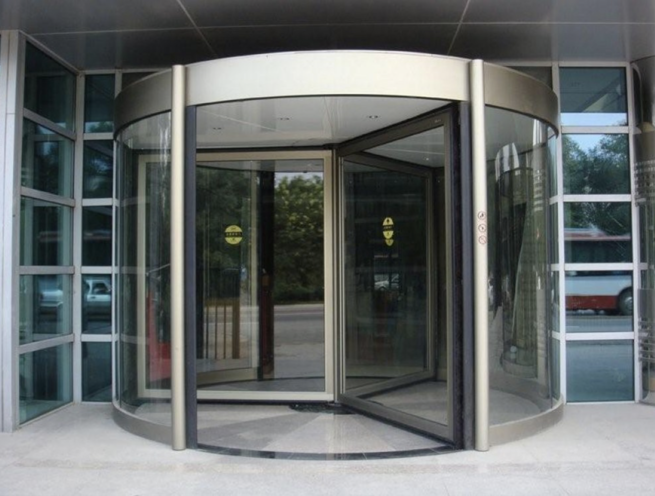
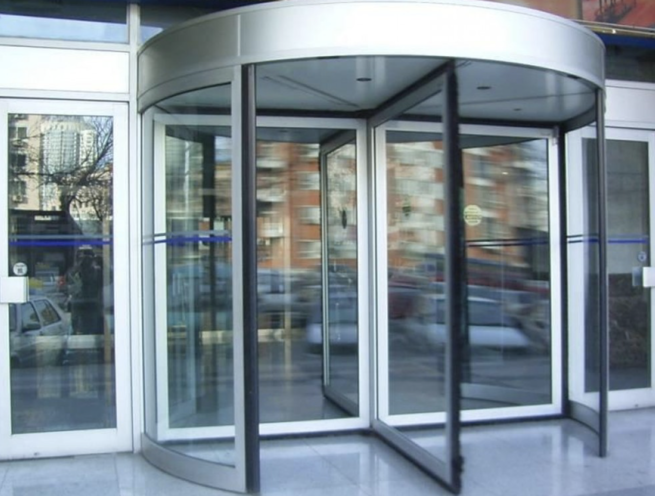
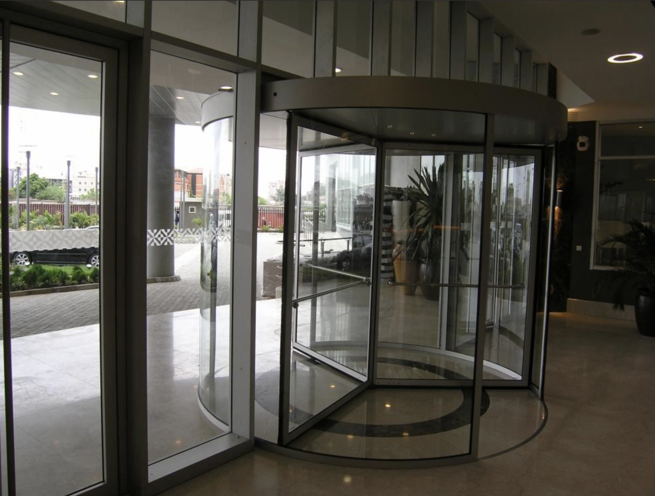
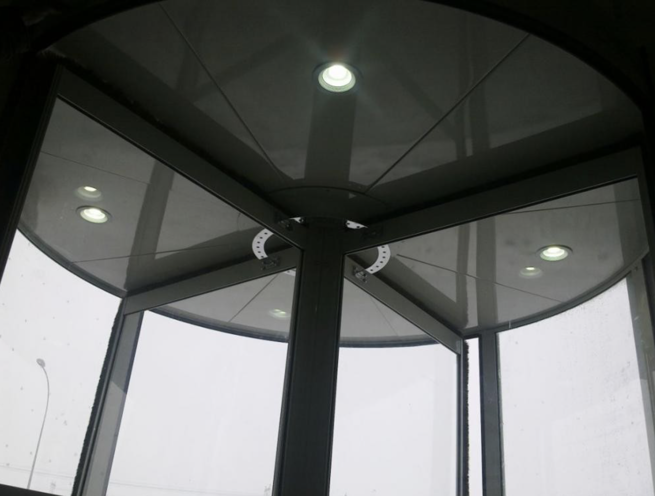
The Madoors USA Automatic Motorized Revolving Door is a high-capacity, climate-control optimized automatic revolving door system available in two-wing, three-wing, and four-wing configurations — engineered to maintain the thermal and acoustic separation of indoor and outdoor environments while delivering an architecturally distinguished, high-traffic building entrance with superior safety, smooth operation, and immediate energy efficiency benefits from the day of installation. Combining the climate-control advantages of a revolving door with the convenience and traffic management capability of an automated motorized system, Madoors USA revolving doors are specified by architects and building owners for emblematic commercial, hospitality, institutional, and public building entrances where energy performance, passenger flow capacity, acoustic comfort, and architectural elegance are simultaneously required.
Installed directly on the finished floor surface with no special foundations required, available in multiple size configurations to accommodate luggage-carrying travelers through to high-volume pedestrian-only traffic, and orderable in configurations that combine to match virtually any building type and entrance geometry, the Madoors USA Automatic Revolving Door offers an excellent return on investment through immediate reduction in heating and cooling costs, noise reduction, and long-term operational reliability.
TECHNICAL SPECIFICATIONS
Madoors USA Automatic Revolving Doors are available in two-wing, three-wing, and four-wing configurations, with each model available in a range of sizes to match the passage volume, luggage accommodation, and architectural requirements of the specific installation. Two-wing and four-wing models are optimized for large, high-capacity entrance applications where maximum compartment size and passenger throughput are primary requirements. Three-wing models provide a balance of compartment size and rotational throughput suited to moderate-to-high traffic entrances where luggage accommodation is a secondary consideration to sustained pedestrian flow.
The motorized automatic drive system controls rotational speed, deceleration, and safety response — providing smooth, consistent door rotation at the speed appropriate to the current traffic volume and passenger profile. The drive system is adjustable to accommodate varying traffic intensities throughout the operating day, slowing for low-traffic periods and maintaining efficient throughput during peak entry and exit periods.
The door system is designed for direct installation on the finished floor surface without special foundation preparation, significantly simplifying installation in both new-build and retro-fit applications and reducing installation time and associated civil works cost. A wide range of accessories is available to customize the system for specific architectural, security, and operational requirements of each project.
The revolving door provides complete separation of indoor and outdoor environments throughout all traffic conditions — the primary functional characteristic that differentiates a revolving door from swing or sliding door alternatives. This complete environmental separation is maintained even at peak traffic throughput, delivering continuous climate control, acoustic separation, and air pressure management at the building entrance regardless of the volume or frequency of user passes.
KEY FEATURES
Complete Indoor-Outdoor Environmental Separation
The revolving door provides continuous, complete separation of indoor and outdoor environments throughout all operating conditions — eliminating the direct air exchange that occurs with every cycle of swing and sliding door systems. This complete separation is the fundamental operational advantage of the revolving door over alternative entrance door types, delivering immediate and sustained reduction in heating and cooling energy consumption from the day of installation.
Thermal Insulation — Immediate Energy Cost Reduction
By maintaining continuous separation of indoor and outdoor air masses, the Madoors USA revolving door eliminates the heating and cooling energy lost through repeated direct air exchange at busy building entrances. The thermal insulation performance of the revolving door system optimizes internal heating and cooling costs immediately on installation — delivering a measurable energy cost reduction that contributes directly to the return on investment calculation for the door system.
Acoustic Insulation — Street Noise Reduction
The revolving door creates a continuous acoustic airlock between the building interior and the exterior street environment, significantly reducing the transmission of street noise — traffic, crowds, construction, and ambient urban sound — into the building interior. This noise reduction is particularly valued in hotels, corporate offices, luxury retail, and cultural institutions where interior acoustic comfort is a priority design requirement.
Two-Wing, Three-Wing & Four-Wing Configurations
Three wing count configurations are available to match the specific traffic volume, compartment size, and architectural character requirements of each installation. Two and four-wing models maximize compartment size for travelers with luggage and large items. Three-wing models optimize rotational throughput for sustained high-volume pedestrian traffic. Wing count selection is determined by the expected daily traffic profile and user characteristics of each specific entrance.
High-Capacity Traffic Flow Management
Automatic motorized revolving doors allow significantly more people to enter and exit a building more quickly than manual revolving door systems, making them the preferred specification for busy facilities — airports, hotels, hospitals, corporate headquarters, and shopping centers — where entrance throughput capacity directly affects operational efficiency and user experience.
Motorized Automatic Drive System
The motorized drive system controls door rotation speed, deceleration, and safety response automatically, providing smooth and consistent rotation without requiring user effort to maintain door movement. Speed is adjustable across the full range of traffic intensities, ensuring safe and comfortable door operation for all user groups — including elderly users, users with mobility aids, and users carrying large luggage or equipment.
Safety Systems — User Protection
The revolving door incorporates safety systems applied to the user, protecting against entrapment, over-speed rotation, and collision with door wings — providing the operational safety required for high-traffic public building entrances where a wide range of user types, including children, elderly users, and users with disabilities, must be safely accommodated.
Cutting-Edge Architectural Design
Madoors USA revolving doors are designed as architectural entrance elements — combining functional climate control and traffic management performance with the visual distinction and elegance that architects and building owners require for emblematic building entrances. The cutting-edge design aesthetic contributes to the overall architectural character of the building entrance, reinforcing the identity and prestige of the facility it serves.
No Special Foundation Required — Direct Floor Installation
The revolving door system is designed for installation directly on the finished floor surface without special foundation preparation, reducing civil works requirements, simplifying installation planning, and enabling deployment in both new-build projects and retro-fit applications where foundation modification would be disruptive or structurally impractical.
Multiple Size Configurations — Luggage to Pedestrian Traffic
Multiple door diameter sizes are available within each wing count configuration, accommodating entrance requirements ranging from travelers with large luggage at hotel and airport entrances through to moderate pedestrian-only traffic at corporate and institutional facilities. Size selection ensures that the door compartment dimensions match the specific user profile and passage requirements of each installation.
Wide Range of Accessories & Configuration Options
The revolving door system is available with a wide range of accessories and configuration options that can be combined to match virtually any building entrance design and operational requirement — providing the architectural and functional flexibility required for deployment across the full diversity of commercial, hospitality, institutional, and public building entrance applications.
Excellent Return on Investment
The combination of immediate heating and cooling energy cost reduction, long-term operational reliability, reduced street noise penetration, high-traffic throughput capacity, and architectural entrance enhancement delivers an excellent return on investment across the operational service life of the Madoors USA revolving door — making it the economically as well as architecturally preferred entrance solution for high-traffic building entrances where climate control is a priority.
ASSEMBLY & INSTALLATION SEQUENCE
Opening Assessment & Configuration Selection
Entrance opening diameter, ceiling height, floor surface condition, traffic volume profile, user characteristics, and architectural requirements are assessed. Wing count, door diameter, and accessory configuration are selected to match the specific entrance requirements. Power supply position and control system interface requirements are confirmed.
Floor Surface Preparation
The finished floor surface at the installation position is inspected for levelness and load-bearing capacity. Any floor surface remediation required to achieve the flatness and strength specification for direct floor mounting is completed before installation commences.
Center Pivot & Drive Unit Installation
The center pivot assembly and motorized drive unit are installed at the floor center point of the revolving door opening. Drive unit alignment and rotational geometry are verified before door wing installation proceeds.
Outer Drum & Canopy Installation
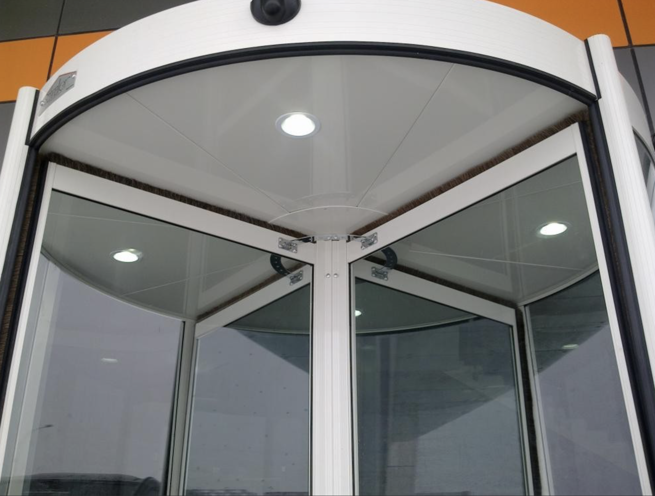
The outer drum curved wall assembly and overhead canopy structure are installed, defining the revolving door enclosure diameter and providing the structural support for the top rotational bearing. Drum and canopy alignment are verified against the center pivot position.
Door Wing Panel Installation
Door wing panels are installed onto the center pivot rotational hardware at the specified wing count configuration. Wing alignment, sweep clearance at floor level, and seal contact at the outer drum are set and verified.
Motorized Drive System Commissioning
The motorized drive system is connected to the facility power supply. Rotation speed, deceleration, hold positions, and safety system responses are programmed and adjusted for the specific traffic profile and user requirements of the installation. Speed adjustment across different traffic intensity modes is configured and tested.
Safety System Testing
All safety systems — wing obstruction detection, over-speed protection, emergency stop, and anti-entrapment response — are installed, connected, and tested through multiple operational cycles. Safety response is verified for the full range of obstruction scenarios applicable to the specific installation environment.
Acoustic & Thermal Seal Verification
All perimeter seals — floor sweeps, drum contact seals, and canopy seals — are inspected and adjusted for continuous contact across the full rotational cycle. Thermal and acoustic separation performance is verified with the door in full rotation.
Final Testing & Handover
Complete operational testing is conducted across all rotation modes, speed settings, safety responses, and accessory functions. Final speed and deceleration adjustments are made for the specific installation conditions. Handover documentation is completed.
DEPLOYMENT SCENARIOS & USE CASES
Madoors USA Automatic Revolving Doors are specified for high-traffic building entrances where climate control, acoustic separation, architectural distinction, and passenger throughput capacity are primary design requirements.
- Hotel and resort main lobby entrance doors
- Corporate headquarters and premium office building entrances
- Airport terminal passenger entrance and departure hall doors
- Hospital and healthcare facility main entrance systems
- Shopping center and luxury mall anchor entrance doors
- University and academic institution landmark building entrances
- Museum, gallery, and cultural institution public entrances
- Government and civic building public entrance facades
- Bank headquarters and financial institution main entrances
- Convention center and exhibition hall public entrances
- Luxury residential apartment tower lobby entrance doors
- Retail flagship store and department store entrance systems
- Railway station and transport hub passenger entrance doors
- Stadium and arena public entrance and VIP entrance doors
- Category: Revolving Door