
Please provide your technical specifications and project requirements for the Automatic Flood Barrier. Our engineers will review your application and provide a detailed manufacturing quote, including exact pricing and lead times.
Automatic Flood Barrier
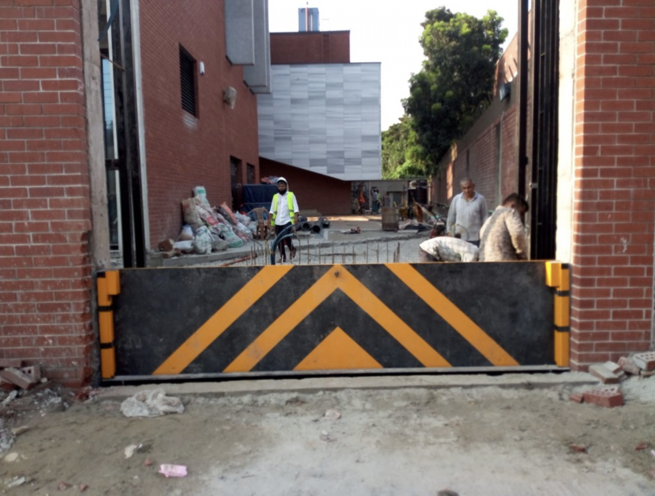
The Madoors USA Automatic Flood Barrier is a fully automated, sensor-triggered flood defense barrier system engineered for a wide range of residential, commercial, and infrastructure flood protection applications — accommodating frequent day-to-day traffic and heavy vehicles in its open standby position while delivering a leak-tight, fully sealed flood barrier at the push of a button or through automatic water sensor activation. Constructed from galvanized steel, stainless steel 304, or a combination of both, and actuated by pneumatic or hydraulic cylinder systems, the Madoors USA Automatic Flood Barrier is designed to be inherently failsafe — loss of power or air pressure automatically triggers barrier closure, ensuring flood protection is never dependent on an active power supply or operator intervention.
TECHNICAL SPECIFICATIONS
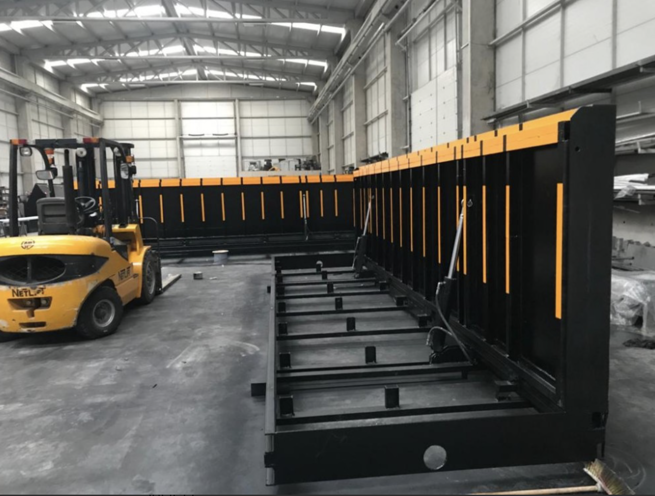
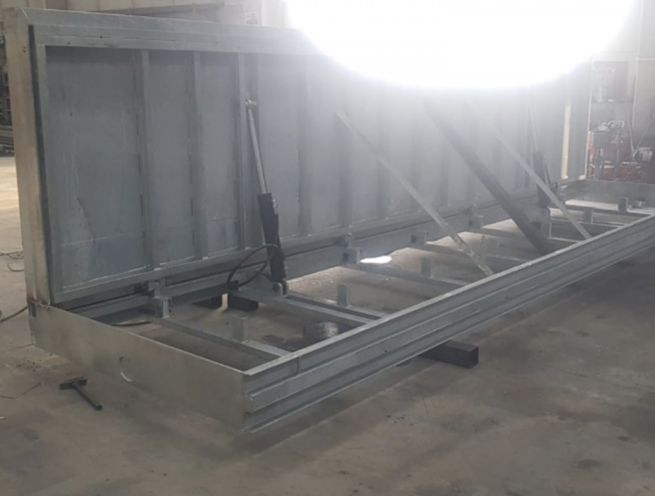
The Madoors USA Automatic Flood Barrier body is constructed from galvanized steel, stainless steel 304, or a combination of both materials — selected based on the corrosion resistance, structural, and aesthetic requirements of each specific installation. The barrier body is firmly bolted in reinforced hinges and includes mounting eyes for the pneumatic or hydraulic actuating cylinders. The cylinders are linked to unique mounts that are securely bolted to the barrier frame, ensuring positive, mechanically reliable actuation across the full range of operating pressure and barrier load conditions.
A compressible, highly durable horizontal seal is mounted within the barrier system, providing the primary water-tight seal between the barrier body and the floor surface when the barrier is in the closed position. Vertical sealing posts ensure a leak-tight seal against the wall at both sides of the barrier opening, completing the full perimeter water seal required for flood containment.
Pneumatic systems operate at 4 to 10 bar pressure. Hydraulic systems operate at 40 to 60 bar. Both actuator types are specified for outdoor installation, providing reliable operation in the exposed environmental conditions — rain, temperature variation, UV exposure, and humidity — encountered at flood-risk property entrances and perimeter openings.
Water sensors are pre-set to monitor rising water levels at the installation location. When the water level reaches the preset trigger threshold, the sensors automatically command barrier closure without requiring operator intervention. The barrier can also be actuated manually at the push of a button for situations where rising flood conditions are observed before the automatic sensor threshold is reached. When flood conditions recede, the barrier travels back to the standby position automatically. A failsafe design ensures that loss of mains power or pneumatic supply pressure automatically triggers barrier closure — flood protection is never compromised by power failure at the critical moment of a flood event.
An acoustic warning signal is fitted as standard to alert personnel and traffic that the barrier is in operation. An optional visual warning light is available to provide additional traffic and personnel warning during barrier activation and operation.
KEY FEATURES
Fully Automatic Water Sensor Activation
Pre-set water sensors continuously monitor rising water levels at the installation location and automatically trigger barrier closure when the water level reaches the activation threshold — providing flood protection even when the property is unoccupied at the time of a flood event. Automatic activation eliminates the dependence on operator presence and intervention that makes manual flood barriers ineffective in sudden or rapidly developing flood events.
Failsafe Design — Power or Air Loss Triggers Closure
The barrier is designed to be inherently failsafe: loss of mains electrical power or pneumatic air pressure automatically triggers barrier closure rather than leaving the barrier in the open position. This failsafe principle ensures that the most likely infrastructure failure scenario during a severe flood event — power supply interruption — results in the barrier closing and protecting the property rather than remaining open and allowing flood ingress.
Push-Button Manual Activation
In addition to automatic sensor activation, the barrier can be closed manually at the push of a button, allowing operators who observe rising water conditions before the automatic sensor threshold is reached to close the barrier immediately without waiting for the automatic activation trigger.
Compressible Horizontal Seal — Leak-Tight Flood Containment
A compressible, highly durable horizontal seal mounted within the barrier system provides the primary water-tight seal between the barrier body and the floor surface in the closed position. The compressible seal accommodates minor floor surface irregularities while maintaining continuous contact pressure across the full barrier width, eliminating water ingress pathways beneath the barrier.
Vertical Sealing Posts — Wall Seal Integrity
Vertical sealing posts at both sides of the barrier ensure a leak-tight seal against the adjacent wall surfaces in the closed position, completing the full perimeter water seal of the barrier assembly. The combination of the horizontal floor seal and vertical wall seals provides a three-side water-tight closure that prevents flood ingress through any gap in the barrier perimeter.
Galvanized Steel & Stainless Steel 304 Construction
The barrier body is available in galvanized steel, stainless steel 304, or a combination of both — providing material specification flexibility for installations with different corrosion resistance, structural load, and aesthetic requirements. Stainless steel 304 construction is specified for coastal, high-humidity, and chemically aggressive environments where galvanized steel service life would be reduced by accelerated corrosion.
Reinforced Barrier Body with Mounting Eyes
The barrier body is reinforced throughout and includes precision-positioned mounting eyes for the pneumatic or hydraulic actuating cylinders. The reinforced construction ensures that the barrier maintains structural integrity under the hydrostatic load of floodwater pressing against the closed barrier face — maintaining the water-tight seal under the full design flood water height without structural deflection that would compromise seal performance.
Pneumatic & Hydraulic Actuation — Outdoor Rated
Both pneumatic actuation at 4 to 10 bar and hydraulic actuation at 40 to 60 bar are available, with the actuator type selected based on the available site infrastructure, required actuation force, and operational preference of each installation. Both pneumatic and hydraulic cylinders are specified for outdoor installation, ensuring reliable actuation performance in the exposed environmental conditions present at flood-risk building entrances.
Unique Cylinder Mounts — Securely Bolted to Frame
The actuating cylinders are connected to unique mounts specifically engineered for the Madoors USA barrier system and securely bolted to the barrier frame — ensuring positive mechanical connection between the actuation system and the barrier body across the full range of operating pressures and barrier load conditions without risk of mount failure or cylinder detachment during flood event operation.
Traffic & Heavy Vehicle Accommodation
In its standby open position, the barrier accommodates frequent day-to-day pedestrian traffic and heavy vehicle movement across the barrier installation location — ensuring that normal access and operations at the protected opening are not disrupted by the presence of the flood barrier system during non-flood conditions.
Acoustic Warning Signal — Standard
An acoustic warning signal is fitted as standard to alert personnel and vehicle traffic in the vicinity of the barrier that activation is in progress — providing the required safety warning before the barrier completes its closure travel.
Optional Visual Warning Light
An optional visual warning light is available to supplement the acoustic warning signal, providing additional traffic and personnel warning that the barrier is in operation — particularly useful in high-noise environments where the acoustic warning alone may be insufficient to alert approaching vehicle operators.
ASSEMBLY & INSTALLATION SEQUENCE
Site Assessment & Flood Risk Profile
The installation opening dimensions, flood water level design height, traffic and vehicle loading requirements, and available power and pneumatic or hydraulic supply infrastructure are assessed. Material specification — galvanized steel, stainless steel 304, or combination — is confirmed for the specific environmental and aesthetic requirements of the installation location.
Structural Opening Preparation
The floor surface at the barrier installation position is prepared to the specified flatness and surface condition required for consistent horizontal seal performance. Wall surfaces at the vertical sealing post positions are prepared for sealing post mounting. Foundation fixing positions for the barrier hinge assembly and cylinder mount anchor points are marked and drilled.
Barrier Frame & Hinge Installation
The reinforced barrier frame and hinge assembly are installed and anchored to the floor and wall structure at the specified fixing positions. Hinge alignment and barrier body swing geometry are verified for correct clearance and seal contact travel.
Cylinder Mount Installation
The unique cylinder mounts are installed and bolted to the barrier frame at the specified mounting eye positions. Mount alignment and bolt torque are verified to the specified installation settings.
Pneumatic or Hydraulic Cylinder Installation
The specified pneumatic or hydraulic cylinders are installed between the cylinder mounts and the barrier body mounting eyes. Cylinder alignment, pin fixing, and travel geometry are verified across the full open-to-closed barrier travel range.
Seal Installation & Verification
The compressible horizontal floor seal and vertical wall sealing posts are installed and adjusted for consistent contact pressure across the full seal perimeter in the closed barrier position. Seal compression and leak-tight contact are verified through the full closed position.
Water Sensor Installation & Preset Calibration
Water sensors are installed at the specified monitoring positions at the installation location. Sensor activation thresholds are preset to the specified flood water level trigger height. Sensor communication with the barrier control system is tested and verified.
Control System, Warning Signal & Pneumatic or Hydraulic Supply Commissioning
The barrier control system is connected to the facility power supply and the pneumatic or hydraulic actuating supply at the specified operating pressure. Acoustic warning signal and optional visual warning light are connected and tested. Automatic sensor activation, manual push-button activation, standby return travel, and failsafe power-loss closure are all tested and verified through multiple complete activation cycles.
DEPLOYMENT SCENARIOS & USE CASES
Madoors USA Automatic Flood Barriers are specified for any building entrance, vehicle access opening, or perimeter penetration where automatic, sensor-triggered flood protection with traffic accommodation is required.
- Residential property garage and entrance flood barrier installation
- Commercial building ground-floor entrance automatic flood protection
- Underground car park vehicle ramp flood barrier systems
- Retail premises and shopfront entrance flood defense
- Hospital and healthcare facility ground-floor flood protection
- Hotel and hospitality property entrance flood barrier systems
- Office building lobby and service entrance flood defense
- Industrial facility loading bay and vehicle access flood barriers
- Transport infrastructure tunnel portal flood barrier installations
- Critical infrastructure facility ground-level opening flood protection
- Municipal building and civic facility entrance flood defense
- Warehouse and logistics facility vehicle entrance flood barriers
- Coastal property tidal surge and storm surge automatic barriers
- River and canal bank property automatic flood protection systems
- Category: Flood Defence Systems