Name:
Alaska Concrete Barrier Wall
Part Number:
MDR-8-147
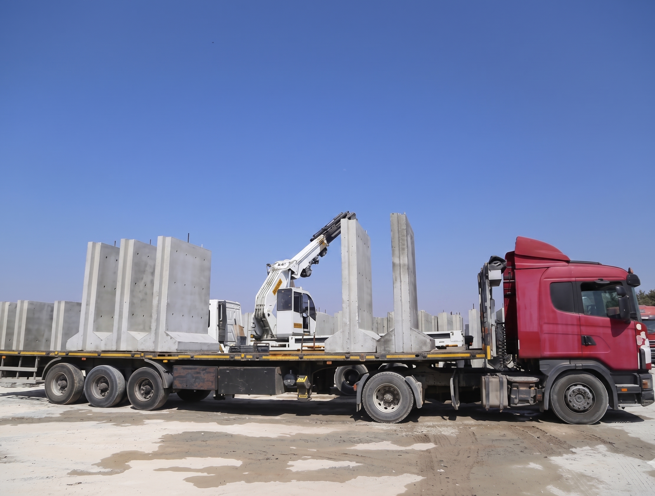
Please provide your technical specifications and project requirements for the Alaska Concrete Barrier Wall. Our engineers will review your application and provide a detailed manufacturing quote, including exact pricing and lead times.
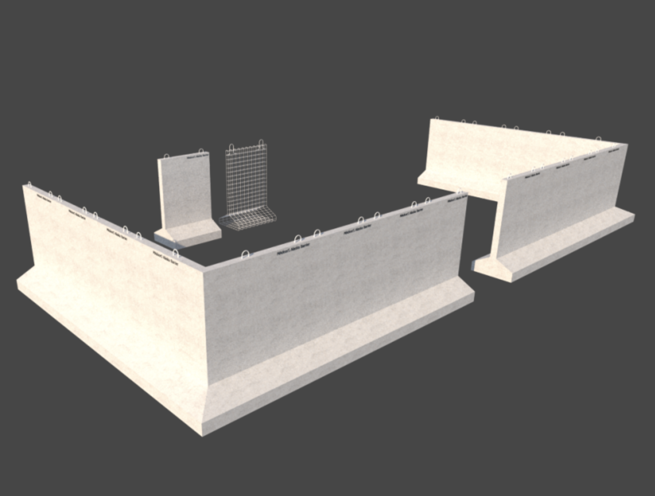
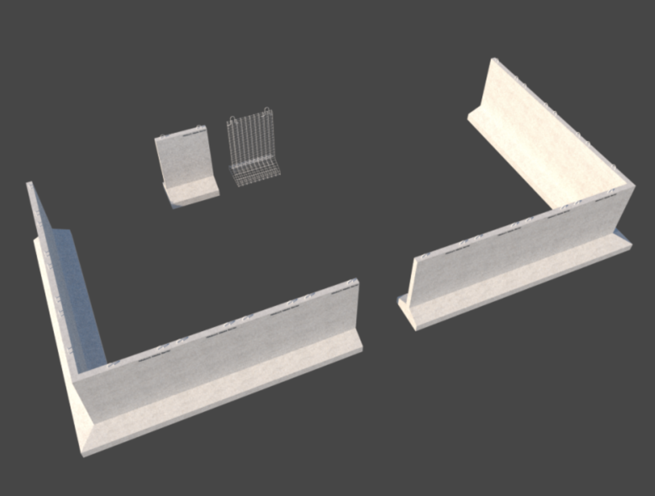
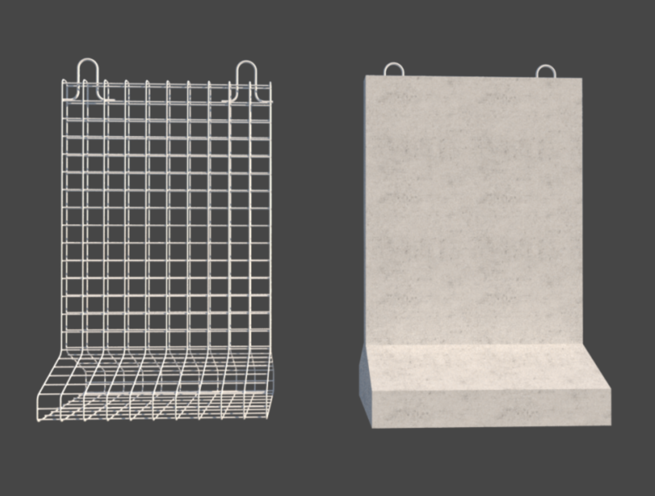
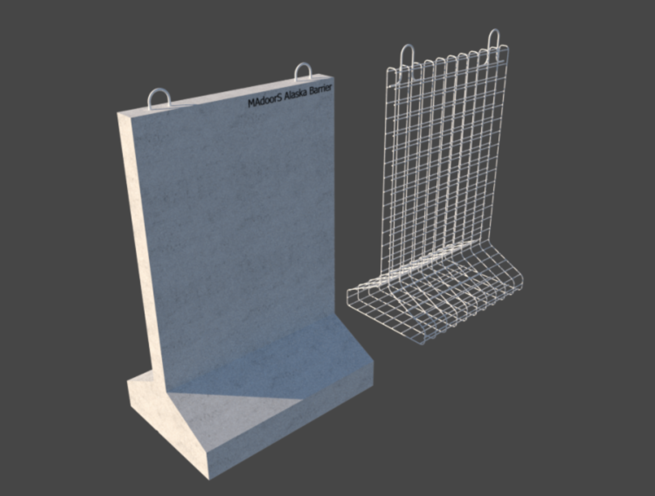
The Alaska Concrete Barrier Wall is a heavy-duty, bulletproof, blast-resistant precast concrete barrier system engineered for military base construction, high-security perimeter defense, and critical infrastructure protection. Manufactured to ASTM American standards, Alaska concrete barriers are produced up to 2.5 meters in height with project-based custom dimensions available, and can be specified in standard ballistic and blast-resistant configurations or upgraded to radiation-proof and impermeable variants through integrated lead plate construction — with radiation shielding levels customizable across the 1 mv to 12 mv range by specialist engineers on a project basis.
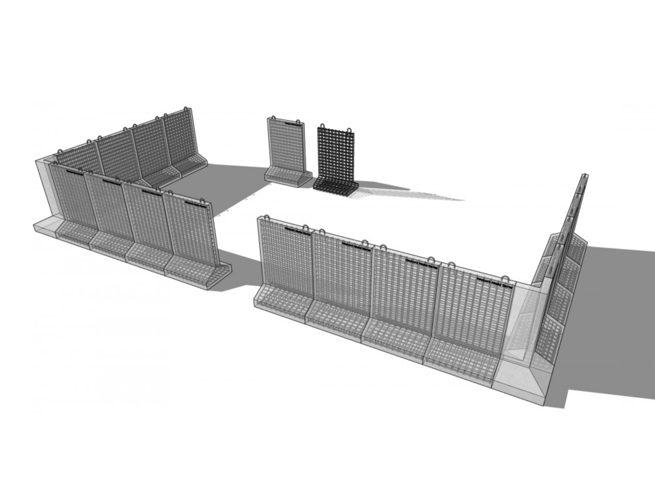
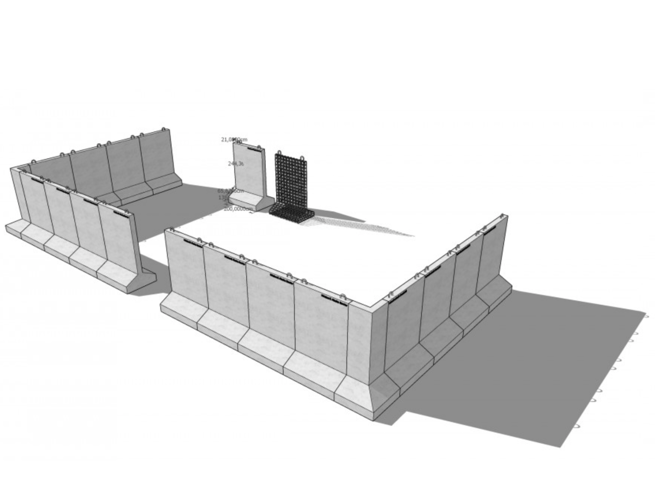
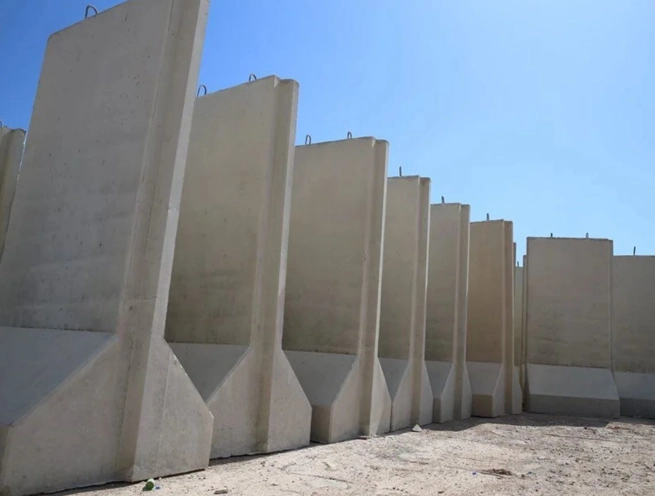
The interlocking skid-type system allows multiple barrier units to be rapidly combined and stacked to establish highly secure military bases, forward operating perimeters, checkpoint fortifications, and protective walls at speed — making the Alaska barrier system one of the most versatile and rapidly deployable heavy concrete defense solutions available for both permanent installation and temporary tactical deployment.
TECHNICAL SPECIFICATIONS
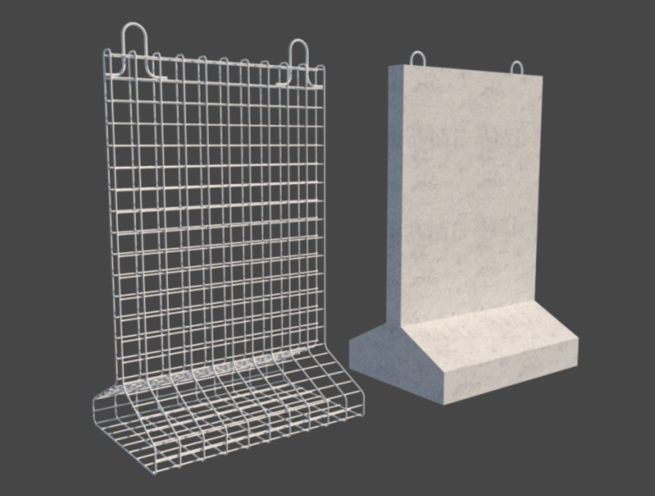
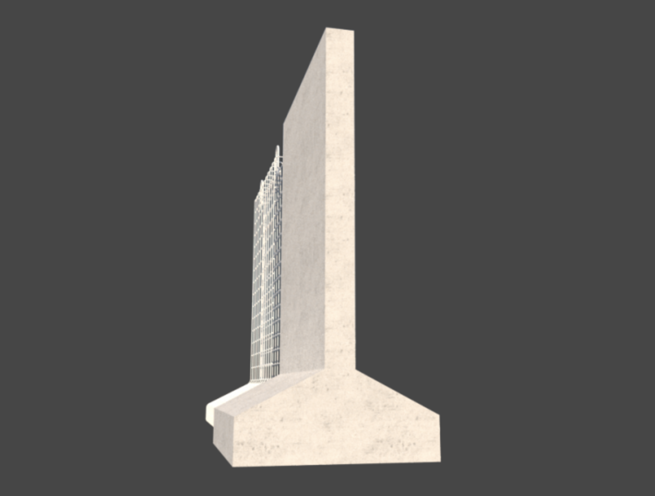
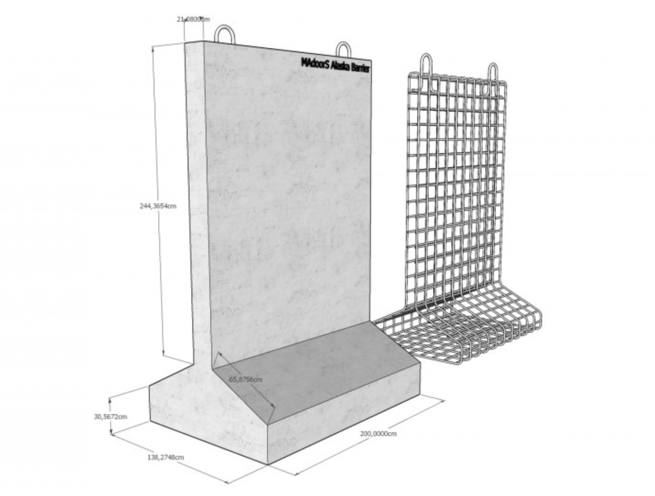
Alaska Concrete Barrier Walls are manufactured to ASTM American standard catalog dimensions as standard, with custom project-based dimensions available. Maximum standard production height is 2.5 meters. Each barrier unit is reinforced internally with 12.7 mm ribbed iron conforming to ASTM A615 M, with a steel mesh breaking stress of 420 MPa. Concrete compressive hardness across all barrier units is 35 MPa, providing the structural mass and integrity required for bulletproof and blast-resistant performance.
Each unit is fitted with two lifting and transport hooks of 16 mm diameter, allowing crane or mechanical handling during transport, placement, and repositioning without requiring additional rigging hardware. The interlocking skid-type connection system allows barrier units to be joined laterally and stacked vertically to build walls, perimeter lines, and protected enclosures of any required length and height configuration.
For radiation-proof and impermeable applications, lead plates are embedded directly into the concrete body during production. Lead plate thickness is determined on a project basis by specialist radiation safety engineers according to the required shielding level within the 1 mv to 12 mv range. This makes the Alaska barrier suitable not only for ballistic and blast defense applications but also for nuclear facility perimeter security, radiation containment infrastructure, and medical or industrial radiation shielding installations.
KEY FEATURES
Bulletproof & Blast-Resistant Construction
Alaska Concrete Barrier Walls are manufactured to be bulletproof and resistant to explosion pressure, providing ballistic protection against direct fire and blast overpressure resistance against nearby detonations. The combination of 35 MPa concrete hardness and ASTM A615 M steel mesh reinforcement delivers the structural mass and tensile integrity required for military-grade ballistic and blast defense performance.
Radiation-Proof & Impermeable Option
Alaska barriers can be manufactured as radiation-proof and fully impermeable through the integration of lead plates cast directly into the concrete body. Lead plate thickness is specified by radiation safety engineers on a project basis, with shielding levels covering the 1 mv to 12 mv range — making the barrier suitable for nuclear facility perimeter walls, radiation containment structures, medical radiation shielding, and industrial radiological protection applications.
ASTM-Compliant Steel Reinforcement
Internal reinforcement is fabricated from 12.7 mm ribbed iron conforming to ASTM A615 M with a breaking stress of 420 MPa. All reinforcement steel meets American ASTM standards, ensuring consistent, verified structural performance across every barrier unit produced.
35 MPa Concrete Hardness
All Alaska Concrete Barrier Wall units are produced to a concrete compressive strength of 35 MPa, providing the high-density structural mass required for effective ballistic protection, blast pressure resistance, and long-term durability in exposed outdoor military and industrial environments.
Height Up to 2.5 Meters — Custom Dimensions Available
Standard production height reaches 2.5 meters, with ASTM American standard catalog sizes available for straightforward procurement. Project-based custom dimensions are available for non-standard wall height, length, or cross-section requirements.
Two 16mm Lifting & Transport Hooks Per Unit
Each barrier unit is fitted with two 16 mm diameter lifting and transport hooks cast into the concrete body, allowing safe and efficient mechanical handling by crane or lifting equipment during transport, installation, and repositioning — without requiring additional rigging hardware or modification to the unit.
Interlocking Skid-Type System
The interlocking skid-type connection system allows Alaska barrier units to be joined laterally and stacked vertically, enabling the rapid construction of perimeter walls, protective enclosures, checkpoint fortifications, and military base perimeter lines of any required length and height. The interlocking system maintains structural alignment between units without requiring mortar, adhesive, or mechanical fixing.
Rapid Military Base Construction
Alaska ballistic concrete barrier walls can be combined rapidly to establish highly secure military bases, forward operating base perimeters, and tactical defense positions. The combination of mechanical handling hooks, interlocking skid connections, and precast production eliminates the on-site concrete pouring and curing time associated with cast-in-place barrier construction, significantly accelerating defensive perimeter establishment timelines.
ASSEMBLY & INSTALLATION SEQUENCE
Site Survey & Layout Planning
The perimeter line, wall height requirement, and total barrier unit count are determined from the site survey and project defense specification. Radiation shielding requirements, if applicable, are confirmed with specialist engineers and lead plate thickness is specified prior to production.
Production & Quality Verification
Barrier units are produced to the specified ASTM dimensions and concrete mix design, achieving 35 MPa compressive strength. Steel mesh reinforcement at 420 MPa breaking stress and 12.7 mm ASTM A615 M ribbed iron internal reinforcement are cast into each unit. Lead plates are embedded during casting for radiation-proof units. Lifting hooks are cast in position and verified for load rating.
Transport to Site
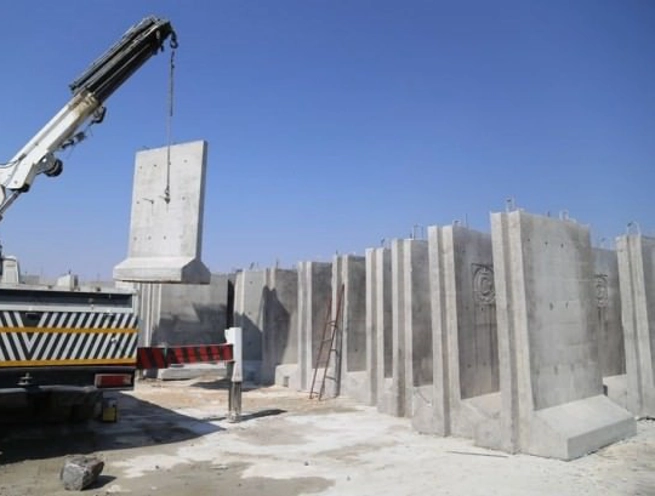
Barrier units are transported to the deployment site using standard flatbed transport. The 16 mm lifting hooks allow crane or mechanical off-loading directly from transport vehicles to the installation position without intermediate handling steps.
Barrier Unit Placement & Interlocking
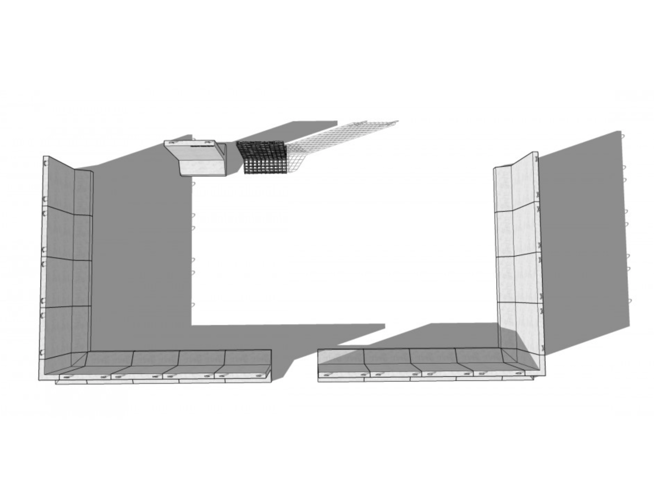
Units are placed in sequence along the planned perimeter line using crane or mechanical lifting equipment. The interlocking skid-type connection system is engaged between adjacent units as placement proceeds, maintaining lateral alignment and structural continuity along the wall line without mortar or mechanical fixings.
Vertical Stacking for Increased Height
Where wall heights exceeding a single unit are required, additional barrier units are stacked vertically using crane placement. Interlocking connections between stacked layers maintain vertical alignment and structural stability of the completed wall assembly.
Final Inspection & Position Verification
Completed wall alignment, interlocking engagement, and lifting hook condition are inspected across the full installation. Radiation shielding integrity is verified by specialist engineers for lead plate units where applicable.
DEPLOYMENT SCENARIOS & USE CASES
Alaska Concrete Barrier Walls are specified across a wide range of military, security, and industrial applications where bulletproof, blast-resistant, or radiation-shielded perimeter protection is required.
RADIATION SHIELDING VARIANT
The radiation-proof Alaska Concrete Barrier Wall is produced by embedding lead plates of specified thickness directly into the concrete body during casting. Lead plate thickness and placement geometry are determined by specialist radiation safety engineers on a project basis, calculated to achieve the required shielding performance across the specified radiation energy range of 1 mv to 12 mv. This variant is suitable for nuclear facility perimeter security walls, medical linear accelerator vault barriers, industrial gamma irradiation facility walls, and any application where both physical security and radiation containment are simultaneous requirements. Contact Madoors USA engineering for radiation shielding project consultation and specification.